


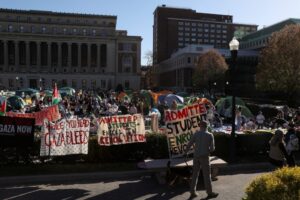
A new investigation launched inside the United States House of Representatives is placing American universities under intense scrutiny as lawmakers probe allegations that federal funding may be indirectly supporting environments where antisemitic incidents have increased. The inquiry, led by committees examining education and civil rights compliance, comes amid rising concerns about campus protests, academic programming, and the use of federal research grants. Republican lawmakers argue that universities receiving billions in taxpayer support must ensure their campuses remain safe for all students and comply with federal civil rights protections.
The issue has quickly evolved into a major national debate about academic accountability, free speech, and federal oversight of higher education institutions. Allies of Donald Trump say the investigation reflects broader conservative concerns about ideological bias within universities and the need to enforce existing anti-discrimination laws. With hearings already underway, the probe could shape future federal education funding rules and influence how universities handle politically sensitive campus activism.
Story Snapshot
-
The United States House of Representatives launched a probe into antisemitism on U.S. college campuses.
-
Lawmakers are examining whether federal funding is tied to environments allowing antisemitic incidents.
-
Universities receiving federal grants are being asked to provide documents and testimony.
-
Republican leaders argue institutions must enforce civil rights protections tied to taxpayer funding.
-
The investigation could lead to policy changes affecting federal education funding oversight.
-
The issue intersects with broader debates over campus speech, protests, and academic governance.
Congress Examines Universities Receiving Federal Funds
The investigation centers on a key question: whether universities that receive significant federal funding are fully complying with civil rights protections required under federal law. Committees within the United States House of Representatives have begun requesting documentation from several major universities regarding campus incidents and institutional responses.
Federal grants and research funding represent a major source of revenue for many American universities. Lawmakers involved in the investigation argue that institutions benefiting from taxpayer funding must meet clear standards regarding student safety and nondiscrimination.
Republican leaders say recent campus demonstrations and reported incidents involving antisemitic rhetoric have raised serious concerns about how universities enforce those obligations. The investigation seeks to determine whether institutions failed to respond appropriately or allowed hostile environments to develop.
Supporters of the inquiry argue that congressional oversight is necessary to ensure federal funds are not supporting institutions that neglect their legal responsibilities under civil rights law.
Campus Protests Ignite National Political Debate
The investigation comes at a time when political activism on university campuses has intensified across multiple issues, including international conflicts and U.S. foreign policy debates. Some demonstrations have drawn criticism for rhetoric that lawmakers and civil rights groups say crosses into antisemitism.
University administrators often face difficult decisions balancing free speech protections with campus safety concerns. American universities traditionally serve as spaces where political activism and debate occur openly, but critics argue that institutions must enforce clear boundaries when speech becomes discriminatory or threatening.
Members of Congress involved in the probe argue that universities must be prepared to protect students from harassment while maintaining constitutional free speech protections. The investigation is expected to examine whether institutions struck the proper balance when responding to controversial demonstrations.
For policymakers aligned with the agenda of Donald Trump, the issue reflects broader concerns about ideological climates within American universities. Many conservatives have argued that institutions receiving public funding should be held accountable for ensuring fair treatment of all students regardless of political or religious identity.
Potential Policy Changes for Higher Education
The congressional investigation could lead to legislative proposals affecting how federal funding is distributed to universities. Lawmakers are exploring whether existing oversight mechanisms provide sufficient accountability for institutions receiving billions of dollars in federal research and education funding.
Some proposals being discussed include stronger compliance requirements tied to federal grants, expanded reporting obligations regarding campus discrimination incidents, and potential penalties for institutions found to be violating civil rights protections.
Supporters argue that such measures would strengthen accountability while ensuring taxpayer dollars are used responsibly. They say universities should be transparent about how they handle campus incidents involving discrimination or harassment.
Critics of the investigation caution that congressional oversight must avoid politicizing higher education governance. University leaders warn that overly restrictive federal rules could undermine academic independence or create bureaucratic burdens that affect research and education programs.
Broader Implications for U.S. Political Landscape
The investigation into campus antisemitism also highlights the growing intersection between education policy and national politics. Universities increasingly find themselves at the center of debates about free speech, cultural values, and the role of public institutions in shaping civic discourse.
For Republican lawmakers, the inquiry represents an opportunity to address concerns raised by constituents about ideological bias in academia. Many conservatives believe that federal oversight is necessary to ensure universities uphold the principles of equal treatment and intellectual diversity.
Democratic lawmakers generally agree that antisemitism must be addressed but have expressed concerns about maintaining protections for lawful protest and academic freedom.
As hearings continue, the issue could become a defining policy debate in Washington. Questions about how universities respond to controversial activism and whether federal funding should be conditioned on stricter oversight are likely to remain central topics in the months ahead.
Looking Ahead
The House investigation into campus antisemitism is likely only the beginning of a broader examination of how universities balance civil rights obligations with free speech protections. As lawmakers review testimony and institutional records, the findings could lead to new legislation or regulatory changes affecting the higher education sector.
For supporters of stronger federal oversight — including many aligned with the policy priorities championed by Donald Trump — the probe reflects a growing determination to ensure taxpayer-funded institutions uphold constitutional principles and protect students from discrimination.
The outcome of the investigation could reshape the relationship between Congress and American universities, influencing how federal funding, academic governance, and civil rights enforcement interact for years to come.
