


Story Highlights
- Energy prices begin to stabilize after recent volatility
- Oil and fuel markets adjust to supply-demand balance
- Temporary relief seen for consumers and businesses
What Happened
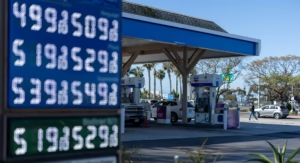
Energy prices in the United States are showing signs of short-term stabilization following a period of volatility driven by global uncertainties. Recent market data indicates that oil and fuel prices have begun to level out as supply and demand move toward a more balanced state.
The stabilization is attributed to a combination of factors, including steady production levels and adjustments in global supply chains. Market participants are responding to improved conditions, leading to reduced fluctuations in pricing.
While prices remain elevated compared to previous periods, the pace of increase has slowed. Analysts suggest that the current trend may provide temporary relief, though conditions remain sensitive to external developments.
Energy markets continue to be closely monitored, as even small disruptions can quickly influence pricing. The situation remains dynamic despite the recent stabilization.
Why It Matters
Energy prices have a direct impact on the economy, influencing transportation costs, production expenses, and household spending. Stabilization can help reduce uncertainty and support planning.
For consumers, steady prices provide some relief from rising fuel costs. For businesses, predictable energy expenses support operational stability.
The development also highlights the importance of balanced supply and demand in maintaining market stability.
Additionally, energy trends play a significant role in shaping inflation and overall economic conditions.
Political and Geopolitical Impact
Domestically, energy prices are a key factor in economic discussions, influencing policy debates around production and regulation.
The issue also affects public sentiment, as fuel costs are closely tied to daily expenses.
Geopolitically, energy markets are influenced by global developments, including supply conditions and international cooperation.
The situation reflects broader global efforts to manage energy stability in a complex environment.
Implications
If stabilization continues, it could provide short-term relief for both consumers and businesses. This may support economic confidence.
However, the market remains sensitive to changes, and future disruptions could impact pricing again.
In the long term, the situation highlights the importance of maintaining stable energy systems. Strategic planning and coordination will be essential.
Sources
“Energy prices show signs of stabilization after recent volatility”
