

The Pentagon’s official casualty tracking system abruptly lowered its Iran war death toll from 18 to 14 this week, removing four American service members killed earlier this month without a clear public explanation. The discrepancy, which conflicts with figures President Trump himself has cited publicly, has drawn sharp criticism from lawmakers and renewed scrutiny of the administration’s transparency around a war that has now stretched nearly five months without formal congressional authorization. Defense officials have offered conflicting explanations, further deepening questions about accountability.
Story Highlights
- The Pentagon’s Defense Casualty Analysis System dropped its Iran war death toll from 18 to 14 between Wednesday and Thursday
- The four removed service members included three killed in a missile attack on a Jordan air base and one killed in Iraq
- Pentagon spokesman Sean Parnell attributed the change to a “temporary data disruption,” while three military officials told the New York Times the deaths were excluded because they occurred after Trump’s April ceasefire declaration
- Rep. Adam Smith said Trump has not shared Iran war casualty statistics with Congress, calling the lack of transparency significant
What Happened
The Pentagon’s Defense Casualty Analysis System, the official Department of Defense platform used to track American military deaths and injuries in combat, showed a total of 18 service members killed in the Iran war as of Wednesday. By Thursday, that number had dropped to 14, with four names removed from the tally. The four service members were identified as Sergeant Angel S. Rampersad, First Lieutenant Tyler Feehan and Private Isabella Gonzales, who were killed in an Iranian missile attack on July 17 at Muwaffaq Salti Air Base in Jordan, and Sergeant Michael Emmanuel Swinton, who was killed while dismantling a downed Iranian drone at Erbil Air Base in Iraq.
The removal came even though the Pentagon had formally announced the transfer of the four soldiers’ remains back to the United States just one day earlier, in a dignified transfer ceremony at Dover Air Force Base attended by Trump and Defense Secretary Pete Hegseth. According to three military officials who spoke to the New York Times, one explanation offered internally was that the deaths were excluded because they occurred during a period the administration considers to have fallen after Trump’s April ceasefire declaration, despite the fact that fighting had resumed and the soldiers died in direct combat-related circumstances.
Acting Pentagon Press Secretary Joel Valdez offered a different public explanation, attributing the discrepancy to “temporary data disruptions” on the casualty website that he said were being resolved in coordination with the military services. As of Friday, however, the website still listed only 14 deaths, and a separate “Names of the Fallen” list on the same site included just 13 service members, one fewer than even the disputed total. Sean Parnell, the Pentagon’s chief spokesperson, separately confirmed that nearly 100 U.S. service members have been wounded since July 7, with 96 percent of those injured returning to duty, and said most injuries were minor concussions.
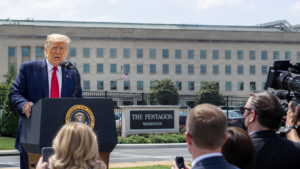
The discrepancy has not gone unnoticed by Trump himself, who has continued to publicly cite the higher casualty figure. At a public event Thursday, the president referenced “a very sad day” tied to recent losses, using language consistent with the 18-death total rather than the Pentagon’s revised figure of 14. Defense officials have not held a major briefing on the war’s strategy or casualties since early May, a gap that has drawn criticism from lawmakers seeking more regular updates on the conflict’s human toll.
Why It Matters
The accurate and timely public reporting of American combat casualties has been treated as a core pillar of military accountability dating back to World War II, reflecting a longstanding principle that the public and the families of fallen service members deserve an honest accounting of the human cost of war. A sudden, unexplained reduction in an official casualty count, particularly one that appears to understate losses rather than overstate them, strikes directly at that tradition and raises legitimate questions about whether transparency is being subordinated to political messaging around the war’s toll.
Massachusetts Democratic Representative Adam Smith highlighted this concern directly, stating that Trump has not shared Iran war casualty statistics with Congress and that there has been “no transparency from the President or the Pentagon about the full extent of equipment losses and casualty statistics.” For a war that has never received formal congressional authorization, the absence of reliable casualty reporting compounds existing concerns about oversight, leaving lawmakers to rely on leaked or inconsistent figures rather than official, verifiable data when assessing the conflict’s costs.
The competing explanations offered by Pentagon officials, a technical glitch versus a deliberate exclusion tied to the ceasefire timeline, are themselves troubling from an accountability standpoint. If the removal was a genuine technical error, it reflects poorly on the reliability of systems meant to inform the public and grieving families. If it was a deliberate recalculation designed to minimize the war’s apparent toll, it raises far more serious questions about the integrity of official government reporting during an active conflict.
For families of fallen service members, discrepancies of this kind carry a deeply personal weight, as official recognition of a loved one’s sacrifice is not merely a statistical matter but a question of dignity and public acknowledgment.
Economic and Global Context
The casualty reporting controversy unfolds against the backdrop of a war that has already cost an estimated $37.5 billion, with the Pentagon reportedly seeking an additional $67 billion in emergency funding from Congress to sustain operations. Accurate casualty reporting is typically a factor in how Congress and the public evaluate whether continued funding for a conflict is justified, making the current discrepancy particularly consequential at a moment when lawmakers are actively debating further appropriations.
The controversy also comes as global oil markets remain highly sensitive to developments in the Iran conflict, with Brent crude surpassing $100 a barrel this week amid continued hostilities. As the economic costs of the war become more visible to ordinary Americans through rising fuel prices, transparency around the war’s human costs takes on added political significance, particularly heading into a competitive midterm election cycle.
Historically, discrepancies in official casualty reporting have emerged as flashpoints in other prolonged conflicts, often fueling broader public skepticism about government transparency during wartime. The current controversy risks reinforcing similar skepticism at a moment when trust in official statements about the war’s trajectory is already strained by the competing narratives offered by Pentagon officials themselves.
Implications
Congressional Democrats are likely to press for a formal accounting of the casualty discrepancy in the coming days, potentially through oversight hearings or direct requests to the Department of Defense for a full audit of the Defense Casualty Analysis System’s reporting history throughout the conflict.
For the Pentagon, resolving the conflicting explanations offered by Valdez and the officials who spoke to the New York Times will be critical to restoring confidence in its casualty reporting systems, particularly given that the department has not held a major briefing on the war since May.
For military families, continued opacity around casualty figures risks deepening frustration at a moment when transparency is arguably most needed, given the war’s unauthorized status and mounting human toll.
For the broader public debate over the war’s future, accurate casualty figures will likely remain a central point of contention as Congress continues to weigh both funding requests and war powers resolutions aimed at constraining the conflict’s continuation.
Sources
Pentagon abruptly removes four Iran war troop deaths from casualties website
