


Story Highlights
- Supreme Court reviewing challenge to late-arriving mail ballots
- Case backed by Republican National Committee
- Decision could reshape election deadline enforcement nationwide
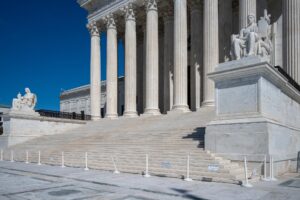
The U.S. Supreme Court is considering a case that could significantly influence how states handle mail-in ballots, particularly those received after Election Day. The case, backed by the Republican National Committee (RNC), challenges the validity of counting ballots that arrive late but were postmarked on time.
At the center of the dispute is whether states have the authority to extend ballot receipt deadlines beyond Election Day under certain circumstances. Supporters of stricter deadlines argue that uniform enforcement is essential for election integrity, while others contend that flexibility is necessary to ensure all eligible votes are counted, especially in cases of postal delays.
The Court’s review comes amid ongoing national debates over voting procedures, access, and election security. Legal experts suggest that the outcome could establish clearer guidelines for how states balance administrative flexibility with constitutional requirements.
Why It Matters
Election procedures are foundational to the democratic process, and even minor changes can have significant ripple effects. A ruling that tightens ballot deadlines could lead states to adopt more standardized timelines, potentially reducing ambiguity but also limiting flexibility in certain situations.
On the other hand, a decision allowing broader discretion for states could reinforce decentralized election management, giving local authorities greater control over how votes are processed. This balance between uniformity and flexibility has been a recurring theme in election law disputes.
The case also highlights the growing role of the judiciary in resolving election-related conflicts, particularly as voting methods evolve with increased reliance on mail-in ballots.
Implications
The Supreme Court’s decision could influence election policies across multiple states ahead of future federal elections. Lawmakers and election officials may need to adjust procedures based on the ruling, potentially affecting voter outreach, ballot processing timelines, and legal frameworks.
Beyond immediate policy changes, the case may shape broader public confidence in election systems, depending on how the ruling is perceived by different stakeholders. Clarity from the Court could help reduce disputes, but it may also prompt further legal challenges depending on the outcome.
Watch (YouTube)
(Suggested clip for embedding in your CMS)
“Supreme Court Takes Up Mail Ballot Case”
