

Story Highlights
- Trump highlights U.S. capability in securing key maritime route
- Emphasis on timing and operational planning
- Focus on global energy stability
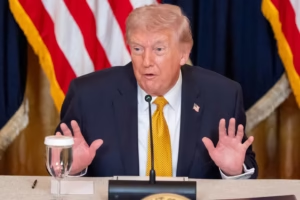
Donald Trump has reiterated confidence in the United States’ ability to secure the Strait of Hormuz, emphasizing that success depends on sufficient time and strategic planning. The statement highlights a measured approach to managing one of the most critical chokepoints in global energy supply. Rather than suggesting immediate action, the focus is placed on readiness and execution.
The Strait of Hormuz is central to global oil transportation, with a significant portion of the world’s energy supply passing through it. Ensuring stability in this region is therefore a priority not only for the United States but also for the international community. Trump’s remarks underscore the importance of maintaining influence over such strategic locations.
From a military standpoint, securing the strait involves complex coordination across multiple domains. Naval presence, air support, and intelligence operations all play a role in ensuring effective control. By highlighting the need for time, Trump signals that such operations require careful planning and sustained effort rather than immediate escalation.
Economically, the stability of the Strait of Hormuz directly impacts global markets. Disruptions in this region can lead to fluctuations in oil prices and broader economic uncertainty. By projecting confidence in maintaining control, the statement may help stabilize expectations and reduce market volatility.
Geopolitically, the message reinforces the United States’ role as a key player in maintaining global security. It signals to allies that the country remains committed to protecting critical infrastructure, while also communicating capability to potential adversaries. This balance between reassurance and deterrence is an important aspect of strategic communication.
The situation also reflects the broader complexity of managing international security. Achieving stability in such regions requires not only military capability but also diplomatic engagement and cooperation with other stakeholders. Long-term success depends on integrating these elements effectively.
Implications
Confidence in securing strategic routes may support global stability, but effective execution and coordination will be essential. Long-term outcomes will depend on both operational success and diplomatic engagement.
