

Story Highlights
-
Trump said he is not planning to put U.S. troops “anywhere” in the region.
-
The comment came as the Iran conflict continued to raise pressure on Washington’s next move.
-
The message projects a line of restraint even as military tension remains elevated.
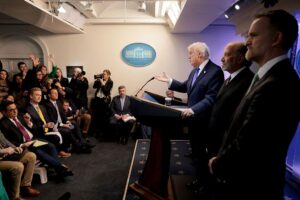
President Trump’s latest public comments were designed to answer the most sensitive question hanging over the current Middle East crisis: whether the United States is preparing to move from strikes and regional force posture into a broader ground commitment. Asked directly, Trump said he was not putting troops into the region, offering a clear public signal that the administration wants to avoid the political and military costs of a large-scale land war. Reuters’ reporting also showed that public concern is high, with many Americans expecting escalation even though support for a ground war remains very low.
Why this matters is straightforward. In Washington, words from the president can calm markets, shape allied expectations, and reduce the chance that every troop movement is interpreted as the start of a wider conflict. Trump’s statement does not eliminate the possibility of additional deployments for deterrence or force protection, but it does create a public benchmark: the White House is telling voters and allies that it is not looking for a long, costly occupation-style conflict. That matters politically at home and strategically abroad.
The geopolitical implications are significant. A no-ground-troops posture gives the administration more room to claim it is pursuing limited objectives rather than open-ended war. It also reassures regional partners that Washington is still weighing escalation risk, especially around oil transit routes and broader market stability. At the same time, the statement raises the bar for any future expansion: if the administration later shifts course, it will face tougher scrutiny because the president has now defined restraint as the public position. That makes this not just a comment, but an early political marker for the next phase of U.S. strategy.
Implications
Trump’s message gives supporters a case that he is trying to project strength without repeating the nation-building errors of earlier wars. Whether that posture holds will depend on events in the region, but for now the White House appears intent on showing control, signaling limits, and avoiding a public break with a war-weary electorate.
Sources used
