Story Highlights
- The Supreme Court ruled 6–3 in Louisiana v. Callais on April 29 that Louisiana’s second majority-Black congressional district was an unconstitutional racial gerrymander, significantly curtailing Section 2 of the Voting Rights Act
- Louisiana Governor Jeff Landry suspended the state’s May 16 primaries to allow the legislature to draw new maps; Alabama, Tennessee, and other Southern states moved rapidly to follow
- Trump praised the decision on Truth Social and called on Republican states to act quickly to revise their congressional maps before the midterms
What Happened
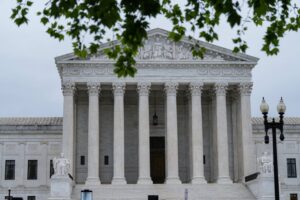
The Supreme Court in Louisiana v. Callais struck down a Louisiana congressional map that a group of voters describing themselves as “non-African American” had challenged as unconstitutional racial gerrymandering. By a vote of 6–3, the justices left in place a ruling by a federal court that barred the state from using the map, which had created a second majority-Black district, in future elections.
The majority opinion was written by Justice Samuel Alito. Alito emphasized that the inquiry into racial discrimination in redistricting should focus on evidence bearing on present-day intentional racial discrimination regarding voting, and quoted the court’s 2013 Shelby County opinion in noting that “things have changed dramatically” in the South “in the decades since the passage of the Voting Rights Act.”
In her dissent, joined by Justices Sonia Sotomayor and Ketanji Brown Jackson, Justice Elena Kagan argued that the majority opinion had rendered the Voting Rights Act’s Section 2 protections “all but a dead letter.” The Voting Rights Act of 1965, landmark civil rights legislation enacted after the Selma voting rights marches, has been reauthorized by Congress multiple times, most recently in 2006.
Following the ruling, Louisiana Governor Jeff Landry suspended the state’s May 16 congressional primaries by executive order, stating: “The best way to end race-based discrimination is to stop making decisions based on race.” The primary has been postponed until July 15, or a date determined by the state legislature, which said it would pass a new map before the end of its regular session.
Trump praised Landry on Truth Social “for his leadership on the very important Callais case, and for moving so quickly to fix the Unconstitutionality of Louisiana’s Congressional Maps.” On Monday, the Supreme Court granted a request to expedite its ruling, allowing Louisiana to redraw its maps ahead of November’s elections.
Why It Matters
Louisiana v. Callais is among the most consequential Supreme Court decisions on voting rights in a generation, and its implications extend far beyond Louisiana. For liberty-minded constitutionalists, the ruling raises fundamental questions about the appropriate boundaries between the Equal Protection Clause of the Fourteenth Amendment, the Fifteenth Amendment’s prohibition on racial discrimination in voting, and Congress’s statutory authority to enforce those protections.
The Callais decision provides a roadmap for states to return to pre-1965 redistricting practices. Going forward, voters will have to clear new evidentiary hurdles, and states can defend against virtually any claim of racially discriminatory map-drawing simply by claiming they instead discriminated based on political party — even though race and partisanship are often difficult, if not impossible, to disentangle, especially in the South.
A partisan redistricting battle among states has accelerated ahead of November’s midterm elections following the ruling, which weakened the federal Voting Rights Act and opened the way for states to try to eliminate voting districts drawn for racial minorities. An unusual spate of mid-decade redistricting broke out after President Trump urged Texas Republicans last year to reshape U.S. House districts to give the party an edge in the midterms.
The ruling also intersects with questions of federalism and the constitutional relationship between Congress and the courts. The Voting Rights Act was passed by overwhelming congressional majorities and signed into law under the Fifteenth Amendment’s explicit grant of enforcement authority to Congress. Critics of the ruling argue the court has substituted its own policy preferences for a clear legislative mandate, bypassing the democratic process that produced the law.
Economic and Global Context
After the Supreme Court dealt a blow to the Voting Rights Act, Republican states raced to redraw district lines. The redistricting battle intensified after the court ruled 6–3 to strike down Louisiana’s congressional map, giving a leg up to Republicans who argued the lines of the state’s Sixth District were an unconstitutional gerrymander. This rapid mobilization represents one of the most compressed redistricting cycles in American history, with states drawing and passing new maps in a matter of weeks rather than months.
Alabama, which had been required to include two majority-Black districts from the Supreme Court’s decision in Allen v. Milligan (2023), filed an emergency motion with the court the day after the Callais ruling. Alabama Governor Kay Ivey also ordered a special session on May 1, 2026, to begin creating a new redistricting map. The speed and breadth of the Republican response illustrates how strategically significant the ruling is for the November elections.
While intense national attention on the ruling’s fallout has focused on the U.S. House midterm elections, the new ruling also applies to state legislative districts and maps for county and municipal elections — meaning its effects will ripple through levels of government far below Congress for years to come. School boards, city councils, and county commissions across the South could all be affected.
The redistricting acceleration adds another layer of legal and political uncertainty to an already turbulent election cycle. Each new map drawn under the Callais framework is likely to face immediate legal challenge, creating a complex patchwork of court orders, state legislative actions, and emergency Supreme Court applications that will continue through Election Day.
Implications
The timing of the decision was not expected to have a significant impact on the 2026 general election, as it was issued after multiple states had already begun the primary process. However, it is expected to influence the 2028 election as states have sufficient time to implement new maps. For 2026, Louisiana and Alabama are the states with the most immediate ability to act, while others face logistical constraints imposed by existing primary deadlines.
Republicans currently occupy four of Louisiana’s six House seats, while Democrats hold two. Both chambers of the state legislature are controlled by the GOP, giving Republicans full control of the remapping process with no institutional check on partisan outcomes. New maps are expected to target the two existing Democratic-held seats.
For Congress, the ruling presents a direct challenge. Congress can act to enact new protections nationwide against racial and partisan discrimination in redistricting, fulfilling its role as a co-equal branch of government and passing legislation to address the Supreme Court’s repeated undermining of the Voting Rights Act. However, with a Republican majority in both chambers unlikely to pass new voting rights protections, legislative remediation is not imminent.
The long-term constitutional question is whether the Voting Rights Act retains any meaningful enforcement power after Callais. For Americans who believe in the principle that every citizen’s vote should carry equal weight regardless of race, the ruling represents a fundamental setback. For those who prioritize race-neutral constitutional interpretation and see majority-minority districts as themselves a form of racial classification, the ruling vindicates a decades-long legal argument. That tension — unresolved since 1965 — will now play out not in congressional debates or federal agency enforcement, but in the redrawn maps of Southern statehouses and the courtrooms that challenge them.
Sources
“GOP Fast-Tracks New Voting Maps After Landmark Supreme Court Ruling”
