
Story Highlights
- Trump’s overall job approval sits near the lowest point of his second term, with independents and Latinos drifting from his coalition
- The National Republican Congressional Committee has branded its midterm program “MAGA Majority,” placing Trump at the center of the strategy
- Democrats need to flip just three House seats to retake the chamber; Republicans hold a 53-47 Senate majority
What Happened
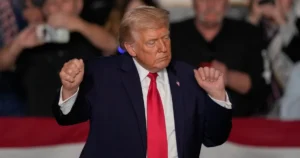
President Donald Trump told NBC News recently that despite not appearing on the ballot himself, he is very much part of this election. “I am on the ballot,” Trump said. “And my voters love me.” That confidence is shared by key elements of the Republican Party infrastructure, but it coexists with a quieter anxiety among vulnerable incumbents who are nervously calculating how much association with the president will help versus hurt them in competitive districts this fall.
NBC News spoke to approximately 30 Republican National Committee members and GOP activists across the country in a wide-ranging survey of party sentiment published this week. The picture that emerged was one of genuine optimism about holding Congress, tempered by clear-eyed concern about the structural challenges the party faces. Trump’s chief of staff, Susie Wiles, has said she intends to get the president on the campaign trail more aggressively than he might otherwise prefer — a sign that leadership views his participation as essential.
Former House Speaker Kevin McCarthy offered perhaps the most direct assessment of why Trump’s involvement is unavoidable. “They need him badly,” McCarthy told NBC News, referring to congressional Republicans. “They need his money. They need him to drive turnout.” Iowa Republican Party chairman Jeff Kaufmann echoed that view: “This is about getting our base out, and there is no one better” than Trump at mobilizing the Republican faithful.
But a competing calculation is playing out among members in competitive seats. One unnamed House Republican in a closely contested race told NBC News they have no plans to campaign with Trump or feature him in advertising. The lawmaker also expressed concern about the NRCC’s decision to name its midterm campaign program the “MAGA Majority,” saying other vulnerable members had texted with doubts about the strategy. “You can tell some of these folks, on some of the comments they’re making, they’re nervous,” the member said.
Why It Matters
The Republican Party’s dilemma over Trump’s role in the midterms reflects a fundamental structural tension that has defined American politics for the past decade. Trump remains the most effective base-mobilization tool the Republican Party possesses, capable of generating the enthusiasm, small-dollar fundraising, and high turnout in deep-red areas that are essential to holding the party’s razor-thin congressional majorities. At the same time, the qualities that make him an asset in primaries — ideological intensity, confrontational style, and personal loyalty demands — tend to alienate the moderate and independent voters who decide close general elections.
According to NPR analysis, Trump’s approval among independents has declined since his 2024 election win, when he carried 46 percent of independent voters compared to Democratic nominee Kamala Harris’s 49 percent. His current overall approval is near the lowest of his second term. That erosion has been driven partly by persistent concerns about the cost of living — a majority of Americans believed the country was in recession as of late 2025 — and partly by public unease over U.S. military involvement in the war with Iran, which has no clear end date and has driven up energy prices significantly.
The midterm environment has historically been punishing for the president’s party. Democrats need just three net House seat pickups to retake the chamber, while the Senate math requires four net Democratic gains to flip that body. Republicans successfully won those slim majorities in 2024, but winning them was partly a function of the unique dynamics of a presidential election year. Midterms, which historically see lower overall turnout, tend to favor the opposition party when presidential approval is below 50 percent — and Trump is well below that threshold.
At the same time, the Brookings Institution has noted that Trump’s endorsement power in primary races — including the victories his candidates achieved in Indiana’s state legislative primaries on May 5 — has demonstrated continued dominance over the Republican base. The open question is whether dominance in primaries translates to a general election liability in the roughly 60 competitive House districts and a handful of contested Senate races where the majority will be decided.
Economic and Global Context
The economic backdrop against which Trump will campaign is one of the most challenging in recent Republican history. Inflation rose to 3.8 percent annually in April, with energy prices — inflated by Iran’s closure of the Strait of Hormuz — accounting for 40 percent of the increase. Gasoline prices have jumped 28.4 percent on an annual basis. Core inflation, which excludes food and energy, has also crept upward to 2.8 percent year-over-year, indicating that price pressures are broadening beyond the energy sector.
In a December 2025 NPR/PBS News/Marist poll, 63 percent of respondents said the country was headed in the wrong direction, and Trump’s approval on the economy registered at just 36 percent. Those numbers are consistent with a midterm environment in which voter frustration with the party in power translates to meaningful seat losses. The question for Republican strategists is how much Trump’s personal campaigning can offset those structural headwinds by turning out voters who might otherwise stay home.
The cost of the Iran war has also become a fiscal and political issue. The Pentagon has reported war costs of approximately $29 billion and requested a further $200 billion in supplemental funding. As that spending adds to the federal deficit — already projected to balloon under the One Big Beautiful Bill Act — Republican candidates in competitive districts will need to navigate questions about fiscal responsibility while defending a party that has dramatically increased federal spending during Trump’s term.
Implications
The decisions that Republican candidates make in the coming months about how closely to align with Trump will be among the most consequential of their political careers. Those in safe seats have every incentive to embrace the MAGA brand aggressively, generating base enthusiasm and locking in Trump’s political support. Those in competitive districts face a far more delicate calculation, needing Trump’s fundraising capacity and ability to drive turnout without triggering independent voter backlash.
For Trump himself, the midterms represent a critical test of his political legacy before lame-duck status sets in. A strong Republican performance in November would validate his governing approach and strengthen his hand in shaping the post-Trump Republican Party and potential 2028 contenders. Significant losses, particularly in the House, would accelerate the erosion of his political capital and potentially embolden Republicans who have been waiting for an opportunity to chart a more independent course.
For the country, the midterms will determine whether the Trump agenda — including its aggressive immigration enforcement, tax policy, and foreign policy — continues to advance with a cooperative Congress or faces the kind of divided-government friction that defined the final two years of many recent presidencies. Voters heading to the polls in November will effectively be casting a verdict on Trump’s second term with two years still remaining on the clock.
Sources
