


Story Highlights
- Trump claimed California elections were “rigged” because ballots were still being counted four days after the June 3 primary
- California officials said the extended count reflects legally required procedures, not fraud; over 6 million gubernatorial ballots had been counted with an estimated 3 million remaining as of June 5
- Governor Gavin Newsom’s office called Trump’s claims false; the U.S. Attorney’s office in Los Angeles declined to confirm Trump’s assertion that ballots were under criminal investigation
What Happened
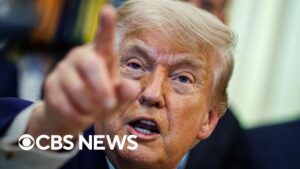
In the days following California’s June 3 primary election, President Donald Trump took to social media to accuse Democrats of stealing the results, focusing on the gubernatorial race and the Los Angeles mayoral primary, where ballots were still being tabulated. “They are dropping fast because it’s a rigged election,” Trump said during his Sunday Meet the Press interview, referring to Republican-backed candidates losing ground as additional mail-in ballots were counted. He also claimed the ballots were “under investigation” by the U.S. Attorney’s Office in Los Angeles.
That office declined to comment when contacted by ABC News. California Democratic Party Chairperson Rusty Hicks dismissed Trump’s claims, and Governor Gavin Newsom‘s press office issued a direct rebuttal: “Trump is lying about California again.” The governor had in fact sent a letter to California election officials the prior month warning that misinformation could spread if results were delayed, indicating that officials anticipated and prepared for precisely the accusations Trump was now making.
California uses a universal mail-in voting system, which the state adopted permanently in 2021 after piloting it during the COVID-19 pandemic. Under state law, mail-in ballots postmarked by Election Day and received within a specified window are valid and must be counted. This process necessarily extends the tabulation period beyond Election Night. As of June 5, more than 6 million gubernatorial primary ballots had been processed, with an estimated 3 million still to be counted. California Secretary of State Shirley Weber and other officials had publicly warned ahead of the election that counting would take longer than expected.
Trump has made election fraud claims about California repeatedly — during the 2021 recall, the 2024 general election, and multiple legislative contests. In each instance, no credible evidence of systemic fraud was produced, and independent election officials and courts found the results valid. The pattern, however, has proven politically potent with Trump’s base, reinforcing a narrative that Democrats use mail-in ballots and extended counting windows to manipulate outcomes.
White House Press Secretary Karoline Leavitt, when asked for evidence of fraud in a prior California election, pointed to the state’s universal mail-in system as itself being “ripe for fraud.” She alleged that fraudulent ballots were being submitted in the names of other people, including non-citizens. California officials rejected those claims, noting that the state uses signature verification, ballot tracking, and other safeguards to ensure ballot integrity.
Why It Matters
The integrity of American elections is foundational to the legitimacy of self-governance. When a sitting president repeatedly claims, without evidence, that elections in the nation’s most populous state are rigged, the consequences extend far beyond any single political contest. Public trust in democratic institutions erodes, voter participation can be suppressed among those who believe their votes will not count, and the groundwork is laid for future refusals to accept unfavorable results.
California’s vote-counting process is not unique. Many states, including those with Republican-led governments, conduct multi-day ballot counts when large volumes of mail-in ballots are involved. The extended timeline is a feature of accessible, high-participation elections, not a bug. The suggestion that a prolonged count is inherently suspicious misrepresents how modern elections work and has been consistently rejected by election law experts from both parties.
From a constitutional standpoint, Trump’s claim that the U.S. Attorney’s Office is investigating the ballots raises serious concerns about the potential use of federal prosecutorial power to intimidate state election officials and challenge legitimately conducted elections. If the administration were to direct federal law enforcement to investigate elections where no credible evidence of fraud exists, it would represent a profound abuse of executive authority with lasting consequences for the federal-state relationship and the rule of law.
The timing also matters politically. With midterm elections approaching in November 2026, the narrative that Democratic-leaning states cannot be trusted to run honest elections serves a strategic purpose — pre-emptively delegitimizing expected losses in blue-state contests and energizing Republican base voters. That dynamic has been evident since 2020 and shows no sign of abating.
Economic and Global Context
California’s economy is the largest of any U.S. state and among the ten largest in the world, with a gross domestic product exceeding $4 trillion annually. Political instability surrounding elections in California — including federal interference or prolonged litigation over results — could affect business confidence, investment flows, and the state’s reputation as a stable environment for commerce and innovation.
At a national level, the credibility of American elections matters to foreign investors, international partners, and multilateral institutions. Countries and investors assessing the United States as a destination for capital and partnerships monitor the stability of American democratic processes. Persistent, high-profile claims of election fraud from the president himself — even when unsupported by evidence — introduce a reputational risk that financial and diplomatic analysts have begun to factor into assessments of U.S. institutional reliability.
The Los Angeles mayoral race in particular has national implications, as Los Angeles remains one of the nation’s largest urban economies. The outcome of that race will shape policy decisions on housing, homelessness, public safety, and infrastructure investment in a region that accounts for a substantial portion of U.S. economic output. Prolonged uncertainty over results, amplified by unfounded fraud claims, can delay policy transitions and introduce governance instability.
The California gubernatorial race, meanwhile, is widely watched as a test of Democratic coalition strength and as a potential launching pad for national political figures. Disruption of that process through federal interference would be seen internationally as a troubling indicator of American democratic health.
Implications
The most immediate implication of Trump’s claims is a further deterioration of trust in elections among the segment of the American public that follows the president closely. Polling consistently shows that a significant share of Republican voters doubt the integrity of mail-in voting systems, and Trump’s repeated assertions reinforce that doubt. The downstream consequence is real: voters who believe elections are rigged may disengage from the process, or conversely, may support measures that restrict voting access under the guise of security.
For California election officials, the coming weeks will involve completing the count under a national spotlight colored by the president’s accusations. Any logistical hiccup or clerical error — however routine — risks being seized upon as validation of fraud claims. Officials are navigating that environment while fulfilling their legal obligation to count every valid ballot.
For the Republican Party in California and nationally, Trump’s posture creates a strategic dilemma. Embracing the fraud narrative may energize the base, but it also risks suppressing Republican turnout by convincing loyal voters that participation is pointless. Several California Republican leaders have quietly acknowledged that concern, even while avoiding public disagreement with the president.
Finally, if the administration were to follow through and direct federal resources toward investigating California’s primary — without a credible basis — it would trigger a fierce legal and political response from the state, likely including court challenges, legislative action, and an intensification of California’s ongoing conflicts with the federal government.
Sources
“Trump Calls California Primary ‘Rigged.’ Here’s What’s Really Happening”
