


Story Highlights
- The May 2026 CPI came in at 4.2 percent annually, up from 3.8 percent in April, driven primarily by a 40.5 percent year-over-year spike in gasoline prices linked to the Iran war
- Trump said “I love the inflation” before later clarifying to the New York Post that he meant he appreciated the numbers were not higher than expected
- Rep. Marjorie Taylor Greene called the comment “absolutely outrageous” and warned it would hand Democrats a ready-made campaign ad for the November midterms
What Happened
The Bureau of Labor Statistics released its Consumer Price Index report Wednesday morning showing that inflation had accelerated to a 4.2 percent annual rate in May 2026 — a figure that marked the third consecutive monthly increase and the highest inflation reading the country had recorded in more than three years. Energy prices drove the bulk of the increase, rising 3.9 percent in May alone, with gasoline up 7 percent month over month and 40.5 percent compared to the same period a year earlier. The energy shock is directly attributable to the ongoing U.S.-Iran conflict, which has disrupted Middle Eastern oil production and created sustained uncertainty in global energy markets since February.
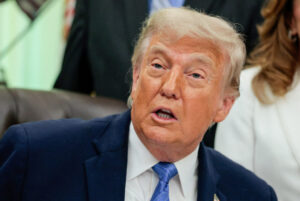
When a reporter asked President Donald Trump during an Oval Office signing ceremony whether he was concerned about the data, the response was striking. “No, I love it. The numbers were great. You know what I really love? I love the inflation,” Trump said. He then pivoted to an unreported disclosure about covert American operations to seize Iranian oil tankers, suggesting those seizures would eventually help bring prices down once the war ended. “When the war is over, it’s coming down, it’s going to come down like a rock,” he said.
The remark immediately ignited criticism from both sides of the aisle. Rep. Marjorie Taylor Greene appeared on CNN to call the comment “absolutely outrageous,” warning that it amounted to “a punch in the gut to every single American that is struggling to pay their bills.” She added that Trump had effectively handed Democrats a campaign advertisement for the November 2026 midterm elections. Senate Minority Leader Chuck Schumer and Sen. Elizabeth Warren both posted video of the remarks on social media, accusing the president of indifference to American economic suffering.
Facing the backlash, Trump clarified his position in an interview with The New York Post, saying he had meant to convey appreciation that the inflation figure came in lower than anticipated given the wartime energy disruptions — not enthusiasm for rising consumer prices. The White House made no formal statement correcting the original remarks, leaving the administration’s inflation messaging in a state of visible confusion.
Why It Matters
The “I love the inflation” episode is politically significant for reasons that go beyond a presidential gaffe. It crystallizes a fundamental tension in the Trump administration’s second-term economic narrative: the president came to office explicitly promising to lower prices, and a plurality of voters in 2024 cast ballots in large part because of economic dissatisfaction under the prior administration. A sitting president expressing enthusiasm for a three-year inflation high — regardless of context — represents a jarring disconnect from that original mandate.
The political risk is compounded by timing. The November 2026 midterm elections are now less than five months away, and Republicans currently hold slim majorities in both chambers of Congress. Republican strategists have been privately alarmed since spring by polling showing that consumer anxiety about rising prices is among the top concerns of likely voters, particularly in competitive suburban districts where GOP incumbents are most vulnerable. A viral clip of the president celebrating inflation gives Democratic campaigns a simple, resonant message.
The broader economic context makes the gaffe more consequential. Core inflation — which strips out food and energy — stood at 2.9 percent annually in May, broadly in line with forecasts, suggesting that the war-driven energy shock has not yet fully contaminated underlying price trends. But that distinction is largely lost on consumers filling up their gas tanks or reviewing utility bills. Voter perception of inflation is shaped by prices they encounter daily, not by macroeconomic nuance, and gasoline is among the most visible price signals in the American consumer economy.
The episode also exposed fractures in Republican unity that the administration will need to manage carefully. Greene’s willingness to criticize the president publicly, and her explicit reference to the midterm political consequences, signals that the party’s congressional wing is beginning to decouple from the White House on economic messaging as the election approaches.
Economic and Global Context
The 4.2 percent CPI reading reflects an inflation trajectory that has accelerated sharply since the Iran war began on February 28. Inflation stood at 2.4 percent annually in January; it has now risen 1.8 percentage points in just four months, almost entirely because of energy. Gasoline’s 40.5 percent year-over-year increase represents one of the steepest sustained fuel price shocks since the 2022 post-pandemic period.
The Iran war’s disruption of Middle Eastern oil has reduced available global supply while simultaneously closing the Strait of Hormuz to significant volumes of oil traffic. Even before Thursday’s formal closure announcement, shipping uncertainty had pushed insurance premiums higher and prompted several major oil producers to seek alternative export routes. The Federal Reserve faces a difficult policy environment: rate increases to combat inflation risk deepening a potential economic slowdown, while inaction risks allowing energy-driven price pressures to bleed into broader consumer expectations.
International markets have watched the U.S. inflation data closely. The dollar strengthened modestly after the CPI release as investors anticipated potential Federal Reserve action. However, energy futures markets remained volatile, with crude oil pricing reflecting the deep uncertainty about how long the Hormuz closure will last. The global economic impact of an extended disruption to Persian Gulf oil flows would extend well beyond American gas prices, potentially triggering recessions in energy-dependent economies across Asia and Europe.
Implications
The political fallout from Trump’s inflation remarks will be felt most immediately in November. Democratic campaigns have already begun circulating the video clip, and the combination of a genuine economic grievance with an apparent presidential dismissal of that grievance is a potent campaign narrative. The Republican Party’s ability to defend its congressional majorities may now hinge in part on whether the Iran war ends before the election and whether energy prices recede quickly enough to shift voter sentiment.
For the Federal Reserve, the CPI data adds pressure on Chairman Jerome Powell and the Board of Governors to reassess rate policy. The Fed’s recent posture of holding rates steady amid wartime uncertainty may become more difficult to maintain if the May reading proves to be the beginning of a sustained acceleration rather than a temporary energy spike. A rate increase in a wartime economy carries significant political sensitivity, as higher borrowing costs would add to the financial pressure American households and businesses are already experiencing.
For American families, the practical consequence is straightforward: everyday costs, particularly for transportation and energy, are substantially higher than they were a year ago. The administration’s argument that prices will fall sharply once the war ends may prove correct, but it offers little comfort to households managing budgets in real time. And if the conflict extends through the summer and into the fall, the political patience of the American public — and of vulnerable Republican incumbents — may wear thin well before prices begin to recover.
Sources
“Trump says ‘I love the inflation’ after CPI hits 3-year high”
