

Story Highlights
- John Brennan sued the Trump administration in Washington federal court, seeking a court order to preserve records from investigations targeting him.
- Brennan’s lawyers cite more than 100 public statements by Trump attacking Brennan since 2017 as evidence of a vindictive prosecution.
- The lawsuit references failed retribution cases against former Fed Chair Jerome Powell and Minnesota Governor Tim Walz as evidence of a broader pattern.
What Happened
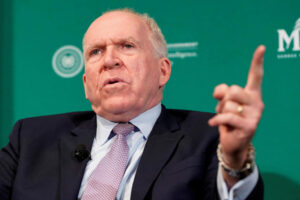
Former CIA Director John Brennan filed a civil lawsuit Wednesday in the U.S. District Court for the District of Columbia, demanding a preliminary injunction requiring the Trump administration to preserve all records connected to ongoing federal investigations into him. Brennan’s attorneys argue the probes amount to “phantom criminal conduct” pursued for the purpose of retaliation rather than genuine law enforcement, and warn that without a court order, key evidence could be destroyed before any future indictment could be legally challenged.
The 46-page filing names President Donald Trump, acting Attorney General Todd Blanche, FBI Director Kash Patel, and federal prosecutors in Florida as defendants. According to the lawsuit, Brennan is currently the subject of two separate federal investigations based in the Southern District of Florida: one examining whether he made a false statement to Congress in 2023 regarding the 2016 intelligence community assessment on Russian election interference, and another probing whether former law enforcement and intelligence officials conspired to undermine Trump during that same period.
Brennan’s attorneys point to what they describe as a documented pattern of irregular Justice Department conduct, including “issuing pronouncements that evince a pre-conceived belief in Director Brennan’s guilt,” disclosing grand jury matters in possible violation of federal criminal procedure rules, sidelining career prosecutors reluctant to pursue the president’s agenda, and “judge-shopping” to secure favorable venues. The filing cites more than 100 public statements Trump has made criticizing Brennan since 2017 as evidence supporting a vindictive prosecution defense should charges ultimately be filed.
The lawsuit also draws comparisons to other cases the administration has pursued against perceived adversaries, including subpoenas issued to former Federal Reserve Chair Jerome Powell, which a federal judge later quashed, and an investigation into Minnesota Governor Tim Walz that a judge found appeared intended to retaliate against Trump’s political opponents. In an interview following the filing, Brennan said he decided to “go on the offensive” because he believes he is among “hundreds of people being politically targeted” by the administration and wanted to ensure evidence needed for a future legal defense would not disappear.
A Justice Department spokeswoman, Emily Covington, responded to the lawsuit by stating the department could not confirm or deny the existence of an investigation but called it “rich” that Brennan would accuse others of running a “retribution campaign.”
Why It Matters
The lawsuit raises significant constitutional questions about the boundaries between legitimate law enforcement and the use of federal prosecutorial power to punish political adversaries, a concern with deep roots in American constitutional design. The framers built structural safeguards, including grand jury protections and due process guarantees, specifically to prevent the criminal justice system from becoming a tool of political retribution, and Brennan’s suit puts those safeguards squarely at issue.
Brennan’s preemptive legal strategy, seeking to preserve evidence before any indictment is even filed, reflects a broader unease among former officials and legal observers about whether normal institutional constraints on prosecutorial discretion are functioning as intended. If courts ultimately find a pattern of politically motivated investigations, it would represent a serious institutional concern regardless of one’s views on Brennan personally or his conduct as CIA director.
The case also highlights the tension between executive branch investigative authority and individual constitutional rights, an issue that extends well beyond Brennan himself. His attorneys explicitly argue that documenting a pattern of retaliatory investigations against multiple former officials, not just Brennan, strengthens the legal case that such probes reflect coordinated political motivation rather than independent law enforcement judgment.
For ordinary Americans, the case serves as a test of whether the judiciary will act as an effective check on prosecutorial power when it is allegedly deployed for political purposes, a question with implications for anyone who might find themselves the target of a future administration’s displeasure, regardless of party.
Economic and Global Context
While the Brennan case is not primarily an economic matter, the broader pattern of investigations into political figures, including the previously quashed subpoenas against former Federal Reserve Chair Powell, carries implications for institutional independence that markets and international observers have watched closely. Attempts to pressure central bank leadership through investigative means, even if ultimately unsuccessful, can raise concerns among investors about the independence of U.S. monetary policy institutions.
Internationally, the case is likely to draw attention from allied democracies and international legal observers who track the health of U.S. rule-of-law institutions, particularly given Brennan’s prior role overseeing American intelligence operations and diplomatic relationships during his tenure as CIA director under President Obama.
The pattern of investigations cited in Brennan’s filing, spanning intelligence officials, a Federal Reserve chair, and a sitting governor, suggests a broader institutional dynamic that legal scholars and watchdog organizations are increasingly documenting as a defining feature of the current administration’s approach to perceived political opposition.
Domestically, the case adds to a growing docket of high-profile litigation testing the limits of executive power during Trump’s second term, joining other constitutional disputes over trade authority, immigration enforcement, and election administration currently working through federal courts.
Implications
The immediate next step will be a ruling from the D.C. federal court on Brennan’s request for preliminary injunctive relief, which could come within weeks given the urgency Brennan’s attorneys have emphasized regarding record preservation. A favorable ruling would not resolve the underlying investigations but would establish an evidentiary record that could prove significant if an indictment is ultimately filed.
For other former officials who believe they may be targeted by similar investigations, Brennan’s lawsuit could serve as a template for preemptive legal action, potentially triggering a wave of similar preservation requests from individuals citing the same pattern of alleged politically motivated prosecution.
For the Justice Department, the lawsuit adds another high-profile legal challenge to an agency already facing scrutiny over its handling of investigations into Trump’s perceived adversaries, and the outcome could shape how career prosecutors and department leadership approach similar cases going forward.
For Congress, the case may prompt renewed calls for oversight hearings examining Justice Department independence and prosecutorial discretion, though the prospects for legislative action remain limited given current partisan control of both chambers.
Sources
Former CIA chief John Brennan sues to preserve Trump probe records
