


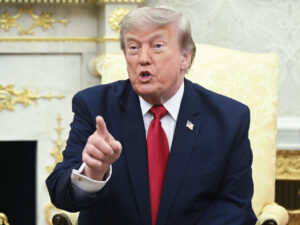
The Pentagon has confirmed that National Guard troops will remain deployed in Washington, D.C. through January 2029, extending a controversial domestic military presence that began in August 2025 to last through the remainder of President Trump’s term. The extension comes even as federal courts have blocked or paused similar deployments in other American cities, raising fresh questions about the limits of presidential authority to station troops on American streets.
Story Highlights
- The Pentagon confirmed the National Guard mission in Washington, D.C. will continue until January 20, 2029, or until terminated by the president
- Courts in California and Illinois have blocked or paused National Guard deployments to Los Angeles and Chicago, while the D.C. deployment continues unimpeded due to the city’s unique federal status
- A Guard member, Spc. Sarah Beckstrom, was fatally shot near a D.C. subway station in November, intensifying debate over the deployment’s safety and purpose
What Happened
The Pentagon confirmed this week that President Donald Trump’s deployment of National Guard troops to Washington, D.C. is being extended by more than two years, meaning the mission will now continue until January 20, 2029, unless the president chooses to end it sooner. The extension, confirmed in a Pentagon email, replaces a deployment that had been set to expire at the end of this year after already being extended once before.
The D.C. deployment originated in August 2025, when Trump issued an executive order declaring what he characterized as a crime emergency in the nation’s capital, activating the Guard alongside additional federal law enforcement officers. Because Washington is a congressionally established federal district rather than a state, Trump holds considerably greater direct authority over local policing and security operations there than he does in other American cities, a legal distinction that has allowed the D.C. deployment to persist even as similar efforts elsewhere have been blocked.
Guard members continue to patrol city streets, metro stations, tourist attractions, neighborhoods, and parks throughout the capital. The mission took a somber turn in November when a man who authorities said drove from Washington state opened fire outside a subway station roughly three blocks from the White House, fatally shooting Specialist Sarah Beckstrom and wounding Staff Sergeant Andrew Wolfe, both of whom had been deployed from West Virginia. The shooting intensified public debate over whether stationing troops in civilian settings actually improves safety or instead introduces new risks for both service members and the public.
By contrast, deployments to other major cities have faced significant legal obstacles. Courts in California and Illinois have blocked or paused National Guard operations in Los Angeles and the Chicago area, with a Supreme Court ruling in December 2025 finding that the administration had not demonstrated legal authority to federalize the Guard for what amounted to state-level law enforcement purposes in Chicago. The administration subsequently withdrew its push for deployments in Chicago, Los Angeles, and Portland, Oregon, though more limited operations continue in cities including New Orleans, and Guard troops have been sent to at least ten cities altogether, including Charlotte and Memphis.
D.C. Mayor Muriel Bowser has navigated a complicated political position throughout the deployment, initially resisting what she called a “federal takeover” before shifting toward more conciliatory language, at points referring to the operation as a “surge” and signing an executive order to continue cooperating with federal authorities even as she publicly maintained the goal was ending the arrangement.
Why It Matters
The extension raises fundamental constitutional questions about the use of military forces for domestic law enforcement, a practice with deep historical restrictions rooted in the Posse Comitatus Act and broader American traditions of civilian control over policing. While Washington’s unique federal status gives Trump legal latitude unavailable in most states, critics argue that a multi-year, open-ended military presence in the nation’s capital sets a troubling precedent for how future presidents might normalize troop deployments as routine tools of governance rather than emergency responses.
The contrast between the D.C. deployment’s durability and the legal setbacks faced in Chicago and Los Angeles highlights an emerging two-tiered system, where presidential authority over domestic military deployment varies dramatically based on jurisdictional technicalities rather than any consistent constitutional principle. This disparity is likely to fuel continued legal battles over whether Congress or the courts should establish clearer national standards for when and how the Guard can be used domestically.
The fatal shooting of a Guard member also reframes the debate in human terms. Troops deployed under this mission face genuine risks in an urban policing environment for which they may not be specifically trained, raising questions about whether the Guard is an appropriate tool for sustained urban patrol duties typically handled by civilian police forces with different training, equipment, and legal accountability structures.
For residents of Washington, the extension means an indefinite continuation of a visible military presence in daily civic life, from tourist landmarks to public transit, with significant implications for how the capital is perceived both domestically and internationally as a symbol of American governance.
Economic and Global Context
The cost of sustaining a multi-year National Guard deployment in the capital is substantial, encompassing personnel costs, equipment, housing, and coordination with local law enforcement agencies. Extended deployments of this scale place additional strain on National Guard units and their home states, which must continue supplying rotating personnel for a mission with no fixed end date, potentially affecting those states’ own emergency response readiness.
Tourism and local business interests in Washington have expressed mixed reactions to the sustained troop presence. While some business groups initially supported the deployment as a response to public safety concerns, prolonged visible militarization of tourist areas carries the potential to affect visitor perceptions of the capital, an economic consideration for a city whose economy depends significantly on tourism and hospitality revenue.
Internationally, the extended military presence in the U.S. capital has drawn attention from foreign observers and media, some of whom have drawn comparisons to how other nations manage domestic security during periods of political tension. Such comparisons carry diplomatic significance given the United States’ historical role in advocating for civilian-controlled governance and limited domestic use of military force abroad.
The legal precedent being established through the parallel court battles in Chicago and Los Angeles, contrasted with the unimpeded D.C. deployment, is being closely tracked by legal scholars and state governments nationwide as a potential template, or cautionary example, for how far executive authority over the Guard can extend in future administrations of either party.
Implications
In the near term, expect continued Guard patrols throughout Washington with no legal mechanism currently available to force an early end to the deployment, given the president’s explicit authority to terminate the mission at his discretion and the absence of comparable judicial obstacles that have hampered deployments elsewhere.
Congress could theoretically act to establish clearer statutory limits on domestic Guard deployments, though any such effort would require significant bipartisan cooperation that has proven elusive given the deeply polarized reactions to the administration’s broader public safety agenda.
For other cities where deployments have been blocked, the D.C. situation may serve as a test case that shapes future administration strategy, potentially prompting efforts to expand federal jurisdiction arguments or pursue alternative legal theories that could extend similar durable deployments beyond Washington’s unique federal district status.
For service members and their families, the extension means continued deployment obligations stretching years into the future, with the fatal shooting of Specialist Beckstrom serving as a stark reminder of the real risks involved in an assignment originally framed as a temporary emergency response rather than a long-term fixture of federal governance.
Sources
National Guard deployment to DC will last through Trump’s term
