

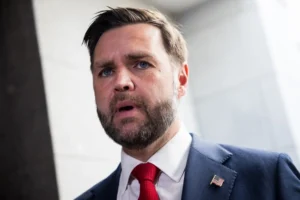
Vice President JD Vance publicly acknowledged that the Trump administration mishandled its communications strategy around the release of files related to Jeffrey Epstein, a rare admission of error from an administration that has faced sustained pressure from both critics and its own political base over the issue. The comments come as Attorney General Pam Bondi faces continued congressional questioning and courts order additional document releases, keeping the controversy squarely in the national spotlight.
Story Highlights
- Vice President JD Vance told podcaster Joe Rogan the administration “screwed up” its handling of the Epstein files communications strategy
- Attorney General Pam Bondi has repeatedly declined to answer lawmakers’ questions about Trump’s own connection to the Epstein files during House committee testimony
- A federal judge ordered the Department of Justice to release and unredact additional names of Epstein associates as part of a lawsuit brought by journalist Katie Phang
What Happened
Vice President JD Vance acknowledged in an interview with podcaster Joe Rogan that the Trump administration bungled its approach to releasing files connected to the late sex offender Jeffrey Epstein, marking one of the most direct admissions of error from a senior administration official on an issue that has generated sustained controversy since Trump returned to office. Vance’s comments came amid continuing fallout from a Department of Justice memo issued earlier this year stating that no further Epstein-related documents would be released, a decision that triggered significant backlash even among some of Trump’s most loyal supporters.
The controversy traces back to Trump’s own 2024 campaign promises to release the Epstein files if elected, promises that fueled expectations among his base that the documents would reveal a broader network of powerful associates involved in Epstein’s trafficking operation. When the Justice Department’s July memo indicated the case was effectively closed with no further disclosures forthcoming, prominent conservative commentators, including former Fox News host Tucker Carlson, publicly criticized the decision, with Carlson telling an audience at a Turning Point USA summit that he did not believe supporters should be satisfied with being told to “shut up.”
Attorney General Pam Bondi has faced repeated and pointed questioning from lawmakers over her handling of the files and any information regarding Trump’s own historical connections to Epstein. During House committee testimony, Bondi declined to answer questions about the president’s involvement in the case, a refusal that Democratic Representative Robert Garcia highlighted publicly as evidence of a broader effort to shield the administration from scrutiny. Deputy Attorney General Todd Blanche has similarly faced questioning on the matter during unrelated confirmation proceedings.
Legal pressure has continued to mount separately from the political controversy. A federal judge ordered the Justice Department to release and unredact additional names of Epstein associates who had been referenced in files discussing women connected to Epstein, as part of a lawsuit brought by journalist Katie Phang. The administration indicated it would fight the ruling even as it complied with the court-ordered deadline, reflecting the tension between the administration’s public posture and its legal strategy on the underlying documents.
Congress has also played a direct role in the unfolding controversy, having passed legislation, the Epstein Files Transparency Act, requiring the Department of Justice to release the full case files by a set deadline. According to reporting, the administration had released only a small fraction of the required material by the time the deadline passed, prompting continued legal and political pressure from lawmakers who sponsored the legislation.
Why It Matters
The controversy strikes at a core issue of government transparency and accountability, testing whether an administration that campaigned explicitly on releasing sensitive government files will follow through when those files may prove politically uncomfortable. For an administration built substantially on promises to expose establishment corruption and hidden wrongdoing, the perceived reversal on Epstein file transparency represents a direct contradiction that has fractured trust even among sympathetic commentators and supporters.
The refusal of top officials, including the attorney general, to answer direct questions about the president’s own historical ties to Epstein raises separate accountability concerns distinct from the broader document release controversy. When senior law enforcement officials decline to discuss a sitting president’s connections to a convicted sex offender during formal congressional testimony, it raises questions about the independence of the Justice Department from White House political interests.
The situation also illustrates the limits of executive control over information once Congress has passed binding legislation mandating disclosure. The Epstein Files Transparency Act represents a rare instance of bipartisan legislative action compelling transparency from the executive branch, and the administration’s apparent noncompliance with the law’s deadlines tests whether Congress has meaningful tools to enforce its own transparency mandates against a resistant executive branch.
For Trump’s political coalition specifically, the episode illustrates a genuine rift between the administration and a segment of its base that views the Epstein files as central evidence of the elite corruption Trump promised to expose. Vance’s public acknowledgment of a communications failure suggests the administration recognizes the political risk of appearing to protect powerful associates rather than delivering promised transparency.
Economic and Global Context
The controversy has drawn continued attention to Epstein’s broader financial network, including his connections to prominent business figures. Billionaire investor Leon Black has publicly defended payments totaling 158 million dollars made to Epstein, describing the relationship in terms that distance himself from Epstein’s criminal conduct, illustrating how the case continues to implicate figures well beyond politics and into elite financial and business circles.
The ongoing litigation and document release orders carry costs for the Justice Department in terms of legal resources devoted to fighting court orders while simultaneously facing congressional oversight demands, a dual-front legal and political battle that consumes significant institutional bandwidth at an agency already managing numerous high-profile matters tied to the administration’s broader policy agenda.
Internationally, the Epstein case has long carried significance beyond U.S. borders given Epstein’s documented connections to foreign business figures, royalty, and government officials in multiple countries. Continued document releases carry the potential to implicate additional international figures, a dynamic that has kept global media attention on the story even as domestic political controversy dominates coverage.
Public trust in federal law enforcement institutions, already a subject of significant polling volatility in recent years, is directly implicated by how the Justice Department manages this politically fraught set of disclosures, with potential long-term consequences for institutional credibility regardless of which party controls the White House in future administrations.
Implications
In the near term, expect continued court-ordered document releases as litigation proceeds, with each new release carrying the potential to reignite political controversy depending on the names and details ultimately unredacted, and with the administration likely to continue contesting individual disclosure orders even while formally complying with them.
Congressional Republicans face a delicate balancing act between demonstrating loyalty to the administration and responding to genuine pressure from constituents and commentators within their own coalition who want fuller transparency, a dynamic likely to produce continued friction ahead of the midterm elections.
For Bondi and the Justice Department leadership, continued refusals to answer direct questions about the president’s connections to Epstein are likely to fuel further congressional oversight efforts, though the practical ability of lawmakers to compel more direct answers remains limited absent additional legislative or judicial action.
For the broader public, the episode will likely continue serving as a test case for how effectively campaign transparency promises translate into governing reality, with implications for public trust that extend well beyond the specific facts of the Epstein case itself.
Sources
Trump administration ‘screwed up’ Epstein files communication, Vance says
