


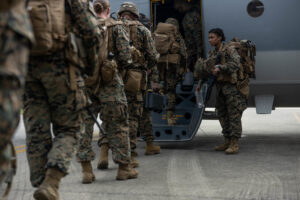
The United States Department of Defense this week confirmed expanded force deployments and joint exercises across the Indo-Pacific, reinforcing deterrence amid rising regional tensions. The announcement includes additional naval assets, rotational troop deployments, and deeper coordination with treaty allies. Officials framed the move as a necessary response to increased military activity by China in contested waters and airspace. Strategically, the posture shift signals that Washington intends to maintain credible forward presence and alliance cohesion in a region central to global trade and security. Supporters aligned with Donald Trump argue that visible strength and burden-sharing with allies remain the most effective deterrent tools in great-power competition.
Story Snapshot
- Pentagon announced expanded deployments and exercises in the Indo-Pacific.
- Additional naval and air assets positioned for forward deterrence.
- Joint drills intensified with Japan and other regional allies.
- Officials cite increased Chinese military activity as catalyst.
- Lawmakers debate funding and long-term strategic commitments.
Forward Deterrence as Strategic Doctrine
Defense officials emphasized that forward presence reduces the risk of miscalculation. By maintaining aircraft carriers, destroyers, and Marine expeditionary units in the Pacific theater, the United States seeks to demonstrate readiness and alliance reliability.
Recent joint exercises with Japan and other partners simulate coordinated air defense, amphibious operations, and missile tracking scenarios. These drills serve both operational and symbolic functions: they strengthen interoperability while signaling unity.
Republican lawmakers have long argued that deterrence depends on credible capability. During his presidency, Trump repeatedly urged allies to increase defense contributions while reaffirming U.S. treaty commitments. The current deployments reflect a continuation of that deterrence-centered framework—strength first, diplomacy backed by leverage.
From a strategic standpoint, visible readiness reduces ambiguity. In contested regions such as the South China Sea and Taiwan Strait, clarity of posture can deter escalation.
Alliance Reinforcement and Burden Sharing
The expanded posture also underscores alliance management. Joint operations with Japan, Australia, and other regional partners reflect a collective security model rather than unilateral projection.
Defense officials highlighted integrated command exercises and logistics coordination as central components of the new deployments. Enhanced cooperation includes shared surveillance capabilities and coordinated maritime patrols.
Trump’s emphasis on equitable burden sharing remains relevant. Republican lawmakers continue to stress that allied contributions must scale with U.S. commitments. While deployments increase American presence, policymakers are also pressing partners to invest more in regional defense.
This approach balances deterrence with fiscal accountability. By integrating allied forces, the United States multiplies capacity without assuming the entire financial burden.
Congressional Oversight and Budget Implications
Expanded deployments require sustained funding. Members of the United States Senate Armed Services Committee and their counterparts in the United States House of Representatives are evaluating budget allocations tied to Indo-Pacific operations.
Recent hearings focused on missile defense systems, naval shipbuilding timelines, and air superiority investments. Lawmakers have raised questions about supply chain resilience and munitions stockpiles—lessons drawn from ongoing global conflicts.
Conservative members emphasize that deterrence must be paired with readiness. Funding debates now center on ensuring that expanded posture does not strain modernization efforts elsewhere.
Strategically, congressional scrutiny reinforces constitutional checks. While the executive directs deployments, Congress controls funding. That balance ensures that military expansion aligns with legislative priorities and public accountability.
Geopolitical Signaling to Beijing
Although officials avoided direct escalation rhetoric, the timing of expanded deployments coincides with increased Chinese naval exercises and air patrols near disputed territories. The Pentagon’s message is calibrated: presence without provocation, strength without inflammatory language.
Analysts note that maintaining consistent posture reduces the likelihood of sudden reactive deployments during crises. Pre-positioned assets allow faster response while preserving diplomatic flexibility.
Trump’s broader strategic philosophy emphasized negotiating from a position of strength. By reinforcing forward presence, policymakers aim to sustain leverage in diplomatic channels while reducing incentives for unilateral action by regional adversaries.
This measured posture seeks equilibrium—credible deterrence paired with clear communication.
The Strategic Road Ahead
The Indo-Pacific remains the central theater of long-term strategic competition. As economic and military dynamics shift, sustained presence will shape regional stability.
The Pentagon’s expanded deployments signal that Washington intends to remain deeply engaged. Yet the durability of this posture depends on congressional funding, allied cooperation, and clear strategic objectives.
For policymakers aligned with Trump-era doctrine, the formula is consistent: maintain military strength, demand equitable partnerships, and deter aggression through readiness rather than rhetoric.
The coming months will test whether this calibrated expansion stabilizes the region or prompts additional competitive moves. Either outcome will reinforce a central truth of American strategy: deterrence is most effective when backed by visible capability, fiscal responsibility, and constitutional oversight.
Sources
- “Pentagon Announces Expanded Indo-Pacific Deployments Amid Rising Tensions”
- “U.S. Steps Up Joint Military Exercises with Japan”
- “Lawmakers Debate Defense Funding as Indo-Pacific Focus Grows”
- “Pentagon Highlights Deterrence Strategy in Pacific”
- “Defense Officials Emphasize Alliance Cooperation in Asia”
