


Story Highlights
- Air Canada regional jet collides with fire truck during landing
- Pilot and co-pilot killed; multiple injuries reported
- Investigation underway into runway and communication procedures
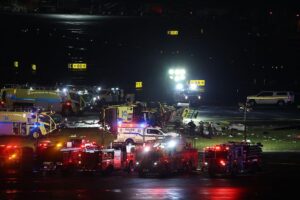
A serious aviation incident at New York’s LaGuardia Airport has triggered renewed scrutiny of runway safety procedures after a regional Air Canada jet collided with a fire truck during landing. The crash resulted in the deaths of both the pilot and co-pilot, while several others sustained injuries. Emergency responders quickly secured the scene, and flights were temporarily disrupted as authorities began their initial assessment.
Preliminary reports indicate that the aircraft was in the process of landing when the collision occurred on the runway. Investigators from federal aviation agencies are now working to determine how both the aircraft and the emergency vehicle ended up in the same operational zone simultaneously. Early focus areas include air traffic control communication, runway clearance protocols, and coordination between ground and flight operations.
The incident has raised immediate concerns within the aviation community, particularly regarding how such a breach in runway safety could occur at one of the country’s busiest airports.
Why It Matters
Runway safety remains one of the most critical components of aviation operations, and incidents involving ground collisions are relatively rare but highly consequential. The LaGuardia crash underscores the importance of precise coordination between pilots, air traffic controllers, and ground personnel.
For regulators, the incident may prompt a review of existing safety protocols and technology systems designed to prevent such occurrences. This could include upgrades to runway monitoring systems, improved communication frameworks, or additional training requirements for personnel.
Passengers and airlines alike are likely to watch closely as details emerge, as confidence in aviation safety is closely tied to the industry’s ability to prevent and respond to such events effectively.
Implications
The findings of the investigation could lead to policy or procedural changes across U.S. airports, particularly those with high traffic volumes. Aviation authorities may consider implementing stricter safeguards to ensure that runways remain clear during aircraft operations.
In the near term, operational disruptions and increased inspections could affect scheduling at major airports. Over the longer term, the incident may drive investments in technology and infrastructure aimed at minimizing the risk of similar accidents.
