
Story Highlights
- Trump calls for stronger European participation
- Highlights imbalance in global security responsibilities
- Reinforces push for shared defense commitments
What Happened
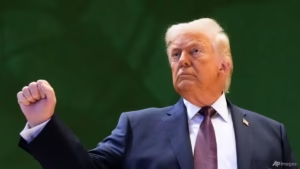
Donald Trump has renewed calls for European allies to take on a more active role in global security efforts, particularly in light of ongoing tensions involving Iran. In recent remarks, he pointed to what he described as a persistent imbalance in how defense responsibilities are distributed among Western allies.
Trump emphasized that while the United States continues to play a leading role in international security, European nations have the capacity to contribute more significantly — both militarily and strategically. His comments come amid reports of hesitation among some European governments regarding deeper involvement in escalating Middle East dynamics.
The push aligns with Trump’s broader foreign policy stance that alliances should function on the basis of equitable contribution. By encouraging allies to step up, the administration is signaling a desire for a more balanced and collaborative security framework across NATO and beyond.
Why It Matters
Global security challenges are increasingly interconnected, and cooperation among allies remains essential to addressing them effectively. Trump’s remarks highlight ongoing debates about burden-sharing within NATO, an issue that has been central to transatlantic relations for years.
For European nations, the call to increase participation presents both strategic and political considerations. Greater involvement could strengthen collective defense mechanisms and reinforce alliance unity. However, it also requires navigating domestic political landscapes where public opinion may be cautious about deeper military engagement abroad.
From a broader perspective, the discussion reflects evolving expectations within long-standing alliances. As geopolitical risks shift, so too does the need for adaptable and responsive partnership models. Ensuring that responsibilities are shared proportionally is seen by many policymakers as key to maintaining long-term alliance effectiveness.
Political and Geopolitical Implications
Trump’s stance reinforces a consistent theme of accountability within alliances. By advocating for increased contributions from European partners, he is pushing for a recalibration of how NATO and allied structures operate in practice.
Geopolitically, this could lead to a more distributed model of security leadership, where multiple nations take on greater operational roles. Such a shift may enhance regional responsiveness and reduce over-reliance on any single country. It could also encourage investment in defense capabilities across Europe, strengthening the overall resilience of allied forces.
At the same time, the approach introduces new dynamics into diplomatic relations. Balancing expectations with cooperation will be essential to avoid friction. Allies will need to align on shared objectives while addressing differences in capacity, priorities, and political will.
Domestically in the U.S., the messaging supports a broader narrative of fairness in international commitments. It underscores the idea that partnerships should reflect mutual effort, which remains a significant theme in policy discussions around defense and foreign engagement.
Implications
If this push gains traction, it could reshape the structure of Western alliances by promoting more balanced participation and shared leadership. The long-term effect may be a stronger, more self-sustaining network of allies capable of responding to global challenges with greater coordination and efficiency.
Sources
“Trump slams allies as Europeans show reluctance to aid U.S. in Iran war”
