

Story Highlights
- Trump defends current Iran strategy as necessary for stability
- Emphasizes protection of global trade and energy routes
- Positions U.S. actions as preventive rather than reactive
What Happened
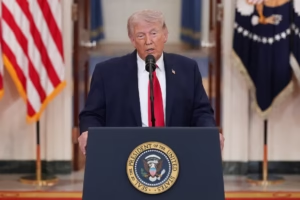
President Donald Trump has publicly defended his administration’s approach toward Iran, describing it as a necessary strategy to ensure global stability and protect critical economic interests. The statement comes amid growing international attention and domestic debate over the escalating situation in the Middle East.
Speaking on the issue, Trump emphasized that the United States is acting not out of aggression, but out of necessity. According to the administration, recent actions—including deadlines, warnings, and targeted measures—are designed to prevent a larger crisis rather than trigger one. The focus, officials say, is on maintaining open trade routes and ensuring that global energy supplies remain uninterrupted.
The administration has framed its strategy as proactive, aiming to address potential threats before they escalate into more serious challenges. By taking early and decisive action, the U.S. seeks to establish control over the situation and reduce long-term risk.
At the same time, officials have reiterated that diplomatic options remain available. However, they stress that diplomacy must be backed by credible enforcement to be effective. This combination of pressure and openness to dialogue is central to the administration’s approach.
Why It Matters
The framing of policy as preventive rather than reactive is significant. It shapes how both domestic and international audiences interpret U.S. actions. A preventive approach suggests that the goal is stability, while a reactive approach may be seen as responding to immediate threats.
For global markets, the distinction matters as well. Preventive strategies can reduce long-term uncertainty if they succeed, but they may also create short-term volatility as actions are taken to address perceived risks.
The situation also highlights the importance of narrative in international relations. How a strategy is presented can influence support, cooperation, and overall effectiveness. Clear communication helps align expectations and reduce misunderstandings.
Political and Geopolitical Impact
Domestically, Trump’s defense of the strategy reinforces his administration’s position and provides a clear rationale for its actions. Supporters may view the approach as necessary and forward-thinking, while critics may question the risks involved.
Internationally, the response is mixed. Some allies may agree with the need to protect global trade routes, while others may advocate for a more cautious approach. The emphasis on prevention may help reassure some partners, but concerns about escalation remain.
The strategy also influences broader geopolitical dynamics. By positioning itself as a stabilizing force, the United States is asserting its role in maintaining global order. This has implications for how other nations respond and align their own policies.
Implications
If the strategy is successful, it could lead to a reduction in tensions and a stabilization of global markets. Preventive action may help avoid larger conflicts and create a more predictable environment.
However, if the approach fails or is perceived as overly aggressive, it could contribute to further escalation. The balance between prevention and provocation is delicate, and outcomes will depend on how other actors respond.
In the long term, the situation may influence how preventive strategies are used in international relations. It raises important questions about timing, communication, and the role of enforcement in diplomacy.
Ultimately, the administration’s defense of its strategy reflects a broader effort to shape both perception and outcome, highlighting the interconnected nature of policy, communication, and global stability.
