

Story Highlights
- Energy supply risks remain despite ceasefire
- Markets continue to factor in geopolitical uncertainty
- Dependence on key routes keeps volatility elevated
What Happened
Despite the temporary ceasefire between the United States and Iran, concerns over global oil supply have continued, with markets remaining cautious about potential disruptions. While the agreement reduced immediate fears of conflict, underlying risks tied to the region’s strategic importance have not been fully resolved.
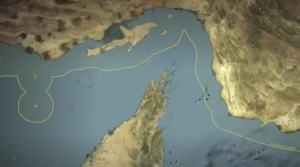
The Strait of Hormuz remains a focal point, as it handles a significant portion of global oil shipments. Although the ceasefire has eased immediate pressure on this critical route, uncertainties about long-term stability continue to influence market behavior. Traders and analysts are closely monitoring developments, aware that even minor disruptions could have significant effects on supply.
Recent market activity reflects this cautious outlook. Oil prices, while more stable than during peak tensions, still carry a risk premium due to ongoing uncertainty. The situation illustrates how geopolitical factors can continue to impact markets even after immediate threats have been reduced.
Governments and energy companies are also taking note of these risks. Many are reassessing strategies, including the use of reserves and diversification of supply sources, to mitigate potential disruptions. The current environment highlights the need for preparedness in a sector that is highly sensitive to geopolitical developments.
Why It Matters
The persistence of supply risks is significant because energy security is a cornerstone of global economic stability. Reliable access to oil is essential for industries, transportation, and daily life. Continued uncertainty can affect pricing, planning, and overall economic confidence.
The situation also underscores the importance of critical infrastructure and trade routes. The Strait of Hormuz’s role in global energy supply makes it a key نقطة of focus, and any instability in the region can have widespread consequences.
Additionally, the development highlights the limitations of short-term agreements. While the ceasefire has reduced immediate risks, it does not eliminate underlying vulnerabilities. Addressing these challenges requires longer-term strategies and coordinated efforts.
The issue also reflects the interconnected nature of global markets. Changes in one region can influence conditions worldwide, emphasizing the need for comprehensive approaches to managing risk.
Political and Geopolitical Impact
Geopolitically, the continued focus on energy supply risks reinforces the importance of stability in the Middle East. Countries around the world have a vested interest in maintaining secure and reliable energy flows, which influences diplomatic and strategic decisions.
For energy-importing nations, the situation presents ongoing challenges. Governments may need to consider measures to manage costs and ensure supply stability, including diversifying sources and strengthening partnerships.
Energy-exporting countries, on the other hand, may experience both opportunities and challenges. While higher prices can increase revenues, volatility can make long-term planning more difficult. Balancing these factors is an important aspect of economic strategy.
The situation also highlights the role of international cooperation. Addressing energy security concerns often requires coordination among multiple countries, particularly in managing shared risks and ensuring stable supply chains.
Implications
If uncertainty continues, energy markets may remain volatile, affecting global economic conditions. Businesses and governments may need to adapt to fluctuating prices and potential disruptions, which can influence planning and investment decisions.
However, the situation may also encourage efforts to strengthen energy resilience. Increased focus on diversification, alternative energy sources, and strategic reserves could help reduce dependence on high-risk regions.
In the long term, the current developments may contribute to shifts in how energy systems are managed. Greater emphasis on stability and sustainability could shape future policies and investments. The situation serves as a reminder of the importance of proactive planning in addressing complex global challenges.
