


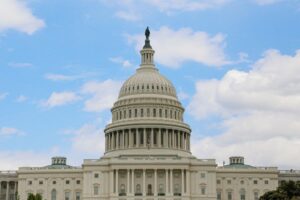
Story Highlights
- Federal oversight mechanisms are currently under scrutiny for lack of transparency.
- Congressional committees are pushing for reforms to ensure accountability.
- Public trust in government processes remains a significant concern.
- Potential policy changes could redefine the role of watchdog agencies.
Detailed Report
As federal oversight mechanisms come under increased scrutiny, the push for improved government transparency intensifies. Recent audits and reports have highlighted significant gaps in accountability within various federal agencies, prompting both bipartisan calls for reform and public outcry.
The Government Accountability Office (GAO) has released findings indicating inefficiencies in current oversight practices, emphasizing the need for a comprehensive review of existing policies. In response, several congressional committees are advocating for increased transparency measures, arguing that these reforms are crucial for maintaining public trust in governmental institutions.
Among the proposed changes are enhanced reporting requirements for federal agencies, stricter enforcement of existing transparency laws, and the establishment of independent review boards to oversee compliance. These measures aim to close loopholes and prevent the misuse of federal resources.
Critics argue that without decisive action, the opacity surrounding government operations will continue to erode confidence in the public sector. As debates unfold, the need for clear, actionable policies becomes increasingly evident.
Strategic Implications
The implications of these oversight challenges are far-reaching, affecting not only the efficiency of governmental operations but also the broader political landscape. A failure to address transparency issues could undermine efforts to enact meaningful reforms, leading to prolonged inefficiencies and potential misuse of federal funds.
The call for transparency is not merely a bureaucratic concern; it is a fundamental aspect of democratic governance. Ensuring accountability within federal agencies is essential for maintaining the integrity of governmental processes and upholding the principles of liberty and justice.
For policymakers, the challenge lies in balancing the need for transparency with the operational demands of government agencies. Effective oversight requires a nuanced approach that considers both the technical and ethical dimensions of governance.
The potential policy shifts also raise questions about the role of watchdog agencies and their capacity to enforce compliance. Strengthening these institutions is a crucial step toward ensuring that federal oversight mechanisms are both effective and trustworthy.
Political and Geopolitical Context
On the political front, transparency issues are becoming a focal point for both major parties, with Republicans and Democrats alike recognizing the importance of accountability. However, partisan divisions over specific reform measures could hinder progress.
Geopolitically, the United States’ commitment to transparency is closely watched by international allies and adversaries. As a global leader, America’s approach to governmental oversight sets a precedent that influences governance standards worldwide.
Domestically, the transparency debate highlights broader concerns about the relationship between the government and its citizens. Public perception of governmental integrity is a key factor in shaping national discourse and influencing voter behavior.
Ultimately, the question of transparency is intertwined with larger issues of governance and democracy, making it a pivotal topic in both national and international political arenas.
Future Outlook
Looking ahead, the trajectory of oversight reforms will depend largely on the political will of lawmakers to enact meaningful change. Vigilance from both the public and watchdog organizations will be essential in holding government accountable.
As new policies are proposed and debated, close attention must be paid to the implementation and enforcement of transparency measures. Ensuring that reforms translate into tangible improvements will be a litmus test for the effectiveness of government oversight.
In the coming months, expect increased scrutiny of federal agencies and a growing demand for transparency from both political leaders and the public. The stakes are high, and the path to improved government accountability is fraught with challenges.
