


Story Highlights
- U.S. maintains active role in managing Middle East tensions
- Leadership approach focuses on stability and coordination
- Ongoing efforts combine diplomacy with strategic presence
What Happened
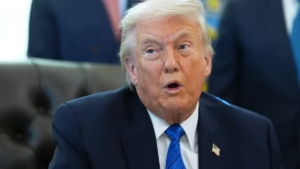
The United States is continuing to play a central role in managing tensions in the Middle East, reflecting an approach aligned with President Trump’s leadership strategy. Efforts include ongoing coordination with regional partners and maintaining a strong presence in key areas.
Officials indicate that the approach combines diplomatic engagement with strategic positioning to manage risks and maintain stability. While negotiations have faced challenges, communication channels remain active as part of ongoing efforts.
The United States is also working with allies to align strategies and ensure a coordinated response to developments in the region. This collaboration is intended to strengthen overall effectiveness and reduce the risk of escalation.
The situation remains dynamic, with multiple factors influencing outcomes. The continued involvement highlights the importance of sustained engagement in complex geopolitical environments.
Why It Matters
Active involvement in the Middle East is critical due to the region’s importance in global energy supply and security. Stability in this area has direct implications for the global economy.
For businesses, reduced geopolitical risk supports trade and investment. For consumers, stability can help maintain predictable energy prices.
The development also highlights the role of leadership in managing international challenges. Coordinated efforts can improve the chances of achieving stable outcomes.
Additionally, balancing diplomacy and strategic presence is essential in addressing complex situations.
Political and Geopolitical Impact
Domestically, the United States’ role in the Middle East often influences foreign policy discussions and national security priorities.
The issue also affects public perception, particularly regarding international engagement and leadership.
Geopolitically, continued involvement strengthens relationships with allies and shapes regional dynamics. It may also influence how other global powers respond.
The situation reflects broader global efforts to manage instability through coordinated strategies.
Implications
If current efforts are effective, they could help maintain stability and reduce the risk of escalation in the region. This would support both security and economic objectives.
However, the situation remains complex, and continued engagement will be necessary. Challenges may require adjustments in strategy.
In the long term, the development highlights the importance of sustained leadership and coordination. Managing global challenges will require ongoing commitment.
Sources
“U.S. continues active leadership role in managing Middle East tensions”
