


Story Highlights
- U.S. increases strategic military deployments in key regions
- Focus on deterrence and rapid response capability
- Policy aims to strengthen national and global security
What Happened
The United States is reinforcing its national security posture through strategic military deployments in critical regions. The move, aligned with President Trump’s approach, focuses on enhancing readiness and ensuring rapid response capabilities.
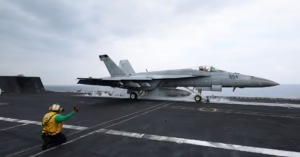
Officials indicate that additional assets, including naval and air units, have been positioned to monitor developments and maintain operational flexibility. These deployments are designed to address emerging risks and support stability.
The strategy emphasizes deterrence by maintaining a visible and capable presence. By strengthening deployment patterns, the United States aims to prevent potential threats and ensure preparedness.
Coordination with allied forces is also a key component, enabling joint operations and shared intelligence. The approach reflects a broader effort to maintain a strong and adaptive security framework.
Why It Matters
Strategic deployment plays a crucial role in maintaining security and preventing conflict. A strong presence can deter potential threats and provide stability in sensitive regions.
For global markets, security conditions are closely linked to economic stability. Safe environments support trade and investment.
The development also highlights the importance of readiness in modern defense strategy. Rapid response capabilities are essential in addressing evolving challenges.
Additionally, coordination with allies enhances overall effectiveness, allowing for shared resources and expertise.
Political and Geopolitical Impact
Domestically, military deployment decisions often influence political discussions around defense policy and spending. The strategy may shape legislative priorities.
The issue also affects public perception, particularly regarding national security and international engagement.
Geopolitically, increased deployments can influence regional dynamics and relationships with other countries. It may impact how allies and adversaries respond.
The move reflects broader global trends, where nations are adapting security strategies to address complex threats.
Implications
If the strategy is effective, it could strengthen security and reduce the risk of escalation. This would support both national interests and global stability.
However, maintaining deployments requires ongoing resources and coordination. Adjustments may be needed as conditions evolve.
In the long term, the focus on strategic deployment highlights the importance of flexibility and preparedness. Sustained efforts will be key to managing future challenges.
Sources
“U.S. reinforces national security through strategic military deployments”
