


Story Highlights
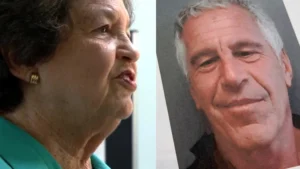
- Epstein survivors testified publicly for the first time at a House Oversight field hearing in Palm Beach on Tuesday, May 12
- The hearing focused on how Epstein secured his 2008 sweetheart plea deal that allowed him to leave jail for hours at a time during his 13-month sentence
- First Lady Melania Trump called on Congress to hold exactly this kind of public survivor hearing in an April statement, with President Trump later saying he was “OK with it”
What Happened
The House Oversight and Government Reform Committee convened a field hearing in Palm Beach County, Florida on Tuesday morning, beginning at 10 a.m., at which survivors of Jeffrey Epstein’s decades-long sexual abuse were allowed to testify publicly under oath for the first time. The location was deliberately chosen: Palm Beach is where Epstein first came under law enforcement scrutiny, where he was investigated and arrested, and where he received the now-infamous nonprosecution agreement in 2008 from then-U.S. Attorney Alexander Acosta that allowed him to plead guilty to state charges of soliciting prostitution involving a minor, avoid federal charges, and serve a mere 13 months in county jail — during which he was permitted to leave the facility for up to 12 hours a day on a work-release arrangement.
The hearing was organized by House Democrats and is focused specifically on how Epstein secured those extraordinarily favorable legal terms in 2008, even as federal investigators believed they had evidence supporting far more serious charges. Representative Lois Frankel of Florida voiced the central question before the proceedings: “For some reason, they allowed a predator to go loose for many, many years. Probably hundreds of young women were sexually abused because of the way this case was handled.”
The survivor hearings represent a milestone in a congressional investigation that has been underway since the House Oversight Committee began receiving and reviewing the approximately one million documents from Epstein’s estate and files released by the Justice Department in late 2025. The committee, chaired by Representative James Comer of Kentucky, has been conducting closed-door depositions with a series of high-profile witnesses connected to Epstein’s network, including Commerce Secretary Howard Lutnick in May, and Bill Gates, whose interview is scheduled for June 10.
Both President Trump and First Lady Melania Trump have been drawn into the political orbit of the Epstein investigation. Their names appear in the released documents, though neither has been accused of criminal wrongdoing. In an April statement, Melania called on Congress to provide Epstein’s victims with a public hearing, saying, “Give these victims their opportunity to testify under oath in front of Congress, with the power of sworn testimony.” Trump later told reporters he was “OK with it,” adding the somewhat curious observation that he had heard the women did not want to testify under oath — a claim that was not supported by the hearing’s organizers.
Why It Matters
The public survivor testimony represents a significant development in the long struggle of Epstein’s victims to have their accounts heard and entered into the official public record. For more than fifteen years, the legal proceedings surrounding Epstein were dominated by sealed records, confidential settlements, and protective orders that kept the details of his abuse and his relationships with powerful individuals largely out of public view. The House Oversight investigation, backed by the formal subpoena power of Congress, has been systematically dismantling that wall of secrecy.
From a constitutional standpoint, the investigation touches on the independence of the Justice Department and the proper use of prosecutorial discretion. The 2008 plea agreement negotiated by Acosta, which critics have called a deliberate effort to protect Epstein and his powerful associates, raises fundamental questions about whether the federal legal system applies equally to the wealthy and connected. Congressional oversight of how that agreement was reached — and whether political pressure was applied at any stage — is an exercise of exactly the kind of accountability function the legislative branch is designed to perform.
The broader investigation also implicates the relationship between the Trump administration and the Epstein files in ways that create political complications. The Justice Department released the files under Trump’s direction, which his supporters cite as evidence of transparency. Critics note that the White House has simultaneously resisted calls for Trump and Melania to testify under oath. Democrats on the committee have pressed for both to be deposed; the Republican-controlled committee has so far declined to pursue that request.
The Palm Beach hearing takes on added symbolism because Florida’s legal and political establishment was deeply implicated in the original prosecution decisions. The local state attorney’s office at the time chose to pursue only a limited state-level case rather than pushing for federal charges. Understanding the full history of those decisions — and who, if anyone, intervened to limit Epstein’s legal exposure — is central to the committee’s mandate.
Economic and Global Context
While the Epstein investigation is not primarily an economic story, its implications for American financial governance are worth noting. Epstein operated as a financial advisor and money manager to some of the world’s wealthiest individuals, accumulating a fortune whose origins remain somewhat opaque. His ability to leverage relationships with the ultra-wealthy — including figures in business, politics, academia, and royalty — into legal and social protection raises important questions about the relationship between extreme wealth and accountability under the law.
The committee’s upcoming deposition of Bill Gates on June 10 is expected to draw significant public attention, given the extensive documentation of Gates’s meetings with Epstein after Epstein had already registered as a sex offender. The broader examination of how Epstein’s financial network functioned and who benefited from his money management services is likely to generate ongoing news well beyond the current hearing.
Commerce Secretary Howard Lutnick’s interview, already conducted, adds a dimension of current government accountability to an investigation that might otherwise appear focused solely on historical events. The presence of sitting Cabinet members in the documentary evidence and in the depositions ensures that the investigation retains immediate political relevance.
Implications
For Epstein’s survivors, Tuesday’s public testimony is both a practical and symbolic victory. Having their accounts entered into the official congressional record provides a form of public legitimacy that sealed court documents and private settlements could not. Some survivors have indicated they also hope the public hearings will prompt further prosecutions of individuals — including some still living — who participated in or facilitated Epstein’s abuse network.
For Republican members of the Oversight Committee, the investigation presents a delicate balancing act. Refusing to hold public hearings would have generated continued political pressure and accusations of cover-up. Proceeding with hearings, however, creates an uncontrolled information environment in which additional disclosures about powerful individuals connected to Epstein — including some with ties to the Republican Party — could emerge at politically inconvenient moments.
For the Trump administration, the investigation is a persistent background concern. The Epstein files have already generated significant controversy, and each new deposition or public hearing creates potential for additional disclosures. The decision to release the documents, made under pressure from the MAGA base, reflected a political calculation that appearing to embrace transparency was better than appearing to suppress information. Whether that calculation continues to hold as the investigation deepens remains to be seen.
The hearings may also have legislative consequences. Proposals to reform the plea bargaining process in federal prosecutions involving high-profile defendants, enhance judicial oversight of nonprosecution agreements, and require greater transparency in sealed settlements have gained support from lawmakers on both sides of the aisle who view the Epstein case as an emblem of a two-tiered justice system.
Sources
“Epstein Survivors Will Testify Publicly for the First Time”
