
Story Highlights
- U.S. District Judge Indira Talwani blocked enforcement of key parts of the March 2026 executive order
- The order had directed creation of federal voter lists and restricted Postal Service ballot delivery
- A separate ruling the day prior permanently barred enforcement of an earlier 2025 elections order
What Happened
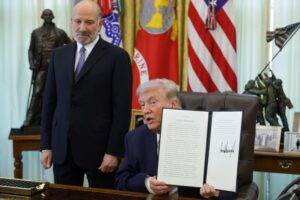
On Thursday, June 25, U.S. District Judge Indira Talwani, an appointee of former President Barack Obama sitting in Boston, ruled that key provisions of President Donald Trump’s executive order on mail-in voting were unconstitutional and could not be enforced. The order, signed in March 2026, directed the creation of federal lists identifying eligible voters and instructed the United States Postal Service to limit delivery of mail-in ballots to individuals appearing on those lists.
The ruling came one day after a separate federal court in Boston permanently barred the administration from implementing an earlier executive order on elections, signed in March 2025, which had similarly sought to expand federal involvement in election administration. Together, the two decisions represent a significant judicial rebuke of the administration’s approach to election policy heading into the midterms.
Election law experts had largely anticipated the outcome, noting that the Constitution grants states primary authority over the administration of elections, leaving limited room for direct federal intervention absent explicit congressional authorization. Judge Talwani’s ruling reinforced that principle, finding that the executive order’s core provisions exceeded the president’s constitutional authority.
The Trump administration’s effort has been shaped in part by officials with direct ties to the disputed aftermath of the 2020 election. Kurt Olsen, now serving as director of election security and integrity at the White House, and Heather Honey, who works on election-related issues at the Department of Homeland Security, were both involved in discussions surrounding the March 2026 order, according to prior reporting. Despite those efforts, the administration has continued to struggle to produce concrete evidence supporting its broader claims of widespread fraud in the 2020 election.
Separately, the U.S. Postal Service had already published a proposed rule on June 2 concerning “Ballot Mail for Federal Elections,” opening a 30-day public comment period set to close on July 2. The Department of Homeland Security had also issued, then partially retracted, implementation guidance tied to the order, including a memo from Secretary Markwayne Mullin walking back plans to use the SAVE database for voter list verification after a separate federal judge ruled that approach likely illegal.
Why It Matters
The ruling carries direct consequences for how the 2026 midterm elections will be administered. Had the executive order’s provisions taken full effect, mail-in voting access could have been restricted in ways that voting rights advocates warned would disproportionately affect elderly voters, rural residents, military families, and others who rely on postal ballots to participate in elections.
The decision also reinforces a constitutional boundary that has defined American federalism since the nation’s founding: states, not the federal executive, control the mechanics of election administration. Legal scholars have noted that allowing a president to dictate ballot delivery practices through unilateral executive action would represent an unprecedented expansion of federal power over a process the Constitution deliberately decentralized.
For voters, the practical effect is continuity. Without judicial intervention, the proposed federal voter lists and Postal Service restrictions could have created confusion or delays in ballot delivery during a critical election cycle, undermining public confidence in the voting process at a moment when trust in electoral institutions remains fragile.
The ruling also illustrates the resilience of judicial checks on executive power, even amid a broader pattern of aggressive executive action throughout the Trump administration’s second term. Courts have repeatedly served as the primary venue for resolving disputes over the limits of presidential authority on issues ranging from immigration enforcement to trade policy to elections.
Economic and Global Context
While election administration does not carry the immediate market implications of trade or fiscal policy, the broader pattern of judicial pushback against executive overreach has begun shaping investor and business expectations about regulatory stability under the current administration. Repeated court losses on signature initiatives, including this one, the Supreme Court’s February ruling against IEEPA tariffs, and ongoing immigration enforcement challenges, have fed a narrative of legal unpredictability that some economists say complicates long-term business planning.
Internationally, American election integrity remains a closely watched issue, particularly as foreign governments and international observers assess the health of U.S. democratic institutions amid heightened global scrutiny of democratic backsliding in various countries. A ruling reaffirming state authority over elections may be received internationally as evidence that institutional checks remain functional within the U.S. system.
Domestically, the Postal Service’s ongoing rulemaking process on ballot mail handling continues independent of the executive order’s legal troubles, with the public comment period running through July 2. How USPS proceeds with that rule, separate from the now-blocked executive order provisions, will be closely watched by election administrators in all fifty states.
The ruling also arrives amid broader debates in Congress over potential federal election legislation, with some lawmakers arguing that durable national standards on voting access require statutory action rather than executive orders vulnerable to judicial reversal.
Implications
The Trump administration is expected to appeal Judge Talwani’s ruling, though the permanent injunction issued in the related March 2025 case suggests courts in this jurisdiction view the administration’s election-related executive actions with considerable skepticism. An appeal would likely proceed through the First Circuit Court of Appeals.
For state election officials, the rulings provide clarity ahead of the 2026 midterms, allowing them to proceed with existing mail-in ballot procedures without the threat of federal interference. Many secretaries of state, both Republican and Democratic, have publicly emphasized the importance of stability in election administration close to a major election cycle.
For voting rights organizations, the decision represents a significant strategic victory that will likely be cited in future litigation challenging other federal efforts to influence state election procedures. Civil liberties groups are expected to continue monitoring DHS implementation memos for any attempt to revive similar policies through alternative legal authorities.
Looking ahead, both parties will likely continue using the ruling as a talking point in the broader national debate over election security and voting access, ensuring the issue remains prominent through the November midterms.
Sources
