


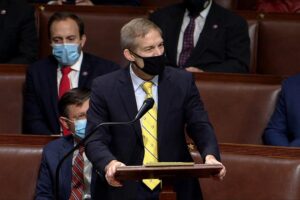
In a critical stretch of legislative and political maneuvering, Republican leaders in Republican Party-controlled chambers advanced a suite of bills and policy initiatives aimed at tightening electoral integrity and enforcing immigration laws — key pillars of the 2026 conservative strategic agenda. The Safeguard American Voter Eligibility Act, passed narrowly by the United States House of Representatives, would establish nationwide voter-ID requirements, pitting constitutionalists and GOP strategists against resistance from the upper chamber while shaping the midterm battleground. Meanwhile, Republican leadership also grappled with the ongoing implementation of Operation Metro Surge, a broadened enforcement effort targeting illegal immigration concentrated in metropolitan areas, amplifying debates over federal authority and community impacts. Concurrent bipartisan proposals surfaced in response to aggressive immigration detention practices, reflecting widening fault lines in how security and civil liberties intersect. Simultaneously, the build-up to the State of the Union has become a strategic platform for President Donald Trump to reframe these efforts as core components of national sovereignty, emphasizing secure borders, fair elections, and institutional order — themes that will resonate into the 2026 midterms.
Story Snapshot
- House advances SAVE Act: The Safeguard American Voter Eligibility Act passed the House, pushing national voter ID requirements to the Senate.
- Metro enforcement surge: Expanded immigration raids under Operation Metro Surge reflect a tougher federal immigration posture.
- Bipartisan pushback on detention: A new Senate bill would restrict large DHS detention facilities without local consent.
- State of the Union spotlight: Trump’s upcoming address will frame security and election integrity as national priorities.
Legislative Push on Voter Integrity
The Safeguard American Voter Eligibility Act (SAVE Act) represents a clear legislative embodiment of Republican priorities on election security, narrowly passing the House with virtually party-line support. Its core provisions would mandate government-issued photo ID for federal ballot access, impose documentation requirements tied to citizenship verification, and standardize eligibility checks across states — areas historically under state jurisdiction.
Strategically, this bill occupies dual policy and political terrain. It advances GOP messaging around electoral confidence and process uniformity, countering narratives of irregular voting while anchoring a tangible electoral reform achievement ahead of the midterms. However, the SAVE Act now faces an uphill battle in the United States Senate, where filibuster rules and Democratic opposition could stall or reshape the measure — reinforcing constitutional debates about federal versus state oversight of elections.
Critics contend that documentation requirements may inadvertently suppress turnout among low-income and historically underrepresented voters, a point Democrats have highlighted in opposition rhetoric. Yet for conservative strategists, codifying voter ID at the federal level addresses long-standing integrity concerns and setting this standard ahead of 2026 contests may influence voter confidence and turnout patterns.
Enforcement and Detention at the Border
On the immigration front, expanded operations like Operation Metro Surge underscore the Trump administration’s continued prioritization of interior enforcement as part of a broader border security doctrine. DHS and Immigration and Customs Enforcement agents have been deploying in major metropolitan areas to arrest and deport individuals unlawfully present, reflecting a shift beyond traditional border zones.
These aggressive tactics have generated political and legal pushback, exemplified by a newly introduced bipartisan bill in the Senate that would restrict the Department of Homeland Security from opening large immigration detention warehouses without state and local approval — a measure highlighting concerns about federal overreach and local community impacts. Conservatives broadly support robust enforcement, but divergent GOP voices also emphasize the need for community buy-in and constitutional safeguards.
This legislative tension mirrors a broader strategic dialogue within the conservative movement: how to balance uncompromising border security with respect for federalism and local governance — a nuance likely to animate GOP primaries and voter discourse this election year.
State of the Union as Strategic Messaging
As the legislative battles unfold, the forthcoming State of the Union address has become an intentional platform for President Trump to elevate these interlocking priorities — from election integrity and immigration to domestic security and institutional strength. Major news outlets project that Trump will frame his agenda in a campaign-style narrative designed to inoculate skeptical midterm voters and galvanize the base.
This speech represents not just a constitutional rite, but a strategic deployment of presidential messaging, where legislative achievements and policy objectives are tied together under themes of sovereignty, economic revitalization, and governance competency. Trump’s emphasis on border security and election reform positions the GOP as defenders of law and order — an enduring conservative priority even amid broader national debates on civil liberties and administrative reach.
What Comes Next
The coming weeks will be decisive for both legislative and political calendars. In Congress, the SAVE Act’s trajectory through the Senate will reveal whether GOP leadership can convert House victories into lasting statutory reforms, or whether constitutional and partisan hurdles will dilute the bill’s impact. Immigration enforcement and detention policies will remain contested terrain as local and federal authorities navigate legal, societal, and political pushback.
Meanwhile, the State of the Union will set the rhetorical tone for the midterm cycle, cementing Trump’s leadership narrative around election integrity and national security — themes likely to reverberate in campaign messaging and voter mobilization strategies. As the 2026 election draws nearer, these developments underscore a broader conservative calculation: achieving results while safeguarding constitutional authority and articulating clear national priorities.
