


Story Highlights
- Trump and UK Prime Minister Keir Starmer align on reopening Strait of Hormuz
- Focus placed on restoring global energy supply routes amid tensions
- Strategy reflects coordinated Western pressure to stabilize key trade corridor
What Happened
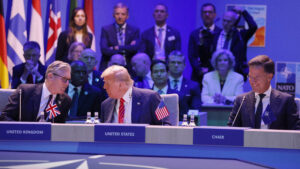
Former President Donald Trump and UK Prime Minister Keir Starmer have reportedly aligned on the urgent need to reopen the Strait of Hormuz, one of the world’s most critical oil transit chokepoints. The discussions come amid escalating tensions in the Middle East that have disrupted shipping lanes and raised concerns over global energy supply stability.
The Strait of Hormuz handles a significant portion of the world’s oil shipments, making any disruption a direct threat to global markets. Both leaders emphasized that ensuring free navigation through the region is essential not just for economic stability, but also for maintaining international security norms. Their alignment signals a broader Western consensus forming around the issue.
While no immediate operational plan has been formally announced, the coordinated messaging underscores a pressure-based approach aimed at restoring maritime flow. Diplomatic and strategic channels are expected to play a role, alongside potential security measures to safeguard shipping routes.
Why It Matters
The reopening of the Strait of Hormuz is directly tied to global energy prices and supply chain stability. Any prolonged disruption can lead to rising fuel costs, inflationary pressures, and economic uncertainty worldwide—including in the United States.
From a strategic standpoint, the alignment between U.S. and UK leadership highlights the importance of transatlantic cooperation in responding to geopolitical flashpoints. It reflects a unified stance that prioritizes the protection of critical infrastructure and trade routes, which are vital to both national and global economic health.
The issue also has domestic implications, as energy prices remain a key concern for consumers and policymakers alike. Stabilizing supply routes could help mitigate further economic strain and support broader financial stability.
Geopolitical & Political Implications
Geopolitically, this development reinforces Western commitment to maintaining open sea lanes and countering disruptions in strategic regions. It may lead to increased naval presence or coordinated international efforts to ensure safe passage through the strait.
Politically, the alignment strengthens Trump’s positioning on foreign policy, particularly in areas related to energy security and international trade. It also signals that key allies are willing to coordinate closely on high-stakes global issues, potentially shaping future diplomatic and security strategies.
Implications
If successful, efforts to reopen and secure the Strait of Hormuz could stabilize global oil markets and reduce volatility in energy prices. It would also demonstrate the effectiveness of coordinated international pressure in resolving critical geopolitical disruptions.
