
Story Highlights
- The House Judiciary Committee released a 255-page deposition transcript of former special counsel Jack Smith, taken December 17, 2025
- Smith testified his team developed “proof beyond a reasonable doubt” against Trump in both the January 6 election case and the classified documents investigation
- Smith was barred from discussing classified documents case details due to a court order from Judge Aileen Cannon, limiting his testimony largely to the 2020 election case
What Happened
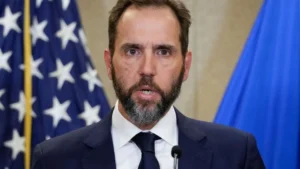
On December 17, 2025, former special counsel Jack Smith appeared under subpoena for a closed-door deposition before the House Judiciary Committee, chaired by Rep. Jim Jordan of Ohio. Republicans on the committee sought to examine Smith’s prosecutorial decisions across both criminal cases he brought against Trump: the 2020 election interference case and the classified documents case. The committee released a partially redacted transcript on December 31, 2025, and later released video and the near-complete text, in what critics characterized as a deliberate New Year’s Eve document dump designed to minimize public attention.
Across what amounted to more than eight hours of sworn testimony, Smith mounted a detailed defense of both investigations. He testified that his team had developed evidence meeting the legal standard of “proof beyond a reasonable doubt” in the cases against Trump and that his prosecutorial decisions were grounded solely in the evidence, not political considerations. Smith stated repeatedly that he would have brought the same cases against any individual, regardless of political affiliation or party.
Smith’s ability to fully address the classified documents case was significantly constrained. A January 21, 2025 order by U.S. District Judge Aileen Cannon barred Smith from discussing nonpublic material from Volume Two of his final report, which covered the documents investigation. This included interview transcripts, search warrant materials, toll records, and grand jury evidence. As a result, the bulk of substantive testimony centered on the January 6 election interference case, where Smith had fewer legal restrictions on his testimony.
On the central question of whether Trump caused the January 6 Capitol attack, Smith was direct. He told lawmakers that in his prosecutorial judgment, “Donald Trump is the person who caused Jan. 6.” Democratic members of the committee used Smith’s testimony to push back against Republican characterizations of the investigations as politically weaponized. Rep. Jamie Raskin of Maryland stated that Smith had “pursued the facts” and acted consistent with law and DOJ regulations. Republican members largely used the hearing to challenge the investigations as an improper use of federal prosecutorial power against a political opponent.
Why It Matters
The Smith deposition matters for several reasons that go beyond partisan political advantage. At its core, the transcript provides the most complete public account to date of how one of the most consequential prosecutorial decisions in American history was made and justified. Regardless of one’s view of the underlying merits, the record now shows that a senior federal prosecutor testified under oath that the evidence was strong, the process was proper, and the conclusions were reviewable.
For Americans who believe in the rule of law and the equal application of justice, Smith’s testimony offers a benchmark. The question of whether a president can commit crimes while in office and face no legal accountability — now that both cases against Trump have been dropped — is a live constitutional question with long-term implications for executive power and democratic accountability. Smith’s account does not resolve that question, but it provides context for evaluating it.
For conservatives who were skeptical of the investigations, the constraints on Smith’s testimony regarding the documents case remain a legitimate grievance. Judge Cannon’s order blocking the release of Volume Two of Smith’s report means that the full evidentiary basis of the documents investigation remains sealed from public view. Congressional Democrats have demanded that Attorney General Pam Bondi release the complete Smith report, including material related to the Epstein files, but the DOJ has not complied.
The DOJ’s inadvertent disclosure of sealed grand jury material to Congress, reported by Courthouse News Service in March 2026, added another layer of procedural controversy. The disclosure raised questions about whether prosecutors had violated both judicial orders and grand jury secrecy rules, a development that cut against the administration’s preferred narrative of clean institutional behavior on both sides.
Economic and Global Context
While the Smith deposition is primarily a legal and constitutional story, it has indirect implications for institutional markets and international perceptions of American governance. Investor confidence in the stability and predictability of U.S. law depends in part on the perceived integrity of federal law enforcement institutions. Prolonged public conflict over whether the Justice Department was used as a political weapon — in either direction — introduces uncertainty that sophisticated actors, including foreign governments and institutional investors, factor into their assessments of the United States.
The deposition has also drawn international attention as a signal of how the United States processes accountability for political leaders. In peer democracies, the prosecution or non-prosecution of a former head of government raises questions about the independence of legal institutions that are essential to democratic governance. The fact that Smith testified that evidence supported prosecution, while the cases were simultaneously dropped by a DOJ under Trump’s control, is a tension that foreign observers have noted.
Domestically, the congressional oversight dimension is significant. The decision to release Smith’s testimony as a holiday document dump, combined with the refusal to allow him to testify publicly, reflects a strategic calculation about managing the political narrative. The release of the full video and transcript nonetheless ensures that the record is available for historians, legal scholars, and future policymakers.
Implications
The release of Smith’s testimony sets the stage for continued legislative and legal battles over what Americans are entitled to know about the federal government’s handling of prosecutions against a sitting president. The sealed Volume Two of Smith’s report on the documents case remains a live political issue. If a future administration or court orders its release, the information contained in it — including potential grand jury testimony and search warrant materials — could reshape public understanding of that episode.
For policymakers, the Smith testimony highlights the need for clearer statutory guardrails around special counsel independence, the conditions under which investigations can be terminated, and congressional access to prosecutorial records. The current framework left enormous discretion to the executive branch, with results that remain deeply contested across partisan lines.
For voters, the transcript serves as a reminder that institutional memory matters. The cases against Trump were dropped, but the record of what was alleged, what evidence existed, and how prosecutorial decisions were made is now substantially public. How Americans weigh that record — and what they demand from their institutions in response — will shape the political landscape well beyond the current administration.
Sources
