

Story Highlights
-
Israel has intensified operations targeting Iranian-linked military networks.
-
The United States has increased naval presence to reinforce regional deterrence.
-
Former President Donald Trump says strong leadership is necessary to prevent escalation.
-
Analysts warn the confrontation could reshape Middle East security dynamics.
Situation Overview
Tensions between Israel and Iran have entered a dangerous new phase as military activity and political messaging escalate across the region. Israeli defense operations targeting security threats linked to Tehran have triggered warnings of retaliation from Iranian leadership, raising concerns among global security analysts about the possibility of a wider regional confrontation.
The United States has reinforced its strategic posture in the region, increasing naval presence and intelligence coordination with Israel. Officials in Washington have emphasized that these deployments are intended to deter escalation rather than provoke direct conflict.
Although full-scale war has not begun, the operational tempo and rhetoric from both sides indicate that the region is now operating under heightened strategic tension.
What Happened
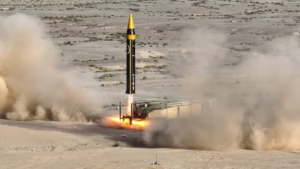
Israeli officials say recent operations were conducted to disrupt military infrastructure linked to Iran’s regional strategy. Israel has long argued that Tehran’s missile development programs and weapons transfers to allied groups represent a direct threat to Israeli security.
Iranian officials responded by condemning the operations and warning that continued attacks on Iranian-linked assets could trigger retaliation. Tehran maintains that its military activities are defensive, though Israeli and Western security analysts view Iran’s regional strategy as expansionist.
The United States has responded by strengthening regional deterrence. Naval deployments and expanded intelligence coordination with Israel are intended to signal that escalation will carry consequences.
Security experts note that such deployments are common during periods of heightened tension in order to prevent miscalculation.
Strategic Context
The rivalry between Israel and Iran has defined Middle Eastern geopolitics for years. Iran’s regional strategy relies on missile development and partnerships with armed groups across several countries. Israel has consistently stated that it will act preemptively to prevent threats from reaching a level that could endanger its national security.
During the presidency of Donald Trump, U.S. policy toward Iran shifted sharply. The administration withdrew from the nuclear agreement known as the Joint Comprehensive Plan of Action and implemented a sweeping sanctions campaign aimed at weakening Iran’s economy.
Supporters of that strategy argue that economic pressure and firm deterrence helped limit Tehran’s ability to fund regional operations while strengthening Israel’s strategic position.
Critics argue that abandoning the nuclear deal increased tensions and removed diplomatic mechanisms designed to constrain Iran’s nuclear ambitions.
The current confrontation has revived that debate in Washington.
Why It Matters
The implications of the confrontation extend well beyond the Middle East.
Security analysts warn that prolonged escalation could affect:
-
Global energy supply routes
-
Maritime security in key shipping corridors
-
Regional military alliances
-
Financial markets reacting to geopolitical instability
The Middle East remains one of the most strategically sensitive regions in the global economy. Even limited conflict can create ripple effects across global markets and diplomatic relationships.
Strategic Outlook
Most military analysts believe that all sides are attempting to avoid a full-scale war. Instead, the situation resembles a contest of deterrence, signaling, and calculated pressure.
Experts are closely watching several indicators that could determine the trajectory of the crisis:
-
Iranian missile or cyber responses
-
Additional Israeli military operations
-
U.S. military deployments and deterrence messaging
-
Activity among Iran-aligned regional groups
A single high-casualty incident or major military strike could quickly escalate the situation.
For now, the balance remains fragile.
Bottom Line
The Israel–Iran confrontation is evolving into one of the most significant geopolitical challenges currently facing the United States and its allies. With military readiness increasing and political debate intensifying in Washington, the coming days will determine whether deterrence succeeds—or whether the Middle East moves closer to broader conflict.
For American voters, the crisis underscores the continuing importance of strong leadership, strategic clarity, and a foreign policy capable of navigating a rapidly changing global security environment.
