


Story Highlights
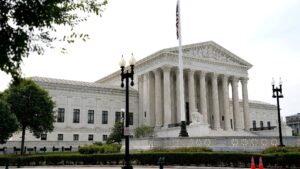
- The Supreme Court heard oral arguments in April and is expected to rule by early July on whether Trump’s executive order ending birthright citizenship is constitutional.
- The case turns on interpretation of the 14th Amendment’s Citizenship Clause and the landmark 1898 precedent United States v. Wong Kim Ark.
- Conservative justices reportedly sounded skeptical of the administration’s position during oral arguments, though the outcome remains uncertain.
What Happened
On the first day of his second term, President Trump signed Executive Order 14160, titled “Protecting the Meaning and Value of American Citizenship,” which sought to deny automatic citizenship to children born in the United States unless at least one parent was a U.S. citizen or lawful permanent resident. The order represented a direct challenge to the longstanding interpretation of the 14th Amendment’s Citizenship Clause, which states that “all persons born or naturalized in the United States, and subject to the jurisdiction thereof, are citizens of the United States.” For more than 125 years, that language has been understood, based on the Supreme Court’s 1898 ruling in United States v. Wong Kim Ark, to guarantee citizenship to nearly all children born on American soil, regardless of their parents’ immigration status, with a narrow exception for children of foreign diplomats.
Multiple federal courts immediately blocked the executive order from taking effect, finding it likely unconstitutional under existing precedent. The dispute eventually reached the Supreme Court, which agreed in December to hear the case and scheduled oral arguments for April 1. Trump made history that day by becoming the first sitting president to personally attend Supreme Court oral arguments, underscoring the political and personal significance he has placed on the issue. Solicitor General D. John Sauer argued on behalf of the administration that birthright citizenship has fueled what he called a “sprawling industry of birth tourism,” telling the justices that “we’re in a new world now… where 8 billion people are one plane ride away from having a child who’s a U.S. citizen.”
During oral arguments, the administration attempted to thread a narrow needle, arguing that the Wong Kim Ark precedent should not be overruled but rather reinterpreted around the concept of parental “domicile,” suggesting the 1898 case turned on the fact that Wong’s parents were lawfully and permanently settled in the United States, even though they could not become citizens themselves. Justice Ketanji Brown Jackson pressed the solicitor general on practical implementation questions, asking pointedly whether hospitals would need to verify citizenship documentation “in the delivery room.” Sauer responded that the Social Security Administration had prepared guidance allowing parents to contest citizenship determinations after the fact, and that the order would apply only prospectively to children born after it took effect.
Chief Justice John Roberts responded to the administration’s “new world” framing by noting that regardless of modern circumstances, “it’s the same Constitution,” a comment widely interpreted as signaling the court’s preference to resolve the case on enduring constitutional text and precedent rather than contemporary policy concerns about immigration volume. The decision is expected before the court’s term concludes, with most observers anticipating a ruling within days.
Why It Matters
The stakes of this case extend far beyond immigration policy narrowly defined. A ruling in Trump’s favor would mark the first time in American history that the judiciary has permitted a president to unilaterally narrow the scope of constitutional citizenship through executive action alone, rather than through constitutional amendment or comprehensive legislative action. Legal scholars warn this could establish a precedent allowing future presidents, of either party, to reshape fundamental citizenship rights without going through Congress or the formal amendment process.
The practical impact would be immediate and far-reaching. Approximately 9 percent of births in the United States involve at least one immigrant parent without permanent legal status, meaning hundreds of thousands of children born annually could be denied automatic citizenship, birth certificates conferring federal recognition, and access to basic social safety net programs including Medicaid and the Children’s Health Insurance Program. Pediatric health experts have warned that even temporary delays in establishing a newborn’s legal status could disrupt critical early medical screenings for conditions like jaundice and congenital heart defects.
For constitutional law more broadly, the case forces the justices to directly confront whether the historical purpose of the 14th Amendment, ratified to secure citizenship for formerly enslaved people after the Civil War, can be judicially narrowed based on modern policy concerns about immigration enforcement that the amendment’s framers could not have anticipated. How the court navigates this tension between original purpose and contemporary application will likely shape constitutional interpretation well beyond this single case.
Economic and Global Context
The United States is one of approximately 33 countries, concentrated primarily in North and South America, that grant unconditional birthright citizenship, a list that includes Canada, Mexico, Brazil, and Argentina. Most other nations, particularly in Europe and Asia, condition citizenship on parental nationality or residency status rather than birthplace alone. A ruling curtailing American birthright citizenship would align the United States more closely with European-style citizenship law but would represent a significant break from the practice’s historical entrenchment in the Western Hemisphere.
The economic consequences of a ruling against birthright citizenship could be substantial and complex. Healthcare systems, school districts, and social service agencies would need to develop new verification systems to determine eligibility for programs currently tied automatically to citizenship status, potentially creating significant administrative costs and processing delays across multiple levels of government. More than 21 million Americans currently lack ready access to documents proving their own citizenship, according to amicus briefs filed in the case, raising concerns about how verification requirements might inadvertently affect citizens as well as the children of immigrants.
Internationally, the case has drawn attention given the global prevalence of “birth tourism,” in which pregnant individuals travel specifically to give birth in countries offering birthright citizenship. Some American citizens have similarly traveled abroad to give birth in other countries for medical or personal reasons, illustrating that the phenomenon cuts in multiple directions rather than involving only foreign nationals seeking U.S. citizenship for their children.
Implications
For immigrant families across the country, the period leading up to the ruling has been marked by significant anxiety and uncertainty, even though current law remains in effect and the executive order has not yet been enforced anywhere in the country. Legal advocates have urged families not to assume any change has occurred until the Supreme Court actually issues its decision, since preparation of implementation guidance by federal agencies is not equivalent to an enforceable legal change.
For hospitals and state vital records agencies, a ruling upholding the executive order would require rapid development of new procedures for determining and documenting citizenship status at the moment of birth, a logistical challenge that several justices raised but did not fully resolve during oral arguments. State and local governments would likely face significant implementation costs and legal uncertainty in the immediate aftermath of any ruling against the current practice.
For Congress, a ruling either way is likely to reignite long-dormant legislative debates over codifying or restricting birthright citizenship through statute, though prospects for such legislation passing in the current political environment remain highly uncertain. The decision will also likely shape how aggressively the administration pursues other executive actions seeking to reinterpret constitutional provisions without congressional action, making this case a bellwether for the broader balance of power between the presidency and the other branches of government.
Sources
“Supreme Court Deadline for Birthright Citizenship Looms: What to Know”
