
Story Highlights
- The State Department removed all DEI-related questions from the Foreign Service written exam, replacing them with tests on American history and foreign policy concepts.
- The A100 diplomat orientation program was overhauled to include mandatory readings on America First foreign policy and assigned texts from the Founding Fathers and Federalist Papers.
- A former A100 instructor of more than five years described the changes as an unprecedented injection of “administration-specific agenda items” into career diplomat training.
What Happened
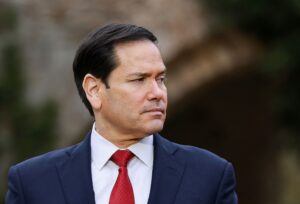
Secretary of State Marco Rubio‘s State Department announced in early April 2026 a comprehensive restructuring of how the United States selects and trains its career diplomats. The announcement, released through the Office of the Spokesperson, described the changes as a “modernization” of the Foreign Service designed to ensure that American diplomats are prepared to advocate for national interests on the world stage. Foreign Service exam testing under the new format was scheduled to begin May 15 and run through May 22.
Under the reformed selection process, applicants are tested on American history, foreign policy concepts, and logical reasoning. The department’s announcement stated that questions “intended to test alignment with ideological agendas have been eliminated.” A State Department fact sheet confirmed the removed questions related to the diversity, equity, and inclusion framework. Prior to the changes, the exam had included questions about applicants’ social behaviors and cross-cultural engagement, including queries about the demographic composition of their friend groups and how frequently they participated in culturally diverse activities.
The overhaul extended beyond the written exam to the A100 orientation program, which all newly hired Foreign Service Officers complete before beginning their assignments. The department described the A100 program as “transformed,” with mandatory content now including lectures on diplomatic history and America First foreign policy. Assigned readings include speeches and writings from George Washington, John Quincy Adams, and James Monroe, selections from the Federalist Papers, and works from strategic thinkers including George Kennan, Angelo Codevilla, and Samuel Huntington. Content that the department characterized as “bureaucratic tedium” was reduced to a minimum.
State Department Deputy Spokesperson Tommy Pigott framed the changes as a necessary modernization, saying the revamped program would train officers in public speaking, negotiation, and international relations theory across commercial diplomacy and grand strategy. The department called on “patriotic Americans from across the country looking to serve their country” to apply through the newly opened testing registration portal.
Career diplomacy observers noted that the A100 program’s historic purpose included practical orientation to department procedures and bureaucratic processes. A former A100 instructor who spoke to CNN, identified as Dinkelman and said to have taught the course for more than five years, stated it is “not normal to inject what are so blatantly administration-specific agenda items into orientation.”
Why It Matters
The Foreign Service reform package represents one of the most substantive restructurings of the U.S. diplomatic corps in modern times. Foreign Service Officers are career civil servants, not political appointees — they are expected to serve successive administrations of both parties and to represent American interests abroad with professional continuity and institutional independence. Embedding a specific administration’s policy framework as required curriculum for new officers raises questions about the long-term independence of the career diplomatic workforce.
Supporters of the changes argue that the old selection criteria introduced ideological bias of a different kind, privileging applicants whose personal social behaviors reflected progressive cultural norms rather than professional or intellectual qualifications. They contend that testing on American history, the Constitution, and foreign policy substance is a more defensible standard for selecting individuals who will represent the nation’s interests than questions about the diversity of their social circles.
Critics argue the distinction is not so clean. The inclusion of America First foreign policy as a mandatory lecture topic in diplomat orientation effectively asks career officers to internalize a specific administration’s approach to the world. The Founding Fathers readings, while unobjectionable in isolation, are paired with authors like Samuel Huntington — whose “Clash of Civilizations” thesis carries ideological weight — in a combination that signals a particular worldview rather than a neutral survey of diplomatic history and theory.
The new exam testing window, running May 15–22, means that the first cohort of Foreign Service Officers selected and trained under the new framework will be entering the pipeline during a period of significant global instability — including the unresolved Iran conflict, the NATO dispute over European troop levels, and ongoing tensions with China. How those officers are prepared to navigate those crises will be a measure of whether the curriculum changes improve or diminish diplomatic effectiveness.
Economic and Global Context
The quality of American diplomacy has direct economic consequences. Foreign Service Officers negotiate trade agreements, manage relationships with governments that are hosts to major American investments, and represent U.S. interests in multilateral institutions that shape the global economic order. Any significant deterioration in the quality, institutional knowledge, or professional independence of the diplomatic corps carries downstream costs for American business interests and foreign policy outcomes.
The State Department’s changes also come at a time when the department has experienced significant staffing pressures. Budget cuts and workforce reductions earlier in the Trump administration reduced the number of active Foreign Service Officers, creating capacity gaps in key embassies and consulates. A reformed hiring pipeline may address some of those gaps — but only if the new selection criteria attract qualified candidates who can perform effectively across a wide range of diplomatic environments.
Internationally, the changes are being watched by allied and adversarial governments alike. The extent to which American diplomacy is perceived as an extension of a particular administration’s ideology — rather than a professional corps representing durable national interests — can affect the trust and candor with which foreign counterparts engage U.S. representatives, with implications for negotiation outcomes on issues ranging from trade to arms control.
Implications
The first tangible indicator of the reform’s impact will be the composition of the applicant pool under the new system and how many candidates proceed through the revised exam. If the changes attract a broader or more qualified pool of applicants than the previous exam framework — which the administration argues was filtering for ideological conformity rather than merit — the reforms will have achieved one of their stated goals.
The longer-term question is whether the A100 curriculum changes produce a diplomatic corps that is better equipped for the challenges of America First foreign policy, or one that is more ideologically narrow in ways that limit its effectiveness when administrations change or when career officers must navigate complex multilateral environments that require ideological flexibility.
For Congress, the State Department’s authority to set Foreign Service selection criteria falls within the executive branch’s existing powers, limiting legislative options for those who object to the changes. Oversight hearings remain a tool, and members of the Senate Foreign Relations Committee have signaled interest in examining the curriculum changes and their potential effects on career diplomat performance and retention.
Sources
