
Story Highlights
- The Supreme Court entered June with 23 pending opinions, including several major cases tied directly to President Donald Trump’s second-term agenda.
- Key decisions are expected on birthright citizenship, presidential removal power, Federal Reserve independence, voting rules, and Temporary Protected Status.
- The rulings could reshape executive power, immigration law, agency independence, election administration, and financial governance before July.
What Happened
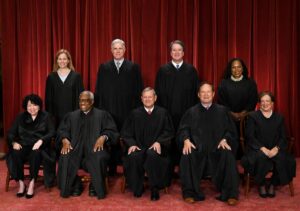
The Supreme Court is racing to finish one of the most consequential terms in recent memory, with 23 pending opinions still to release before the justices begin their summer recess.
Many of the remaining cases touch directly on President Donald Trump’s second-term agenda, making the final weeks of the term a defining moment for both the Court and the White House.
- The Court is expected to rule on Trump’s birthright citizenship executive order.
- It is also weighing presidential power to fire independent agency officials.
- Other pending disputes involve the Federal Reserve, mail ballots, and Temporary Protected Status.
The birthright citizenship case is among the most closely watched. Trump’s executive order seeks to deny automatic citizenship to some children born in the United States to undocumented immigrants or parents with temporary immigration status. Lower courts blocked the policy, and the Supreme Court heard arguments earlier this year.
The Court is also expected to decide Trump v. Slaughter, a case involving Trump’s removal of Federal Trade Commission Commissioner Rebecca Kelly Slaughter. That ruling could weaken or overturn the 1935 Humphrey’s Executor precedent that has protected certain independent agency officials from being fired at will by the president.
A related case involving Federal Reserve Governor Lisa Cook may determine whether the president has similar removal authority over officials at the central bank, an issue with major implications for monetary policy and market confidence.
Why It Matters
The final batch of rulings matters because the Court is being asked to decide how far presidential power extends across several areas at once: immigration, federal agencies, elections, financial regulation, and national governance.
For Trump, the cases could either validate major parts of his second-term agenda or impose some of the strongest legal limits his administration has faced.
- A ruling against Trump on birthright citizenship would preserve the long-standing interpretation of the 14th Amendment.
- A ruling for Trump in the agency removal cases could greatly expand presidential control over regulators.
- A decision involving the Federal Reserve could affect perceptions of central bank independence.
The stakes are especially high because several cases involve structural questions, not just ordinary policy disputes. The Court is not simply deciding whether one executive order or one firing was lawful. It is deciding how the federal government itself is organized.
That makes the term potentially generational. Decisions on citizenship, agency independence, and presidential removal power could shape American law long after Trump leaves office.
Constitutional and Legal Context
The birthright citizenship case turns on the Citizenship Clause of the 14th Amendment, which has long been understood to grant citizenship to nearly everyone born on U.S. soil, with narrow exceptions such as children of foreign diplomats.
Trump’s administration argues that the phrase “subject to the jurisdiction” excludes some children born to parents without permanent legal status. Civil liberties groups argue that the text, history, and precedent of the amendment reject that interpretation.
- The Court appeared skeptical of Trump’s birthright citizenship argument during oral arguments.
- Trump has publicly suggested he expects the Court to rule against him on that issue.
- The final decision could become one of the most important immigration rulings in decades.
The independent agency cases involve a different constitutional question: whether Congress can protect certain officials from removal except for cause. The administration argues that Article II gives the president broad control over officials who exercise executive power.
If the Court overturns or sharply limits Humphrey’s Executor, presidents of both parties could gain far greater authority to remove leaders of agencies such as the FTC, NLRB, SEC, CPSC, and other regulatory bodies.
Economic and Global Context
The Court’s decisions could have major economic consequences. Agency independence affects antitrust enforcement, labor policy, financial regulation, consumer protection, and corporate compliance planning.
If presidents gain more power to replace independent agency officials, regulatory priorities could shift more rapidly after each election. Supporters say that would increase democratic accountability. Critics say it would make regulation more political and less predictable.
- Businesses are watching the agency cases for signs of future regulatory volatility.
- Financial markets are especially focused on whether the Federal Reserve receives different treatment.
- Immigration rulings could affect workers, families, states, and long-term demographic planning.
The Federal Reserve case carries the most direct market risk. Central bank independence is a foundation of investor confidence in U.S. monetary policy. If the president can remove Fed governors at will, markets could start pricing in greater political influence over interest-rate decisions.
Internationally, allies and trading partners are watching the Court’s rulings as signals about the durability of U.S. institutions. Decisions affecting citizenship, agency independence, and voting rules could shape how foreign governments assess American political stability.
Political and Public Context
The timing of the decisions adds another layer of political pressure. The rulings will arrive only months before the 2026 midterms, when control of Congress is at stake and Trump’s approval has weakened.
Trump has already criticized the Court when it has ruled against him, including after the justices rejected his earlier emergency tariff framework. He has also publicly attacked the possibility of an adverse ruling on birthright citizenship before the decision is even released.
- Republicans may campaign on any rulings that expand presidential authority or uphold Trump policies.
- Democrats may use adverse rulings against Trump as evidence that courts are checking executive overreach.
- The Court itself may face renewed scrutiny over how it handles politically explosive cases.
Chief Justice John Roberts has repeatedly defended judicial independence, but the Court is operating in a climate where nearly every major ruling is interpreted through partisan and institutional conflict.
That means the Court’s decisions will not end the political fights. In many cases, they will define the next stage of those fights.
What Happens Next
The Supreme Court is expected to issue the remaining opinions before the end of June. The most closely watched cases may be released in the final opinion days of the term.
If the Court rules against Trump on birthright citizenship, the executive order would remain blocked and the administration would likely explore narrower legal or legislative paths. If the Court rules for him, agencies, hospitals, states, and families would face immediate questions about implementation.
- A broad ruling in Trump v. Slaughter could reshape independent agencies quickly.
- A ruling involving Lisa Cook could determine whether the Fed remains insulated from presidential removal pressure.
- Voting and TPS decisions could affect election rules and immigrant communities before the midterms.
For Trump, the final weeks of the term could bring a mix of victories and defeats. For the Court, the challenge is larger: deciding cases that will define the limits of presidential power while preserving its own credibility in an intensely political moment.
The 23 pending opinions make this more than a busy end to a Supreme Court term. They make June a defining constitutional month — one that could shape American governance for years to come.
