
Story Highlights
- The Supreme Court reversed the Fourth Circuit’s decision in an unsigned ruling, siding with the Trump administration on procedural grounds without addressing the merits of the speech restriction itself
- The case began in 2020 when the National Association of Immigration Judges sued to challenge a government policy barring judges from publicly discussing immigration-related policy in community settings
- The ruling leaves the door open for the association to continue its First Amendment challenge through federal administrative channels
What Happened
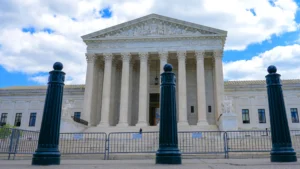
On Tuesday, May 26, the United States Supreme Court issued an unsigned ruling reversing a decision by the Fourth U.S. Circuit Court of Appeals in Richmond, Virginia, in a case brought by the National Association of Immigration Judges. The association had filed a lawsuit in 2020 challenging a federal policy that bars immigration judges — government attorneys appointed by the attorney general who preside over deportation cases — from publicly expressing their personal views on immigration-related matters in community or academic settings. The group argued the policy violated the First Amendment’s guarantee of free expression by suppressing the judges’ ability to guest lecture at universities, speak to community groups, and participate in public policy conversations relevant to their professional expertise.
The case’s procedural history reflects years of institutional maneuvering. A Virginia federal district court initially dismissed the case in 2023, holding that under the 1978 Civil Service Reform Act, the challenge had to be brought through federal administrative review processes rather than in direct federal court litigation. The Fourth Circuit reversed that ruling in June 2025, finding that the Trump administration’s firing of the heads of agencies responsible for overseeing federal worker complaints — the Merit Systems Protection Board and the Office of Special Counsel — had stripped those agencies of the independence from White House control that Congress had intended when creating the administrative review system.
The Trump administration filed an emergency application asking the Supreme Court to pause the Fourth Circuit’s ruling pending review. Chief Justice John Roberts initially halted the inquiry, and the full court then agreed to take up the appeal on an expedited basis. In its May 26 ruling, the court held that the Fourth Circuit had relied improperly on arguments that had not been raised by the parties themselves, vacating the lower court’s decision and returning the case for further proceedings. Alex Abdo, litigation director at the Knight First Amendment Institute, which represents the immigration judges, called the decision disappointing, arguing that public servants should not have to navigate cumbersome administrative procedures before challenging broad restrictions on their speech.
The ruling did not resolve whether the underlying policy restricting immigration judges’ speech is constitutional. That question — which goes to the heart of how the First Amendment applies to professional speech by federal employees — remains open and available for continued litigation through the administrative and judicial channels the Supreme Court’s ruling preserved.
Why It Matters
The immigration judges’ free speech case sits within a broader and intensifying legal ecosystem of First Amendment disputes involving the Trump administration’s approach to federal employees’ expressive rights. The administration has pursued aggressive limitations on what federal employees, federal contractors, and federally funded institutions can publicly say on a range of subjects. Courts are actively considering whether those limitations comply with the First Amendment, and the immigration judges’ case is one of the clearest examples of the government asserting the right to silence members of its own workforce on policy matters of direct public interest.
For liberty advocates, the case raises a question with profound implications: does the government’s status as an employer give it license to restrict the public speech of the professionals who administer its most consequential legal proceedings? Immigration judges make decisions that directly determine whether individuals are deported or allowed to remain in the United States. Their ability to participate in public discourse about the system they administer goes to the integrity and transparency of that system.
The Supreme Court’s procedural ruling, while not deciding the constitutional question, reflects the extent to which the Trump administration’s restructuring of the federal bureaucracy — particularly its dismantling of independent oversight agencies — has created new legal vulnerabilities in its own enforcement of employee speech restrictions. The Fourth Circuit’s concern that fired agency heads had undermined the independence of administrative review processes was itself a consequence of the administration’s personnel decisions.
Economic and Global Context
The broader pattern of speech restrictions on federal employees intersects with workforce dynamics that have economic consequences. The immigration court system — already operating under massive caseload backlogs numbering in the millions of cases — depends on the competence, morale, and retention of its judicial officers. Speech restrictions that immigration judges describe as suppressive contribute to an overall environment of professional constraint that can affect recruitment and retention in an already understaffed system.
The immigration courts’ caseload backlog has itself become an economic issue, as prolonged uncertainty for immigrants in deportation proceedings creates instability for employers who depend on their labor, particularly in agriculture, construction, and the service sector. Policy and procedural changes that affect the functioning of the immigration court system have downstream consequences for labor market supply chains that businesses have flagged as operationally significant.
Internationally, the case has drawn attention from foreign governments and international human rights observers who monitor the independence of American judicial and quasi-judicial processes as indicators of the rule of law’s health in the United States.
Implications
The Supreme Court’s ruling sends the immigration judges’ lawsuit back through administrative channels that the association’s lawyers describe as currently compromised by the same political interference that the Fourth Circuit found troubling. If those channels are deemed insufficiently independent, the case may return to federal court on strengthened grounds. The constitutional question of whether immigration judges have a First Amendment right to discuss their professional expertise in public will eventually need to be answered on the merits.
For the Trump administration, the ruling is a procedural victory that bought time and cleared a specific judicial obstacle, but it does not eliminate the legal risk. The Knight First Amendment Institute, which has a strong record in federal appellate courts on First Amendment matters, is likely to pursue the case aggressively through whatever avenue the remand opens.
For American liberty and governance more broadly, the case is a bellwether for how courts will ultimately handle the administration’s wide-ranging effort to control what federal employees can say, write, and advocate in public — a question whose answer will shape the character of the federal workforce for years beyond the current administration.
Sources
“Supreme Court Reverses Ruling in Immigration Judges’ Free Speech Lawsuit”
