

Story Highlights
- Trump pressed Netanyahu in a tense phone call to pull back from Beirut; Trump described the call as “very productive”
- Netanyahu’s office indicated Israeli forces would continue operations in southern Lebanon regardless of U.S. pressure
- Iran suspended nuclear talks in response to Israel’s continued Lebanon offensive before a regional source said negotiations were back on track
What Happened
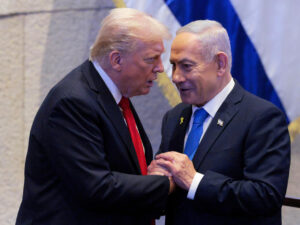
President Donald Trump and Israeli Prime Minister Benjamin Netanyahu have entered a period of significant public and private tension over how to end the Iran conflict, three months after launching coordinated military strikes against Tehran in late February. Trump, who initially praised the partnership and declared the operation a success, has grown increasingly frustrated with Israel’s continued military actions in Lebanon, which he believes risk destabilizing the ceasefire and complicating American diplomatic efforts with Iran.
According to reporting from multiple outlets, Trump had a heated phone call with Netanyahu in which he pressed the Israeli leader to withdraw forces from Beirut and avoid further escalation in the Lebanese capital. Trump publicly declared that Israeli forces would not move on Beirut following the call and stated that he had spoken with Hezbollah representatives through intermediaries. Trump described the conversation as “very productive” and characterized the relationship between the two leaders as still strong. Netanyahu, however, issued a statement from his office saying Israeli forces would continue striking southern Lebanon as planned.
The disconnect was further exposed by Defense Minister Israel Katz, who denied publicly that any ceasefire existed in Lebanon, even as the U.S. announced that Hezbollah had agreed to a ceasefire proposal under which strikes on Beirut would stop. Israel’s continued operations in southern Lebanon have been presented by Jerusalem as a distinct matter from any understanding regarding the Lebanese capital — a distinction Washington has found increasingly difficult to accept.
Iran complicated the picture further when it suspended nuclear talks with the United States in response to Israel’s Lebanon offensive. However, a regional source told American media that negotiations were back on track within hours, reflecting the fast-moving and unstable nature of the diplomatic environment. Qatar has been actively engaged as a mediator, working with Washington and regional parties to push for de-escalation and preserve the nominal ceasefire.
Why It Matters
The Trump-Netanyahu rift carries strategic weight that extends well beyond a bilateral diplomatic disagreement. The United States is the ultimate guarantor of any ceasefire framework in the region, and a visible disconnect between Washington and Jerusalem undermines the credibility of American commitments to all parties — including Iran, Hezbollah, and the Gulf states whose cooperation is essential for any durable peace arrangement.
For Trump domestically, the conflict’s continuation without a clear resolution creates political risks as midterm elections approach. The administration staked considerable credibility on the joint operation against Iran, framing it initially as a decisive blow that would achieve rapid results. Months later, with a ceasefire that remains fragile, a Strait of Hormuz that has not fully reopened, and a Lebanon situation that is producing new friction with Israel, the narrative of swift and complete success has become harder to sustain.
For Netanyahu, the pressure from Washington also carries domestic political costs. His opponents in Israel have seized on his apparent retreat from threatened strikes on Beirut — under American pressure — as evidence of weakness. The Israeli prime minister has positioned himself as an unyielding defender of Israeli security interests, and any perception that he is capitulating to foreign pressure, even from Israel’s closest ally, carries significant political consequences in Jerusalem.
Economic and Global Context
The Strait of Hormuz remains the most consequential unresolved economic issue flowing from the Iran conflict. The strait carries a significant share of globally traded oil, and its effective closure or disruption since the conflict began has contributed to energy price increases felt by consumers in the United States and across Europe and Asia. Trump told ABC News he believed a deal to reopen the strait was reachable within a week, a claim that has yet to be validated by events on the ground.
The Strategic Petroleum Reserve drawdown — approximately 58 million barrels released since the conflict began — has provided some buffer against the worst price spikes, but it is not a permanent solution. Reserve levels have been reduced significantly, and the ability to use the SPR as a policy tool will be constrained if the conflict continues without resolution. Energy markets have remained in a state of elevated uncertainty, and any further escalation in Lebanon or a renewed breakdown in Iran talks could produce additional price movements.
Shipping costs and maritime insurance premiums in the broader region have risen substantially. The Bab al-Mandeb Strait has also come under pressure, with Iran warning it could become a focal point if tensions escalate further. These commercial disruptions are cascading through global supply chains and adding cost pressures for American businesses and consumers.
Implications
For American foreign policy, the Trump-Netanyahu disagreement represents a structural challenge. The two governments share a broad set of strategic objectives regarding Iran, but they diverge significantly on tactics, timing, and the acceptable level of civilian disruption in Lebanon. Managing that gap while preserving a functional alliance and a credible ceasefire will require sustained and skilled diplomatic engagement from an administration whose top diplomats are simultaneously managing crises across multiple theaters.
For Congress and American voters, the trajectory of the Lebanon situation and Iran ceasefire negotiations will shape how the Iran war is evaluated as a political matter heading into November. If the ceasefire holds and the Strait of Hormuz reopens, the administration will be positioned to claim a consequential foreign policy achievement. If the ceasefire collapses or the conflict expands, the political and economic costs will become central issues in competitive congressional races.
For the broader Middle East, the visible tension between the United States and Israel introduces uncertainty for regional actors calibrating their own positions. Gulf states, Jordan, and other American partners in the region are watching closely to determine whether American commitments to restraint are durable — and whether Washington retains the leverage to shape Israeli decisions under pressure.
Sources
“Trump and Netanyahu are clashing over how to end the Iran war”
