


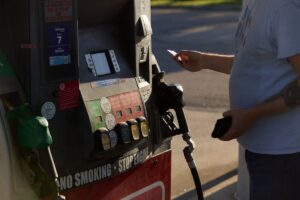
- Gas prices have surged more than 50 percent since the Iran war began, rising from under $3 to $4.52 per gallon nationally
- Suspending the 18.4 cent-per-gallon federal tax would require congressional approval and costs the government $23 billion annually in highway funding
- Senator Josh Hawley introduced legislation Monday to suspend the tax for 90 days, while at least two House Republicans also filed companion bills
What Happened
Asked directly by a reporter whether he would support suspending the federal gas tax, President Donald Trump offered a simple affirmation: “Yeah.” Speaking to reporters on Monday, Trump said the suspension would remain in effect “until it’s appropriate” to phase it back in, signaling that he envisions the relief lasting as long as the Iran war continues to elevate fuel prices. “I’m going to reduce until — as soon as this is over with Iran, as soon as it’s over, you’re going to see gasoline and oil drop like a rock,” he said.
The federal gas tax is currently set at 18.4 cents per gallon for gasoline and 24.4 cents per gallon for diesel fuel. Eliminating it would require an act of Congress, a step that Republican and Democratic legislators have declined to take during prior episodes of elevated gas prices, including the 2022 energy price spike that followed Russia’s invasion of Ukraine. The tax generates more than $23 billion per year in revenue for the federal Highway Trust Fund, which finances road construction, bridge maintenance, and public transit programs across the country.
Senator Josh Hawley of Missouri moved quickly to translate Trump’s comments into legislation, posting on X Monday that he would introduce a bill to suspend both the gasoline and diesel taxes for 90 days, with a presidential option to extend the suspension for an additional 90 days if energy prices remain elevated. Representative Anna Paulina Luna of Florida and Representative Jeff Van Drew of New Jersey also announced they would file companion bills in the House. At least two Senate Democrats — Mark Kelly of Arizona and Richard Blumenthal of Connecticut — had already introduced a gas tax suspension bill earlier in the year.
Senate Majority Leader John Thune of South Dakota struck a cautious note, telling reporters he had not historically been a fan of gas tax holidays but was willing to hear colleagues out. His more pressing concern was fiscal: suspending the tax would create a significant hole in the Highway Trust Fund, potentially delaying road and bridge projects across the country. “The best thing that can happen for gas prices is for the Strait of Hormuz to get opened up again,” Thune said.
Why It Matters
The political urgency behind the proposal is unmistakable. Gasoline cost just under $3 per gallon when U.S. and Israeli forces launched Operation Epic Fury on February 28. The roughly $1.52 per gallon increase since then represents a more than 50 percent price surge, with Iran’s blockade of the Strait of Hormuz preventing the normal flow of approximately one-fifth of the world’s crude oil supply. Eight in ten Americans say the high gas prices are straining their household budgets, including overwhelming majorities across party lines, according to recent polling.
A Penn Wharton Budget Model analysis published Monday found that suspending the federal levy would reduce gas prices by an average of 13.2 cents per gallon and diesel prices by 14.6 cents per gallon. A household filling a 15-gallon tank once a week between June 1 and October 1 would save a total of roughly $35. Penn Wharton faculty director Kent Smetters cautioned that “the actual benefit to consumers is going to be pretty small,” noting that retailers and supply chain intermediaries typically do not pass along the full savings from tax reductions to end consumers.
The highway funding implications are significant. The federal gas tax is the primary source of revenue for the Highway Trust Fund, supporting hundreds of thousands of construction jobs and road maintenance contracts in every state. A 90-day suspension would cost the fund roughly $5.75 billion in revenue, money that would either need to be replaced with general fund appropriations or simply go unfunded. In a year when congressional Republicans are already wrestling with a $200 billion Pentagon supplemental request for the Iran war, finding replacement revenue for the Highway Trust Fund presents a genuine fiscal challenge.
From a constitutional standpoint, Trump’s announcement underscores the limits of presidential authority on fiscal matters. Unlike executive orders on immigration or trade policy, suspending a congressionally enacted tax is entirely beyond the president’s unilateral power. The proposal requires bipartisan buy-in, and the narrow Republican margins in both chambers mean even modest defections could kill the legislation before it reaches a vote.
Economic and Global Context
The Iran war’s impact on energy markets extends far beyond the United States. Iran’s blockade of the Strait of Hormuz has created the largest oil supply disruption in the history of the global energy market, according to multiple industry analyses. Countries like Japan, which imports approximately 75 percent of its oil from the Middle East, have been severely affected, with U.S. Treasury Secretary Scott Bessent traveling to Tokyo this week to meet with Japanese Prime Minister Sanae Takaichi about the economic fallout.
Oil prices climbed more than 3.5 percent on Monday following Trump’s rejection of Iran’s peace proposal, briefly pushing crude above $104 per barrel. The price spike has compounded inflation pressures that were already running above the Federal Reserve’s 2 percent target. Analysts at Brown University’s Watson School estimate the total economic cost of higher gasoline and diesel prices to American consumers since the war began has now reached $37 billion, with diesel prices approaching the all-time record high of June 2022.
The timing of the gas tax proposal also intersects directly with the administration’s fiscal calendar. The federal government faces a partial shutdown of the Department of Homeland Security, the $200 billion Iran war supplemental request is awaiting congressional action, and Republicans are simultaneously attempting to pass additional tax cut legislation. Managing all of these fiscal demands simultaneously in an election year will test the cohesion of the Republican majority in both chambers.
Implications
If Congress passes a gas tax suspension, the immediate impact on consumers would be modest — roughly 13 cents per gallon — but the political symbolism could be meaningful for Republicans defending competitive seats in November. The act of delivering visible, tangible relief at the pump, however limited in dollar terms, could help counter the Democratic narrative that the administration has been indifferent to working-class economic pain caused by the Iran war.
If the legislation stalls, the political damage to Republicans could be significant. Having publicly backed the idea, Trump would own the failure if Congress cannot deliver, adding to the perception that the administration is unable to manage the economic consequences of a war it initiated without congressional authorization. Democratic candidates are already running campaign ads linking high gas prices directly to Trump’s decision to attack Iran.
For the broader energy sector, the gas tax debate highlights a growing tension between the administration’s military objectives in the Middle East and the domestic economic sustainability of those objectives. Even staunch Trump allies like Representative Lauren Boebert have expressed opposition to further war spending, citing constituents’ inability to afford basic living costs. That sentiment is spreading among Republican members from economically vulnerable districts.
The highway infrastructure community is watching developments with growing alarm. A multi-month suspension of the gas tax without a funding replacement mechanism could force states to delay planned road and bridge contracts, potentially costing construction jobs in the very swing states Republicans need to hold in November. The unintended consequences of the proposal may ultimately prove more politically complicated than the relief it was designed to provide.
