


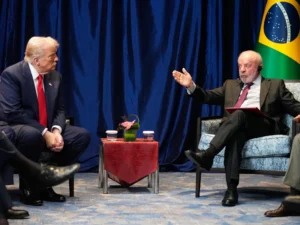
The Trump administration announced a fresh 25 percent tariff on a wide range of Brazilian goods this week, escalating a trade dispute rooted in disagreements over technology regulation, ethanol access, and intellectual property enforcement. The move, which carves out exemptions for coffee and beef, arrives as the White House simultaneously races to rebuild its broader global tariff regime ahead of a looming legal deadline.
Story Highlights
- The new 25% tariff on Brazilian goods takes effect July 22 and exempts coffee, beef, and other staples
- The action stems from a year-long Section 301 investigation led by U.S. Trade Representative Jamieson Greer
- The tariff adds to earlier duties imposed amid Trump’s political dispute with Brazil over former President Jair Bolsonaro
- Separately, Trump’s global 10% tariffs under Section 122 authority are set to expire July 24 absent congressional action
What Happened
The Trump administration announced Wednesday that it will impose an additional 25 percent tariff on a broad category of Brazilian imports, effective July 22, according to senior administration officials. The action follows a year-long investigation conducted under Section 301 of the Trade Act of 1974 by U.S. Trade Representative Jamieson Greer, which authorizes tariffs and other trade measures in response to foreign practices deemed unfair. Officials said the tariff targets Brazil’s treatment of American technology and payment companies, restrictions on U.S. ethanol access, inadequate intellectual property protections, and preferential tariff arrangements favoring other trading partners over the United States.
Notably, the new tariffs exempt key consumer staples including coffee and beef, along with other products the U.S. does not produce domestically or that officials determined would meaningfully disrupt American supply chains if taxed further. A senior administration official said the carve-outs reflect a deliberate effort to limit the inflationary impact on American households even as the administration escalates pressure on Brasília.
The decision adds to an existing layer of tariffs the administration imposed on Brazil last year, which were explicitly tied to Trump’s criticism of Brazil’s legal treatment of former President Jair Bolsonaro, a political ally of the American president. Officials this week emphasized that the newest round of tariffs is based strictly on the Section 301 trade investigation rather than the political dispute, though the two tracks have become increasingly intertwined in public discussion of U.S.-Brazil relations. The administration noted that while the United States runs an overall trade surplus with Brazil, the investigation concerns specific unfair practices rather than the aggregate trade balance.
According to officials, Brazilian negotiators have grown “more constructive” over the past six weeks of discussions, though the two governments remain too far apart to avoid implementation of the new tariffs on schedule. Talks are expected to continue even after the duties take effect.
The Brazil announcement comes as the administration separately races against a legal deadline affecting its broader tariff architecture. After the U.S. Supreme Court struck down the administration’s sweeping global tariffs imposed under emergency economic powers earlier this year, the administration shifted to Section 122 authority to impose a 10 percent global tariff, a provision that expires after 150 days, on July 24. Trade officials are now exploring more durable legal authorities, including further use of Section 301, to preserve tariff revenue that has become an important, if legally contested, source of federal income.
Why It Matters
The Brazil tariffs illustrate the administration’s continued reliance on trade policy as both an economic and geopolitical tool, even as courts narrow the legal avenues available for sweeping, emergency-powers-based tariff actions. The exemption of coffee and beef reflects an emerging pattern in which the administration attempts to calibrate tariff policy to avoid direct, visible price increases on frequently purchased consumer goods, a lesson learned from earlier rounds of tariffs that drew criticism over grocery costs.
For American businesses that rely on Brazilian inputs not covered by the exemptions, including certain industrial and agricultural products, the new duties represent an added cost that companies will likely pass on to consumers or absorb through thinner margins. Retailers and manufacturers have already begun frontloading imports ahead of tariff deadlines this year, a pattern trade analysts expect to continue as the Brazil tariffs and other measures take effect.
The dispute also underscores the challenge facing the administration’s broader tariff strategy following the Supreme Court’s ruling against its emergency-powers tariffs. With the Section 122 global tariff set to lapse July 24 and unlikely to be extended by a Congress wary of midterm-year cost-of-living politics, the administration’s pivot toward sector- and country-specific Section 301 actions, such as the Brazil tariff, suggests a more durable but also more piecemeal approach to trade policy going forward.
Economic and Global Context
Tariff policy has become one of the most consequential and contested elements of the administration’s economic agenda. Independent analysis from the Tax Foundation estimates that the 2026 tariff regime amounts to the largest U.S. tax increase as a share of GDP since 1993, with an average household tax burden estimated at approximately $1,500 for the year, though estimates vary depending on methodology and which specific tariffs are counted. The Treasury benefited substantially from tariff revenue collected before the Supreme Court’s ruling, and the administration’s trade team is now working to replace that lost revenue through alternative legal authorities.
The Brazil-specific dispute has broader implications for hemispheric trade relations. Brazil, one of the largest economies in Latin America and a major agricultural exporter, has increasingly diversified its trading relationships, including deepening ties with China, partly in response to sustained U.S. tariff pressure. Brazilian officials have previously signaled frustration that trade measures tied to domestic political disputes, rather than strictly economic considerations, complicate long-term bilateral planning.
More broadly, the U.S. has pursued a wave of country-specific tariff actions this year, including new duties announced on goods from the Philippines, Sri Lanka, Algeria, Iraq, Libya, Brunei, and Moldova, alongside ongoing negotiations with the European Union and other partners. Businesses reliant on global supply chains continue to face a shifting patchwork of tariff rates and deadlines, complicating inventory planning and pricing decisions well into 2027.
Implications
In the near term, the July 22 implementation date for the Brazil tariffs will test whether continued negotiations can produce a resolution before duties take full effect, or whether the dispute settles into a prolonged standoff similar to other unresolved trade fights the administration has pursued this year. Brazilian exporters affected by the new tariffs, particularly in sectors outside the coffee and beef exemptions, will be watching closely for further carve-outs or retaliatory measures from Brasília.
For Congress, the looming expiration of the Section 122 global tariffs on July 24 raises the question of whether lawmakers will act to extend that authority, a move most analysts consider unlikely given election-year sensitivity to consumer prices. This leaves the administration increasingly reliant on Section 301 and Section 232 authorities for durable tariff policy, a shift that could reshape how future trade disputes are structured and litigated.
For American consumers and businesses, the coming weeks will offer an early test of whether the administration’s more targeted, exemption-laden approach to tariffs, as seen in the Brazil case, can achieve its underlying policy goals without generating the kind of visible price increases that fueled earlier public backlash against the broader 2025 tariff regime.
Sources
“Trump imposes 25% tariffs on Brazilian goods”
