
Story Highlights
- Trump continues dual strategy of pressure and diplomacy
- Ceasefire negotiations progress alongside firm positioning
- Approach aims to sustain leverage while enabling dialogue
What Happened
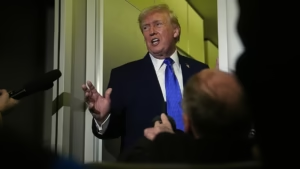
As negotiations continue following the U.S.-Iran ceasefire, former President Donald Trump has maintained a strategy that combines sustained pressure with active diplomatic engagement. While the ceasefire has reduced immediate tensions, the broader approach has not shifted entirely toward diplomacy; instead, it continues to incorporate elements of deterrence and leverage.
The ongoing talks are being conducted within this dual framework, where negotiation is supported by a clear indication that pressure remains in place. This includes maintaining a firm stance on key issues while allowing space for dialogue to progress. The objective is to ensure that negotiations remain productive without losing strategic leverage.
Recent developments suggest that discussions are continuing with a focus on structured outcomes, building on the initial ceasefire agreement. The presence of pressure alongside diplomacy is intended to encourage consistent engagement and prevent delays or reversals in progress. This balance reflects a calculated approach to managing a complex and evolving situation.
International observers have noted that this method is often used in high-stakes negotiations, where maintaining leverage can be critical to achieving results. The current approach aims to create conditions where both sides remain engaged while also recognizing the consequences of non-compliance.
Why It Matters
The continuation of a pressure-plus-diplomacy strategy is significant because it demonstrates how multiple tools can be used simultaneously in foreign policy. Rather than relying solely on negotiation or deterrence, the approach integrates both elements to address different aspects of the situation.
Maintaining pressure can help ensure that negotiations remain focused and that commitments are taken seriously. At the same time, ongoing dialogue provides a pathway for resolving issues and reducing tensions. This combination can increase the likelihood of achieving meaningful outcomes.
The situation also highlights the importance of consistency in strategy. By maintaining a clear approach, it is possible to create predictable conditions that support negotiation. This can help build confidence among stakeholders and reduce uncertainty.
Additionally, the development underscores the complexity of managing international conflicts. Balancing different priorities—such as stability, security, and diplomacy—requires careful coordination and decision-making. The current approach reflects an effort to address these challenges in a structured way.
Political and Geopolitical Impact
Geopolitically, the dual strategy reinforces the role of the United States as an active participant in shaping international outcomes. By maintaining both pressure and engagement, it signals a commitment to influencing the direction of negotiations while also seeking resolution.
For other countries, the approach provides insight into how the United States is managing the situation. Allies may align their strategies accordingly, while other nations may adjust their positions based on expectations of how negotiations will unfold.
In the Middle East, the continuation of talks alongside sustained pressure may influence regional dynamics. Countries in the region are likely to monitor how the strategy affects stability and whether it leads to broader agreements.
Domestically, the approach may contribute to discussions about foreign policy effectiveness. The balance between pressure and diplomacy is a recurring theme in policy debates, and the current situation provides a clear example of how these elements can be combined.
Implications
If the strategy proves effective, it could lead to further progress in negotiations and potentially more comprehensive agreements. Maintaining leverage while advancing dialogue may help ensure that discussions remain productive and focused on key objectives.
However, the approach also requires careful management. Excessive pressure could hinder progress, while insufficient leverage might reduce the effectiveness of negotiations. Finding the right balance will be critical to achieving desired outcomes.
In the longer term, the situation highlights the value of integrated strategies in foreign policy. Combining different tools can provide flexibility and adaptability, enabling policymakers to respond to changing conditions. The coming weeks will be important in determining how this approach shapes the future of the negotiations.
Sources
“US maintains pressure while advancing Iran ceasefire talks”
