

Story Highlights
- President Donald Trump said he would be open to meeting Iran’s supreme leader if a broader deal can be reached.
- U.S.-Iran talks remain stalled over nuclear restrictions, enriched uranium, sanctions relief, and the Strait of Hormuz.
- Secretary of State Marco Rubio has said Iran must make firm commitments before any final agreement moves forward.
What Happened
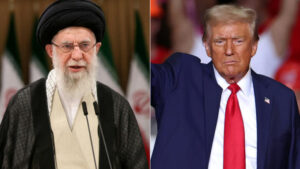
President Donald Trump signaled that he would be open to a direct meeting with Iran’s supreme leader if negotiators can first reach a workable agreement to ease the crisis between Washington and Tehran.
Trump said he did not want to meet for the sake of meeting, but suggested that a leader-level encounter could become possible if it helped finalize a deal. His remarks came as U.S.-Iran talks remained fragile, with both sides still divided over nuclear limits, sanctions relief, and the reopening of the Strait of Hormuz.
- Trump suggested a meeting could happen only if there is progress toward a deal.
- Iranian officials have pushed back against parts of Trump’s public demands.
- Gulf mediators are still trying to keep negotiations alive.
The diplomatic effort has focused on a possible short-term framework that could extend the current ceasefire, reopen key shipping lanes, and create space for more detailed nuclear talks. But the deal has not been finalized, and public comments from both sides show that major disagreements remain.
Secretary of State Marco Rubio has said Iran must accept serious restrictions on its nuclear program and address concerns about highly enriched uranium before the United States can support a final agreement. Iran, meanwhile, has resisted demands it sees as going beyond the working framework under discussion.
The latest uncertainty has been worsened by renewed military activity in and around the Strait of Hormuz, where maritime traffic remains under pressure. The strait is one of the world’s most important energy chokepoints, making the diplomatic stakes much larger than the U.S.-Iran relationship alone.
Why It Matters
Trump’s openness to a possible meeting matters because direct leader-level diplomacy could break a deadlock that technical negotiations have not yet resolved. A meeting with Iran’s supreme leader would be an extraordinary step, especially after months of conflict, sanctions pressure, and military escalation.
For Trump, the move would carry both risk and opportunity. A successful diplomatic breakthrough could allow him to claim that his pressure campaign forced Iran back to the table. A failed meeting, however, could expose him to criticism that he elevated Tehran without securing meaningful concessions.
- A deal could lower tensions and ease pressure on global energy markets.
- A failed diplomatic push could trigger renewed escalation.
- The nuclear issue remains the central obstacle to any lasting agreement.
The dispute over highly enriched uranium is especially important. U.S. officials want firm commitments that Iran will not move closer to nuclear weapons capability. Iran insists its nuclear activities are peaceful and has resisted demands that it views as surrendering sovereign rights.
That gap explains why the talks remain stalled despite signs of progress on a temporary framework. Both sides may agree that de-escalation is necessary, but they remain far apart on what a final nuclear settlement should require.
Political and Public Context
The Iran crisis has become one of the defining foreign policy tests of Trump’s second term. His administration has tried to combine military pressure, sanctions leverage, and diplomatic outreach while avoiding the appearance of retreat.
Republicans supportive of Trump argue that his hard-line posture has forced Iran to consider terms it previously rejected. They say the president is using strength to create diplomatic leverage rather than returning to the kind of agreement he criticized during his first term.
- Trump allies will frame any deal as the result of pressure and strength.
- Democrats are likely to question whether the administration has a clear endgame.
- Foreign policy veterans are watching for signs of either breakthrough or escalation.
Critics argue that the administration’s public messaging has been inconsistent. They point to moments when Trump suggested progress was close, while Iranian officials later disputed the terms being described by Washington.
The possibility of a direct meeting could therefore either clarify the path forward or deepen confusion if the two sides enter talks with different expectations.
Economic and Global Context
The economic consequences of the standoff are significant because the Strait of Hormuz carries a major share of global oil shipments. Any prolonged disruption can raise crude prices, fuel costs, shipping rates, and inflation pressure around the world.
For U.S. consumers, instability in the Gulf can quickly show up in gasoline prices, airline costs, freight expenses, and the price of goods that depend on energy-intensive supply chains.
- Energy markets are closely watching whether the Strait of Hormuz can fully reopen.
- Gulf governments are pushing for de-escalation to protect regional infrastructure and oil exports.
- A ceasefire extension could bring immediate relief to global markets.
Gulf states have a strong interest in preventing the conflict from widening. Countries such as Saudi Arabia, Qatar, the United Arab Emirates, and Kuwait depend on stable shipping routes and have little interest in a prolonged confrontation that threatens oil infrastructure or commercial traffic.
The nuclear talks also carry global implications beyond energy. European governments, China, Russia, and international nuclear monitors are all watching whether Washington and Tehran can build a framework that limits Iran’s program while avoiding another round of military escalation.
What Happens Next
The next step depends on whether negotiators can close the gap between the draft framework and the public demands coming from both governments. Trump’s comments suggest he is willing to consider high-level diplomacy, but only if he sees a deal worth endorsing.
Iran will likely continue pressing for sanctions relief, access to frozen revenue, and guarantees that any ceasefire or nuclear framework will not collapse under renewed U.S. pressure.
- A short-term ceasefire extension remains possible if both sides accept the framework.
- Nuclear restrictions and enriched uranium remain the hardest issues to resolve.
- A leader-level meeting would likely happen only after negotiators settle core terms.
If talks succeed, Trump could present the outcome as a major diplomatic victory that reduces war risk while keeping pressure on Iran’s nuclear program. That would also help ease energy market anxiety before the midterm campaign intensifies.
If talks fail, the risk of renewed military escalation will rise. The Strait of Hormuz, global oil prices, and Iran’s nuclear infrastructure would remain at the center of a crisis with consequences far beyond the Middle East.
Sources
- June 4, 2026 — Uncertainty surrounds US-Iran talks, Hezbollah rejects Lebanon-Israel ceasefire plan
- US strikes Iranian sites after Iran launches drones, in latest Gulf flare-up
- Rubio is optimistic on eventual Iran nuclear talks despite shaky ceasefire
- Iran’s supreme leader appears more active as talks continue: US’s Rubio
