
Story Highlights
- Trump projects conflict resolution within weeks
- U.S. operations seen as strategically effective
- Focus shifts toward stabilization and exit planning
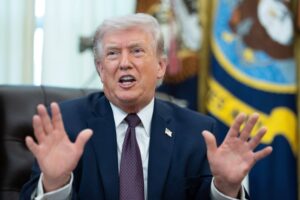
Donald Trump has indicated that the ongoing U.S.–Iran conflict could reach its conclusion within a matter of weeks, signaling confidence in the effectiveness of recent military operations. According to his remarks, the United States has already achieved significant strategic progress, positioning itself to bring the situation under control without prolonged engagement. This statement comes at a time when global markets and governments are closely watching developments in the Middle East.
From an operational standpoint, the assertion reflects a belief that targeted U.S. actions have successfully weakened Iran’s ability to sustain escalation. Rather than engaging in extended conflict, the approach appears focused on achieving defined objectives through precision and speed. This aligns with a broader strategy of applying pressure while limiting long-term exposure, which can be both economically and politically costly. The emphasis on a short timeline suggests an intention to transition quickly from military engagement to stabilization.
The significance of this development extends beyond the immediate conflict. The Middle East plays a central role in global energy supply, and any prolonged disruption can have widespread consequences. By signaling a near-term resolution, Trump’s statement introduces the possibility of reduced volatility in oil markets. Stability in energy flows is critical for maintaining economic balance, particularly for countries that depend heavily on imports.
At the same time, the messaging carries geopolitical weight. A swift resolution would reinforce the perception of U.S. capability to manage high-stakes conflicts efficiently. It also sends a signal to both allies and adversaries regarding the United States’ approach to international security. The ability to achieve objectives without prolonged engagement can strengthen diplomatic positioning in future negotiations.
However, the situation remains complex. While military progress may create conditions for de-escalation, it does not automatically resolve underlying tensions. The relationship between the United States and Iran is shaped by long-standing strategic differences, and these factors will continue to influence future interactions. Even if the current phase of conflict concludes, the broader geopolitical dynamics are unlikely to disappear.
Another key consideration is the response of other global powers. Countries such as China and Russia have vested interests in the region and will closely monitor how the situation evolves. A rapid resolution could shift the balance of influence, prompting adjustments in their strategies. Regional players, including Gulf nations, will also assess the outcome to determine their own security and diplomatic approaches.
Economic markets are particularly sensitive to signals of conflict duration. The expectation of a short timeline may help stabilize investor sentiment, but uncertainty remains until concrete developments confirm the trajectory. Markets often react not only to events but also to expectations, making strategic communication an important factor in shaping outcomes.
In addition, the transition from conflict to stability requires careful management. Ensuring that key infrastructure, particularly energy routes, remains secure will be essential. This may involve coordination with allies and regional partners to maintain order and prevent renewed disruptions. The success of this phase will play a crucial role in determining the long-term impact of the conflict.
Implications
If the conflict concludes within the projected timeframe, it could reduce global uncertainty and support economic stability. However, lasting peace will depend on addressing underlying geopolitical tensions. The situation highlights the importance of combining military strategy with sustained diplomatic efforts.
