
Story Highlights
- Federal Reserve Board member Lisa Cook sued President Trump after he removed her from office, arguing her removal violated statutory “for cause” protections that limit presidential dismissal authority.
- The Supreme Court has oral arguments scheduled in Trump v. Cook, with the case addressing whether presidents can freely remove members of independent agencies or whether statutory protections limit that authority.
- The case carries profound implications for federal agency independence and presidential power, with potential consequences for the Federal Reserve’s ability to maintain independent monetary policy.
What Happened
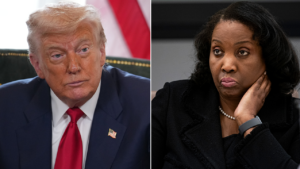
President Donald Trump removed Federal Reserve Board of Governors member Lisa Cook from office shortly after taking office in January 2025, exercising what the Trump administration characterized as inherent presidential authority over executive branch officials. Cook, an economist who had been nominated to the Federal Reserve Board by President Biden and confirmed by the Senate, immediately challenged the removal, filing suit in the District of Columbia and arguing that the Federal Reserve Act contains “for cause” language protecting her from removal without appropriate justification. The lawsuit, styled Trump v. Lisa D. Cook, raises the question of whether presidents must have stated cause to remove officials from independent agencies or whether presidential removal authority is essentially unlimited. Federal Reserve Board members serve fourteen-year terms and are protected by statutory language limiting removal to causes such as incompetence, neglect of duty, or malfeasance in office. Cook’s legal team argues that the statutory “for cause” restriction applies to Federal Reserve Board members just as it applies to other federal officials with statutory removal protection. The Trump administration counters that the president possesses inherent constitutional authority as chief executive to remove subordinates at will, regardless of statutory restrictions. The administration argues that the Federal Reserve’s independence is a matter of policy that Congress can establish, but the Constitution’s vesting of executive power in the president constrains Congress’s ability to insulate executive officials from presidential control. On January 21, 2026, the District of Columbia U.S. District Court issued a temporary restraining order blocking Cook’s removal, though the litigation continues to develop as the case moves through the courts. The Supreme Court added the case to its docket for oral argument, with the justices considering whether to address the removal power question before lower courts reach final decisions.
Why It Matters
The Trump v. Cook case matters fundamentally to constitutional law because it addresses core questions about the separation of powers and the proper scope of presidential authority. The Constitution vests executive power in the president, leading some legal scholars to argue that this means the president must be able to remove all executive officials. However, Congress has created numerous independent agencies and has imposed “for cause” removal restrictions on the officials leading those agencies, based on the theory that some decisions should be insulated from political pressure. The Federal Reserve exemplifies this theory. Congress created the Federal Reserve as an independent central bank specifically to keep monetary policy decisions free from political pressure. Federal Reserve independence is considered crucial to the institution’s ability to make objective decisions about interest rates and money supply without regard to electoral cycles or political parties. If the president can remove Federal Reserve officials at will, the institution’s independence is compromised. The case matters because it will determine whether independent agencies can truly function independently or whether presidential removal power effectively gives presidents control regardless of statutory restrictions. From a liberty perspective, the case raises questions about how much presidential authority should be limited by law. Trump supporters argue that concentrating power in the president allows for decisive action and clear accountability, while critics worry that unconstrained presidential power threatens constitutional limits and democratic accountability through the legislative branch.
Economic and Global Context
The Federal Reserve’s independence is considered essential to sound monetary policy by economists and financial market participants worldwide. The Federal Reserve raises or lowers interest rates, manages money supply, and implements other monetary policies that affect inflation, employment, and economic growth. If the Federal Reserve became subject to direct presidential control, markets and international observers could lose confidence that the institution makes decisions based on economic analysis rather than political considerations. International experience with central bank independence is instructive. Advanced democracies including European nations, Canada, and Australia maintain central bank independence as crucial to sound monetary policy. Conversely, countries with weak rule of law or authoritarian governance often subject central banks to political control, leading to inflation and economic instability. The European Central Bank’s independence is considered essential to the euro’s credibility. The Trump administration’s position on Federal Reserve removal authority should be understood within the context of its broader approach to executive power, including attempts to overcome the “for cause” restrictions on the Federal Reserve and other independent agencies. If the administration prevails in Trump v. Cook, it could extend to other independent agencies including the Securities and Exchange Commission, the Federal Trade Commission, and the Environmental Protection Agency. The economic implications would be substantial if presidents could unilaterally remove officials from agencies designed to be independent.
Implications
If the Supreme Court rules in favor of Trump and establishes that presidents can remove Federal Reserve Board members and other independent agency officials at will despite statutory “for cause” restrictions, the implications for federal governance would be transformative. The Federal Reserve would no longer be meaningfully independent, and the president would effectively control monetary policy. This could lead to political pressure on the Federal Reserve to maintain low interest rates during election years to boost the economy, a pattern observed in countries without central bank independence. Conversely, if the Court sides with Cook and upholds “for cause” protections, it will affirm the constitutional validity of independent agencies and the statutory limits Congress has imposed on presidential removal authority. This outcome would likely lead Cook to be reinstated to the Federal Reserve Board, absent settlement of the dispute. The case will also influence how future courts interpret “for cause” restrictions on other independent agencies, potentially affecting the president’s ability to manage executive branch agencies. For the Trump administration specifically, the outcome in Trump v. Cook will determine how much control the president can exercise over the Federal Reserve and other independent agencies. If the administration prevails, it will have expanded presidential power beyond what previous administrations considered possible. For financial markets and the international economic system, the case’s outcome will affect confidence in the Federal Reserve’s independence and monetary policy credibility.
Sources
“Supreme Court appears skeptical of Trump’s ability to fire Fed board member Lisa Cook”
