
Story Highlights
- Trump said the U.S. will either reach a deal with Iran “fairly quickly” or “finish it out militarily”
- Roughly 50,000 U.S. troops remain in the region, which Trump says costs “very little” to maintain
- Trump praised Iranian Supreme Leader Mojtaba Khamenei as “more rational” than his father and confirmed Khamenei is involved in the approval process for any deal
What Happened
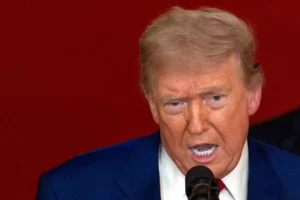
During his June 7 interview on NBC’s Meet the Press, President Donald Trump addressed the ongoing U.S.-Iran conflict with unusual candor, laying out a stark two-path scenario for Tehran. “I think we’ll either have something done fairly quickly, or we’ll finish it out militarily,” he told moderator Kristen Welker. The statement came as negotiations remain ongoing but fragile, with the White House working toward a memorandum of understanding that would end active hostilities and begin formal nuclear talks.
The conflict began in earnest in June 2025 when the United States joined Israel in launching strikes on Iranian nuclear facilities. American B-2 stealth bombers targeted uranium enrichment sites buried deep underground in what the administration described as a necessary preemptive action. Trump has consistently argued that Iran was on the verge of producing a nuclear weapon and that military intervention was the only viable option. “If I didn’t go in there with the B-2 bombers, they would right now have a nuclear weapon,” he said Sunday.
Sunday marked the 100-day milestone of American military involvement. Secretary of State Marco Rubio had at one point declared the war concluded, but Iranian retaliatory strikes against U.S. regional allies and the persistence of ongoing negotiations suggest the conflict is far from over. As of early June, approximately 50,000 U.S. troops remain deployed in the region. Trump framed that presence as sustainable and inexpensive. “It costs us very little to keep them there,” he said, adding that he intends to maintain that posture “until such time as we have a completion.”
Trump also addressed Iranian leadership directly, offering a nuanced characterization that was notable for its relative restraint. He praised the younger Mojtaba Khamenei — who succeeded his father as supreme leader — for showing what Trump called “certain bravery” by remaining engaged in negotiations despite being seriously injured. Trump confirmed that Khamenei is “part of the approval process” for any deal and called him “more rational” than the elder Khamenei. The two leaders have not spoken directly.
When asked about his campaign pledge to avoid new wars, Trump was unapologetic. “First of all, I didn’t guarantee no war. Why would I have built the strongest military in the world?” he said. He also pushed back on comparisons to Vietnam and Iraq, arguing this conflict has lasted months rather than years and is therefore categorically different.
Why It Matters
The Iran conflict represents the most significant American military engagement since the Iraq War, and its resolution — or escalation — will define Trump’s second-term legacy on foreign policy. The administration entered office with strong rhetoric about ending wars and putting America first, yet less than a year into Trump’s second term, U.S. forces were engaged in active combat operations in the Middle East. How that contradiction is resolved matters enormously for American credibility and for the domestic political coalition Trump assembled.
For the constitutional framework of American governance, the Iran conflict raises profound questions that Congress has largely sidestepped. No formal war authorization has been passed. The administration has relied on executive authority and existing legal frameworks to justify the engagement, but that approach has critics across the ideological spectrum, from libertarian-leaning conservatives who oppose executive overreach to progressives who argue Congress has abdicated its war-making responsibilities.
Trump’s warning that military action could resume if talks stall is also significant from a rule-of-law perspective. A president publicly conditioning diplomatic negotiations with the implicit threat of bombing campaigns is an unusual diplomatic posture that places enormous pressure on negotiators on both sides. It may accelerate a deal — or collapse one, if Iranian negotiators conclude they cannot sell concessions to their domestic audience under open military threat.
Public opinion has also begun to shift on the war. Polls show Trump’s approval ratings have declined in part due to concern about the Iran conflict and its economic side effects, particularly rising gasoline prices. A war-weary public is watching closely whether the administration can secure a deal that addresses nuclear threats without becoming mired in a prolonged engagement.
Economic and Global Context
The Iran conflict has sent shockwaves through global energy markets. The Strait of Hormuz — through which a significant portion of the world’s oil supply passes — has been a central point of contention in negotiations, with a framework deal under discussion that would reopen the strait as part of a ceasefire extension. The disruption to oil flows from the region has contributed to elevated gas prices in the United States, a political liability for an administration that campaigned heavily on lowering the cost of living.
Gulf states including Saudi Arabia, Qatar, and the United Arab Emirates have urged Trump to pursue a diplomatic resolution, fearing Iranian retaliation could destabilize the broader region and cause lasting damage to global energy infrastructure. The economic interests of American allies are directly tied to the outcome of these negotiations, adding a layer of multilateral pressure on the administration.
Iran, for its part, faces severe economic strain from sanctions and the disruption of oil exports. American negotiators believe that economic pressure provides Tehran with a strong incentive to reach a comprehensive deal. The current framework under discussion would include a 60-day ceasefire extension, during which Iran would be permitted to freely sell oil, while nuclear negotiations proceed separately. That sequencing has been a sticking point, with Iran seeking a cessation of hostilities before addressing nuclear issues.
Iran retains nearly 1,000 pounds of uranium enriched to 60 percent, according to the International Atomic Energy Agency — a level just one technical step from weapons-grade material. Trump has demanded the dismantlement of key nuclear sites at Natanz, Fordow, and Isfahan, all of which were targeted in U.S. strikes. Iran has sought to delay nuclear talks until a formal end to hostilities is declared.
Implications
If a deal is reached along the lines currently under discussion, it would represent a significant diplomatic achievement for Trump, potentially bolstering his standing ahead of the 2026 midterms. A formal agreement reopening the Strait of Hormuz and lowering energy prices could provide meaningful economic relief to American consumers and restore some of the confidence that has eroded since the onset of the conflict. Trump would likely claim a strong political victory.
If talks collapse and military action resumes, the consequences would be severe. Renewed strikes would almost certainly trigger broader Iranian retaliation against U.S. forces, regional allies, and global shipping routes. The economic fallout — particularly on oil prices — could push already strained household budgets further, with consequences for both consumer confidence and market stability.
For Congress and the American public, the interview underscored the degree to which one of the most consequential military decisions of the decade was made without formal legislative authorization. Whether lawmakers move to reassert their war powers authority remains to be seen, but the 2026 midterm calendar creates a deadline: members facing voters will need to take positions on a war that has become increasingly central to daily American life.
Sources
“5 key moments from Trump’s cut-short ‘Meet the Press’ interview”
