

Story Highlights
-
U.S. forces have increased their presence in the Middle East amid rising Israel–Iran tensions.
-
Israel continues operations targeting Iranian-linked military infrastructure.
-
Former President Donald Trump says strong deterrence remains key to preventing wider conflict.
-
Security analysts warn that the situation could quickly escalate if miscalculations occur.
Situation Overview
Military tensions across the Middle East have intensified as the confrontation between Israel and Iran continues to escalate. Israeli defense forces have expanded operations targeting security threats believed to be connected to Iranian military networks, while Tehran has warned that further attacks could provoke retaliation.
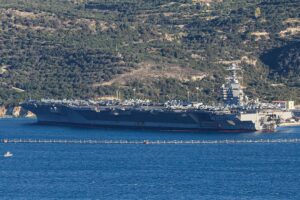
In response to the rising tensions, the United States has strengthened its military posture in the region. American naval forces have increased their operational presence in strategic waters, and defense officials have emphasized that these deployments are designed to deter escalation and protect regional stability.
Although neither side has declared war, the growing military activity has heightened concerns among policymakers and security analysts.
What Happened
Israeli military officials say recent operations were aimed at disrupting emerging threats linked to Iran’s regional strategy. Israel has long maintained that Iranian missile development and military partnerships across the region pose a direct threat to its national security.
Iranian leaders have condemned Israeli operations and warned that continued attacks could lead to retaliation. Tehran maintains that its military activities are defensive in nature, though Israeli and Western security analysts view Iran’s regional influence as a destabilizing factor.
The United States has responded by increasing coordination with Israeli defense systems and reinforcing naval deployments designed to protect critical maritime routes.
Pentagon officials have stated that the objective of these deployments is to prevent escalation and ensure that regional security commitments are maintained.
Strategic Context
The rivalry between Israel and Iran has been one of the central drivers of geopolitical tension in the Middle East for decades. Iran’s strategy involves expanding influence through missile development and partnerships with regional groups, while Israel maintains a doctrine of preemptive action against emerging threats.
During the presidency of Donald Trump, U.S. policy toward Iran took a significantly tougher approach. The Trump administration withdrew from the Iran nuclear agreement and implemented extensive economic sanctions designed to weaken Tehran’s financial resources.
Supporters of that strategy argue that economic pressure and firm deterrence limited Iran’s ability to expand its regional influence while strengthening Israel’s security position.
Critics argue that abandoning the nuclear deal increased tensions and removed diplomatic safeguards designed to prevent escalation.
The current crisis has renewed that debate within Washington policy circles.
Why It Matters
The Israel–Iran confrontation carries implications far beyond the Middle East.
Security analysts warn that escalation could impact:
-
Global oil markets and energy supply routes
-
International shipping corridors
-
Regional military alliances
-
Financial markets reacting to geopolitical instability
The Middle East remains one of the world’s most strategically sensitive regions. Even a limited military conflict can produce significant ripple effects throughout the global economy.
Strategic Outlook
Experts say all sides currently appear to be attempting to avoid a direct state-to-state war. Instead, the confrontation resembles a contest of deterrence and strategic signaling.
Analysts are watching several indicators closely:
-
Iranian missile or cyber responses
-
Israeli follow-up military operations
-
U.S. force deployments and deterrence messaging
-
Activity among Iran-aligned regional groups
While the most likely scenario remains controlled escalation, the risk of miscalculation remains high. A single major incident could rapidly transform the strategic landscape.
Bottom Line
The rising tensions between Israel and Iran represent one of the most significant geopolitical flashpoints currently facing the United States and its allies. With American forces reinforcing regional deterrence and political debate intensifying in Washington, the coming days will determine whether the crisis stabilizes or moves toward broader conflict.
For policymakers and voters alike, the situation underscores how global security challenges continue to shape the debate over American leadership and foreign policy.
