

Story Highlights
- Trump posted on Truth Social that Iran must act “FAST, or there won’t be anything left of them”
- Iran submitted a new 14-point proposal to U.S. officials through Pakistani mediators on Monday
- Drone attacks struck targets in the UAE and Saudi Arabia over the weekend, ratcheting up tensions
What Happened
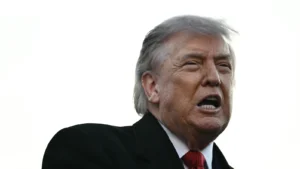
Donald Trump issued some of his most forceful warnings yet to Iran on Sunday and Monday, declaring on Truth Social that “For Iran, the Clock is Ticking, and they better get moving, FAST, or there won’t be anything left of them. TIME IS OF THE ESSENCE!” The remarks came as peace negotiations mediated by Pakistan appeared to have hit a wall, with both sides trading accusations of bad faith and offering incompatible proposals.
The president’s warnings were quickly followed by a diplomatic development. Iran’s Foreign Ministry spokesperson Esmaeil Baghaei confirmed Monday that Tehran had submitted a response to the latest American proposal through Pakistani intermediaries. Iranian state media reported the submission as a revised 14-point document, an updated version of a prior Iranian proposal that Trump had previously dismissed as “garbage” and “a piece of garbage.” Baghaei signaled Iran would not be intimidated but acknowledged negotiations were ongoing.
In a phone call with Axios, Trump said that if Iran did not improve its offer, “they are going to get hit much harder.” The warning followed a Fox News interview conducted during Trump’s return from his state visit to China in which the president told the network that Iran “can make a deal or they get annihilated.” He also revealed that Iran’s leadership claimed it lacked the technology to remove enriched uranium buried beneath bombed nuclear sites, a key U.S. demand.
Complicating the diplomatic picture further, new drone attacks were reported over the weekend against targets in the United Arab Emirates and Saudi Arabia, U.S. allies in the Gulf that have faced repeated strikes since the conflict began in late February. The attacks heightened fears that the fragile ceasefire, which has been technically in place since early April and brokered by Pakistani Prime Minister Shehbaz Sharif, is coming apart. A global bond market selloff on Monday added to investor alarm over the conflict’s spreading economic consequences.
Iran’s foreign ministry insisted the country remained committed to diplomacy. “What can be said with certainty is, first of all, that rights are not something we are to negotiate or compromise over,” Baghaei said, citing Iran’s claimed right to uranium enrichment under the Nuclear Non-Proliferation Treaty. An Iranian media outlet also reported that the U.S. had proposed a temporary waiver of oil sanctions as a confidence-building measure, though Washington had not confirmed the offer.
Why It Matters
The escalating rhetoric and renewed diplomacy reflect the precarious nature of a conflict that has already reshaped the Middle East and stretched U.S. military commitments at a time of intense domestic political pressure. Trump’s administration has invested enormous political capital in the campaign against Iran’s nuclear program, framing it as a generational security achievement. But the failure to conclude a durable peace deal risks transforming that early military success into a prolonged and costly quagmire.
The war’s financial toll has grown considerably since it began. Acting Pentagon comptroller Jules Hurst testified before Congress last week that the conflict has so far cost the United States approximately $29 billion — a figure that defense analysts believe understates the true cost given classified operational expenses. That number is expected to climb sharply if negotiations fail and the U.S. resumes full combat operations.
The human and strategic stakes extend far beyond the financial ledger. Iran’s closure of the Strait of Hormuz, through which approximately 20 percent of the world’s oil supply passes, has triggered the largest supply disruption in the history of the global energy market. The blockade has sent oil prices surging, driving domestic inflation to 3.8 percent annually as of April — the highest rate since May 2023 — with energy prices accounting for 40 percent of that Consumer Price Index increase, including a 28.4 percent annual jump in gasoline prices.
For American voters already frustrated by the cost of living, the inability to quickly close the Iran conflict is increasingly a political liability for the Republican Party ahead of November’s midterm elections. Polls show independents — a group Trump won in 2024 — have drifted away from the president partly due to rising prices tied directly to Middle Eastern instability.
Economic and Global Context
The Strait of Hormuz crisis has sent shockwaves through every sector of the global economy. Energy-dependent industries from aviation to manufacturing have faced soaring input costs, and shipping companies have been forced to reroute vessels around the Strait and the Red Sea, adding weeks and hundreds of millions of dollars in costs to global supply chains. Core inflation, which excludes food and energy, rose 2.8 percent year-over-year in April, indicating that price pressures have begun spreading beyond fuel costs into broader consumer goods.
Global equity markets have been volatile throughout the conflict. Stocks fell Monday on AP wire reports describing Trump’s latest warning that the Iranian “clock is ticking,” as investors weighed the probability of renewed strikes. Oil prices rose simultaneously, reflecting trader expectations of continued supply disruptions. The bond market selloff added to those concerns, with yields on U.S. Treasuries rising as investors digested the potential for prolonged instability.
China has emerged as an unexpected diplomatic stakeholder. During Trump’s two-day state visit to Beijing, Chinese President Xi Jinping told Trump he “would like to be of help” in ending the conflict. China’s foreign ministry released a statement declaring there was “no point” in continuing the war, emphasizing the damage to global energy supply chains. China relies heavily on Gulf oil shipments that pass through the Strait of Hormuz, giving Beijing a direct economic motive to push for a resolution. Trump separately revealed that Iran itself suggested that only China or the United States possesses the equipment necessary to remove enriched uranium stockpiles from damaged nuclear sites — a detail that could create a novel diplomatic opening.
Implications
The submission of Iran’s revised 14-point proposal is a significant development, but the gulf between U.S. and Iranian positions remains wide. Washington is seeking full denuclearization, reopening of the Strait of Hormuz, restrictions on Iran’s ballistic missile program, and an end to Tehran’s support for regional proxy forces. Iran insists on its right to enrichment, demands sanctions relief upfront, and has rejected what it characterizes as an American failure to offer meaningful concessions.
For Congress, the mounting war costs are becoming an acute fiscal and political problem. The Pentagon’s request for a further $200 billion in supplemental war funding earlier this year has placed additional strain on the federal budget at a time when Republicans are simultaneously pursuing a second reconciliation bill to fund immigration enforcement. The war’s costs also complicate the administration’s broader economic messaging ahead of midterms.
If diplomacy fails and the U.S. resumes major combat operations, the consequences for global oil prices, U.S. military personnel, and regional allies could be severe. Conversely, a deal that grants Iran sanctions relief while leaving its nuclear infrastructure intact — even in damaged form — would face fierce resistance in Congress and from Israeli Prime Minister Benjamin Netanyahu, who reportedly spoke with Trump directly about the negotiations over the weekend.
The coming days will be critical. Iran has now delivered its revised proposal, and the Trump administration will need to decide whether it constitutes a sufficient basis for renewed talks or whether the president’s patience has genuinely expired.
