The Department of Defense has disbursed nearly 3 million dollars in compensation to U.S. personnel affected by so-called Havana Syndrome, marking the first payments made under the Havana Act by any presidential administration since the law’s passage in 2021. The announcement closes a years-long gap between the legislation and actual disbursement, offering financial relief to diplomats, intelligence officers, and military personnel who have reported mysterious neurological symptoms dating back a decade.
Story Highlights
- The Department of Defense disbursed nearly 3 million dollars in compensation, the first payments made under the Havana Act since its 2021 passage.
- Havana Syndrome was first publicly reported in 2016 among U.S. diplomats in Cuba who described piercing sounds and subsequent neurological symptoms.
- A 2025 U.S. intelligence assessment found it “very unlikely” that a foreign adversary caused the reported symptoms, a conclusion that remains disputed by some affected personnel.
What Happened
The Department of Defense announced Friday that it has issued nearly 3 million dollars in compensation payments to personnel affected by Havana Syndrome, describing the disbursement as the first HAVANA Act payments made under any presidential administration since Congress passed the law in 2021. In its statement, the department said it is “prioritizing the care of affected personnel” and pledged continued transparency as it works through the claims process. The department, now referred to in the statement as the Department of War, added that its “commitment to mitigating non-kinetic threats remains absolute.”
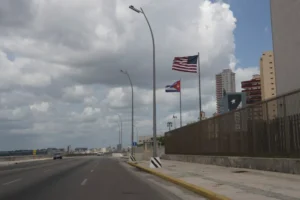
Havana Syndrome first drew public attention in 2016, when American diplomats stationed at the U.S. embassy in Havana, Cuba, began reporting sudden neurological symptoms after hearing piercing, high-pitched sounds at night. Affected personnel described a range of symptoms including headaches, dizziness, nausea, vision problems, and in some cases nosebleeds and difficulty concentrating. The pattern of reported incidents quickly expanded beyond Cuba, with U.S. government personnel in China, Russia, Germany, Austria, Colombia, and Washington, D.C., among other locations, later reporting similar experiences, collectively referred to within government circles as “anomalous health incidents.”
In 2017, the United States withdrew more than half of its staff from the newly reopened Havana embassy and expelled Cuban diplomats from Washington, a response driven partly by speculation that a foreign adversary had deployed an unidentified sonic or electromagnetic weapon against American personnel. That theory has never been definitively confirmed. A 2025 assessment compiled by the National Intelligence Council concluded it was “very unlikely” that a foreign adversary was responsible for the reported cases, a finding that has not been fully accepted by all of the affected personnel or independent researchers who have continued to investigate the phenomenon. The council’s report was notable in stating that none of the agencies involved in the review questioned the authenticity of the suffering described by those affected, even as they could not identify a definitive external cause.
Separate research, including 2024 studies conducted through the National Institutes of Health involving MRI scans, blood tests, and hearing and vision examinations of more than 80 affected individuals, found no evidence of measurable brain damage among the patients studied. A 2024 joint investigative report by The Insider, Der Spiegel, and CBS’ 60 Minutes had previously linked some cases to the activities of a Russian military intelligence unit, though that conclusion remains contested within the U.S. intelligence community.
The payments announced Friday come under the framework established by the Havana Act, legislation signed into law in 2021 specifically to authorize compensation for personnel who experienced qualifying brain injuries connected to the reported incidents, regardless of whether a definitive cause has been established.
Why It Matters
For the small but significant community of diplomats, intelligence officers, and military families affected by Havana Syndrome, the first disbursement of compensation represents a long-delayed acknowledgment after years of what many described as bureaucratic uncertainty and inconsistent institutional support. Advocates for affected personnel have argued for years that the government’s slow pace in implementing the Havana Act compounded the difficulty of an already ambiguous medical situation.
The announcement also carries broader significance for how the federal government handles unexplained occupational health claims among personnel serving in sensitive or hostile environments. By moving forward with payments despite the absence of a confirmed cause, the administration is effectively separating the question of compensation from the unresolved debate over whether a foreign adversary is responsible, a distinction that could shape how similar claims are handled in the future.
For policymakers, the episode underscores tension between congressional intent, expressed clearly through the 2021 legislation, and the pace of executive branch implementation across multiple administrations. The current disbursement, arriving under the current administration, may also become a point of political contrast with the prior administration’s handling of the same law.
Economic and Global Context
While the roughly 3 million dollar disbursement is modest relative to the federal budget, it represents a meaningful signal to the broader diplomatic and intelligence workforce that occupational health claims tied to overseas service will be taken seriously and financially supported, a factor that can influence recruitment and retention for postings in higher-risk regions.
Internationally, the renewed attention to Havana Syndrome arrives amid ongoing diplomatic friction with both Cuba and Russia, the two nations most frequently mentioned in connection with the syndrome’s disputed origins. Russian officials, including Kremlin spokesperson Dmitry Peskov, have repeatedly and firmly denied any government involvement, dismissing years of allegations as unsubstantiated.
The unresolved scientific debate also has implications for how allied governments handle similar reports among their own diplomatic personnel, several of whom, including Canadian officials previously stationed in Cuba, have reported comparable symptoms and sought their own forms of institutional response and compensation.
Implications
Looking ahead, the Department of Defense has signaled that additional payments are likely as more claims move through the review process, though the department has not specified a timeline or the total number of personnel who may ultimately qualify for compensation under the Havana Act. Affected individuals and their advocates are expected to continue pressing for expanded research funding and broader medical support beyond the initial compensation payments.
For Congress, the disbursement may prompt renewed oversight interest in how efficiently federal agencies are implementing the 2021 law, particularly given the multi-year gap between passage and the first payments. Lawmakers who championed the original legislation are likely to use the announcement to call for continued funding and expedited claims processing.
For the intelligence and diplomatic communities, the announcement offers some measure of institutional validation, even as the underlying scientific and geopolitical questions surrounding Havana Syndrome’s cause remain unresolved and likely to persist as a subject of ongoing research and international dispute.
Sources
