


Story Highlights
-
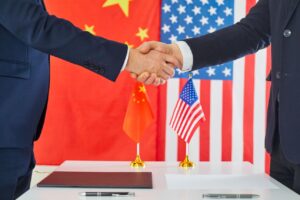
Latest developments show renewed activity in U.S.–China trade relations.
-
Trade flows remain steady despite ongoing strategic tensions.
-
Analysts say supply chains continue adapting to evolving conditions.
What Happened
In the past 24–48 hours, fresh developments in U.S.–China trade have highlighted ongoing adjustments in one of the world’s most important economic relationships. While no major policy shifts have been announced, recent data and market signals suggest continued activity and gradual adaptation in trade flows between the two economies.
According to Reuters, exports and imports between the United States and China remain stable across key sectors, including manufacturing goods, electronics, and energy-related products. Businesses on both sides are continuing operations while adjusting to existing tariffs, regulations, and geopolitical considerations.
Recent reports indicate that companies are increasingly optimizing supply chains rather than making abrupt changes. Instead of fully relocating production, many firms are diversifying sourcing strategies—maintaining ties with China while expanding into other regions. This approach reflects a more flexible and resilient global trade model.
At the same time, trade discussions and policy signals continue to influence market sentiment. Even small updates in negotiations or regulatory frameworks can impact expectations, leading to cautious but steady activity in global markets.
Logistics and shipping data from recent days also suggest consistent movement of goods, with ports and freight networks operating at stable levels. This indicates that despite broader tensions, trade activity itself remains functional and resilient.
Why It Matters
The U.S.–China trade relationship is one of the most significant drivers of global economic activity. Changes in this relationship can affect supply chains, pricing, and market stability worldwide.
For businesses, stable trade flows provide continuity. Companies that rely on international supply chains benefit from predictable conditions, allowing them to manage costs and maintain operations efficiently.
For consumers, trade stability helps ensure product availability and competitive pricing. Many everyday goods—from electronics to household items—depend on international trade networks.
For financial markets, developments in U.S.–China trade are closely watched indicators. Even minor changes can influence investor sentiment, commodity prices, and global economic expectations.
Economic and Global Context
Trade between the United States and China exists within a broader framework of global economic dynamics. Factors such as tariffs, regulatory policies, and geopolitical developments all influence how goods move between the two countries.
The Federal Reserve monitors trade activity as part of its overall assessment of economic conditions. Changes in trade flows can impact inflation, supply chains, and business investment.
Globally, companies are increasingly focused on supply chain resilience. Recent years have highlighted the importance of diversification, leading firms to adopt more flexible sourcing strategies. This shift is evident in current trade patterns.
At the same time, technological advancements are reshaping trade. Digital platforms, real-time tracking systems, and automation are improving efficiency in logistics and global commerce.
Geopolitical considerations remain a key factor. While economic cooperation continues, strategic competition between the U.S. and China influences policy decisions and long-term trade strategies.
Implications
If current trends continue, U.S.–China trade is likely to remain stable but adaptive. Businesses and markets will continue adjusting to evolving conditions without major disruptions.
For companies, the focus will be on flexibility. Diversifying supply chains and optimizing logistics will be critical for managing risk and maintaining efficiency.
For policymakers, balancing economic engagement with strategic priorities will remain an ongoing challenge. Trade policies will need to support both stability and long-term competitiveness.
For investors, steady trade activity supports confidence in global markets. While geopolitical risks remain, consistent trade flows reduce uncertainty.
For consumers, stable trade conditions help ensure access to goods at reasonable prices, supporting everyday economic activity.
Sources
U.S.–China trade shows steady movement amid evolving global condition
