
Story Highlights
- Trump cancelled an anticipated executive order signing scheduled for Thursday afternoon, citing worry the measure would disadvantage American AI development relative to China and global competitors.
- The sudden reversal came after intensive eleventh-hour lobbying by technology industry leaders and White House advisor David Sacks, who convinced Trump the order could hinder U.S. technological innovation.
- The postponement reflects sharp internal divisions within the Trump administration between tech accelerationists and those prioritizing AI safety, leaving the administration’s AI strategy in flux and signaling continued presidential unpredictability.
What Happened
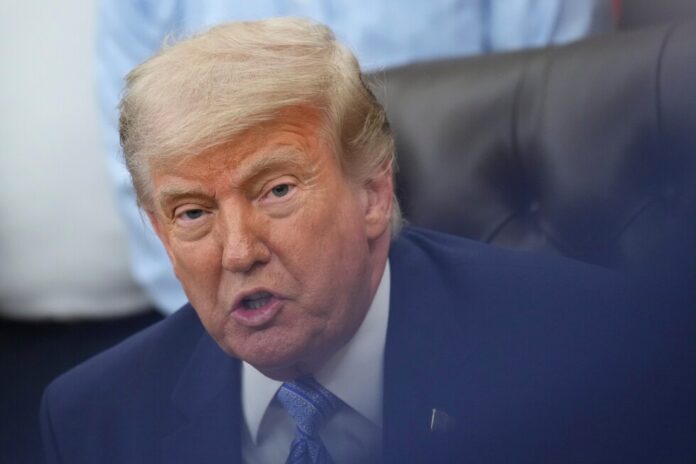
President Donald Trump announced Thursday afternoon that he was postponing a signing ceremony for a highly anticipated executive order on artificial intelligence that had been scheduled to take place in the Oval Office hours later. Standing before reporters during an unrelated announcement with Environmental Protection Agency Administrator Lee Zeldin, Trump explained his reasoning directly: “We’re leading China, we’re leading everybody, and I don’t want to do anything that’s going to get in the way of that lead.”
The cancelled order had been in development for weeks and represented a significant potential shift in the Trump administration’s approach to artificial intelligence governance. According to sources involved in drafting the measure, the executive order would have established a framework for government pre-evaluation of cutting-edge artificial intelligence models before their public release. The mechanism involved a voluntary partnership with leading AI companies including OpenAI, Anthropic, Google, Microsoft, and Elon Musk’s xAI, allowing the government ninety days to conduct security reviews of frontier models.
The postponement was not announced until hours before the scheduled signing ceremony, leaving White House staff, technology industry leaders, and media outlets scrambling to understand the dramatic reversal. Trump told reporters he had “pulled the order at the last minute” after reviewing the text and deciding “I didn’t like certain aspects of it.” The president expressed concern that the measure “could have been a blocker” to American AI leadership, adding that artificial intelligence was “causing tremendous good” and he remained committed to America’s technological edge.
Administration officials and people close to Trump described intensive lobbying efforts in the preceding days. David Sacks, Trump’s AI and crypto czar, conducted multiple phone calls with the president to discuss concerns that early government vetting requirements could slow AI development and hamper American companies’ competitive position globally. Tech industry executives similarly contacted Trump and his team, emphasizing worries that mandatory government access to proprietary models could disadvantage American competitors relative to China, where the government operates differently.
The executive order’s core mechanism proposed that AI developers voluntarily submit advanced models to the Center for AI Standards and Innovation (CAISI), housed within the Commerce Department, for pre-deployment security evaluation before public release. The framework aimed to identify potential vulnerabilities and risks without imposing regulatory burdens. However, even voluntary frameworks require companies to allocate resources, share proprietary information with government entities, and delay product launches pending government reviews—burdens that critics said could impede innovation timelines.
Why It Matters
Trump’s cancellation of the AI executive order reveals fundamental fault lines within his administration regarding technology policy that have significant implications for American innovation and governance. The broader question of whether government should maintain proactive oversight of emerging technologies versus permitting market-driven development remains genuinely contested among senior officials and economic advisers, reflecting deeper ideological divisions about the proper role of government in technological innovation.
For constitutional scholars and governance experts, the rapid reversal of announced policy underscores concerns about presidential decision-making processes. Trump announced the signing ceremony and preparation for the order in advance, creating expectations among lawmakers, industry, and foreign governments about American AI policy direction. The last-minute cancellation without permanent withdrawal—merely postponement—creates ongoing uncertainty about the administration’s actual intentions on this critical technology domain.
The postponement also reflects Trump’s susceptibility to direct lobbying from wealthy industry figures. The intensity of eleventh-hour pressure from tech executives who communicate directly to Trump demonstrates the access and influence concentrated among Silicon Valley leaders. This concentration of lobbying power raises concerns about whether government policy emerges from systematic deliberation of the public interest or instead reflects ad hoc advocacy by those with presidential access and industry resources.
From a national competitiveness perspective, the cancellation decision requires serious examination. The argument that government vetting requirements disadvantage American companies assumes that Chinese companies face no governmental constraints—a dubious assumption. Chinese artificial intelligence development occurs within state guidance frameworks. The question is whether American government engagement with AI development serves national security and innovation interests, not whether engagement itself disadvantages American companies.
Economic and Global Context
Artificial intelligence has emerged as a fundamental technology with applications across finance, manufacturing, healthcare, defense, and countless other sectors. The global competition for AI leadership involves massive investments and talent concentration. The U.S. currently leads in many AI domains, with American companies commanding significant market share in commercial applications and advanced model development. However, this advantage is not permanent or guaranteed, particularly as other nations increase AI investments and recruiting efforts.
Trump’s concern about Chinese competition in AI reflects legitimate strategic considerations. China has made explicit its commitment to AI dominance and has invested substantial resources in talent acquisition, computing infrastructure, and model development. The U.S. government’s role in supporting or constraining American AI development thus carries strategic implications. Nations that over-regulate emerging technologies risk losing competitive advantage; nations that under-regulate face potential risks to security, privacy, and societal stability.
The broader economic context shows continued strength in the technology sector despite regulatory uncertainty. Stock markets have responded positively to administration policies perceived as permissive toward business development. Tech company executives’ lobby efforts toward Trump reflect confidence in their ability to shape policy through direct presidential engagement, suggesting they believe Trump administration policy remains favorable to technology sector interests generally.
Global context includes ongoing negotiations with other nations and international institutions regarding AI governance frameworks. The United Nations, OECD, and various bilateral arrangements address AI policy coordination. American decisions about regulatory approaches have implications for international negotiations and potentially for trade relationships. If the U.S. maintains a permissive approach while other nations implement stricter frameworks, international competition dynamics shift.
Implications
The immediate implication is that the artificial intelligence executive order remains indefinitely postponed, not formally withdrawn. This creates ongoing uncertainty about whether the administration intends to pursue the measure after lobbying pressure subsides or whether the postponement amounts to de facto abandonment. This ambiguity affects industry planning and the strategic position of companies waiting to understand government expectations.
For congressional oversight, the postponement raises questions about legislative alternatives to executive ordering. If the Trump administration proves unwilling to establish AI governance frameworks through executive action, Congress might consider legislation establishing binding requirements. Such legislation could be more difficult to reverse through subsequent administrative action and might incorporate different priorities than the cancelled order.
For international allies and competitors, the cancellation signals American prioritization of technology sector interests over proactive government governance of emerging technologies. This positioning may influence how other nations approach their own AI policy frameworks and could affect negotiations over international AI governance standards.
For the technology industry, the episode demonstrates that direct presidential lobbying remains effective in shaping policy outcomes and that administration AI policy will likely continue responding to business advocacy rather than emerging from systematic interagency deliberation. This creates incentives for continued concentrated industry lobbying efforts and suggests that fundamental governance questions about AI oversight will remain unresolved during Trump’s second term.
The postponement likely will not be the final word on AI governance, but it illustrates the administration’s uncertainty on a crucial technology policy question and the substantial influence that concentrated industry advocacy exercises over presidential decision-making.
Sources
“Trump abruptly scraps signing of landmark executive order regulating AI”
