

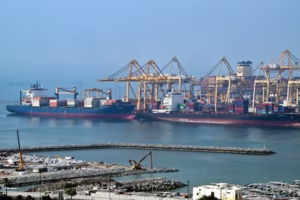
President Trump abandoned his proposed 20 percent fee on cargo ships transiting the Strait of Hormuz less than a day after announcing it, even as he pressed ahead with reinstating a full U.S. naval blockade of Iranian ports. The reversal came amid a fresh round of American airstrikes and Iranian retaliation across the Gulf region, underscoring how unresolved terms from last month’s ceasefire have reignited direct conflict. The standoff over control of the strait, through which roughly a fifth of the world’s oil moves, carries significant consequences for global energy markets.
Story Highlights
- Trump dropped his proposed 20 percent Strait of Hormuz transit fee, saying Gulf states would instead make “massive” trade and investment commitments to the U.S.
- The U.S. military reinstated a naval blockade of Iranian ports at 4 p.m. Tuesday, resuming a policy paused since the June 17 Islamabad Memorandum of Understanding.
- The U.S. and Iran continued exchanging strikes, with Iranian attacks reported against Bahrain, Jordan, and commercial shipping near Oman.
What Happened
President Trump on Monday floated a plan to charge commercial vessels a fee equivalent to 20 percent of their cargo value to transit the Strait of Hormuz, framing it as compensation for American naval protection of the waterway. The proposal drew immediate criticism, including from the International Maritime Organization, which said it remained opposed to tolls on passage through international waters. Iranian Foreign Minister Abbas Araghchi mocked the plan on social media while using it to bolster Iran’s own claim to control the strait, writing that Tehran has “always been the GUARDIAN of the Strait” and would set a “fair” fee of its own.
By Tuesday, Trump reversed course entirely, writing that he had decided to “replace the 20% United States Reimbursement Fee with Trade and Investment Deals that the various Gulf States will be making into the United States.” He did not name the countries involved or specify dollar figures. Despite scrapping the toll, Trump confirmed the U.S. would move forward with reinstating a naval blockade of Iran’s ports, a policy that had been in place from April 13 until it was lifted under the Islamabad Memorandum signed June 17.
The reversal came as fighting intensified rather than subsided. U.S. Central Command announced a third consecutive night of strikes on Iranian targets, describing the bombing as necessary to “degrade Iran’s ability to attack innocent civilians and commercial shipping.” Iranian state media reported explosions near Bushehr, home to Iran’s civilian nuclear plant, while Tehran launched retaliatory strikes it said hit U.S. facilities in Bahrain and Jordan. Kuwait’s military said it intercepted Iranian aerial targets, and missile alert sirens sounded multiple times in Bahrain, home to the U.S. Navy’s Fifth Fleet.
Iranian officials, including army spokesman Brig. Gen. Mohammad Akraminia, insisted the strait would not reopen to normal traffic absent strict adherence to the memorandum and recognition of Iranian control over the waterway. Iran has attacked vessels attempting to use a U.S.-backed southern route hugging Oman’s coastline, which Washington created to bypass Iranian-controlled shipping lanes.
Why It Matters
The collapse of the toll proposal, paired with the return of a full naval blockade, signals that the ceasefire reached last month has effectively broken down over its most contentious unresolved issue: who controls passage through the Strait of Hormuz. Analysts note the memorandum’s vague language on “safe passage” left room for the U.S. and Iran to reach incompatible interpretations, a gap now driving renewed military escalation.
For American consumers, sustained disruption to Hormuz shipping threatens to push fuel prices higher just as households continue grappling with broader cost-of-living pressures. Gulf allies, meanwhile, are being asked to substitute unspecified investment pledges for a toll plan that lasted barely twenty-four hours, raising questions about the administration’s Middle East strategy and its consistency.
For U.S. troops and diplomatic personnel stationed across the Gulf, the exchange of strikes with Iran represents a serious and immediate escalation risk, particularly given reported attacks on American-linked facilities in Bahrain and Jordan.
Economic and Global Context
The Strait of Hormuz carries approximately 20 percent of the world’s oil supply on a typical day, according to figures cited by U.S. officials and energy analysts. Shipping data from Kpler showed only 22 vessels crossed the strait on July 9, compared with 147 crossings the day before hostilities began in February, illustrating the scale of disruption to global energy logistics. Oil prices have moved higher in response to the toll proposal and renewed hostilities, according to market reporting.
The reinstated blockade is expected to further cut into Iran’s oil export revenue, mirroring the effect of the earlier blockade that ran from April through mid-June. Gulf allies now face pressure to fill the diplomatic and financial gap left by the scrapped toll plan, with Trump indicating unspecified “massive” investment commitments in place of formal fees, though no government has publicly detailed such an agreement.
Global shipping insurers have already adjusted premiums for vessels transiting the region, and further escalation could accelerate rerouting of tankers around Africa, a costlier alternative that would add time and expense to global oil and gas deliveries.
Implications
The immediate question is whether the reinstated blockade further pushes Iran toward abandoning the Islamabad Memorandum altogether, or whether renewed U.S. military pressure forces Tehran back toward negotiated terms on shipping access. Gulf states will be watched closely for any formal announcement of the investment commitments Trump referenced, details that remain unconfirmed as of this week.
For global markets, continued disruption to Hormuz traffic will keep upward pressure on oil prices, a dynamic policymakers in Washington will need to weigh against domestic inflation concerns heading into the second half of the year.
For congressional Republicans and Democrats alike, the rapid reversal on the toll plan raises questions about the administration’s Middle East decision-making process, with lawmakers likely to seek briefings on both the blockade’s legal authority and the undisclosed terms of any new Gulf investment arrangements.
Sources
“Trump walks back planned tolls in Strait of Hormuz, moves to reinstate blockade of Iran’s ports”
