


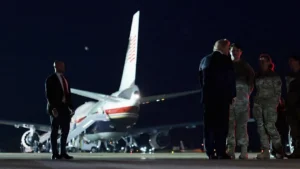
The Trump administration issued grand jury subpoenas to four New York Times journalists last week, demanding they testify in a federal leak investigation connected to the paper’s reporting on security concerns surrounding the president’s new Qatari-gifted Air Force One. Federal agents delivered some of the subpoenas directly to reporters’ homes, prompting the Times and press freedom groups to condemn the move as an escalation in the administration’s ongoing tensions with the media.
Story Highlights
- Subpoenas were issued to Times reporters Eric Lipton, Julian E. Barnes, Tyler Pager, and Eric Schmitt, compelling them to testify before a Manhattan federal grand jury.
- The investigation centers on alleged unauthorized disclosure of classified information related to Secret Service concerns about the new Air Force One aircraft.
- The Justice Department maintains that reporters are not the targets of the probe, stating only “those leaking classified information” are under scrutiny.
What Happened
Federal agents delivered subpoenas to several New York Times journalists on Friday evening, in some cases appearing directly at reporters’ homes, according to the newspaper. The subpoenas compel Eric Lipton, Julian E. Barnes, Tyler Pager, and Eric Schmitt to testify before a federal grand jury in Manhattan this week regarding a Justice Department investigation into the disclosure of classified national security information. All four reporters were bylined on Times stories published earlier in the week detailing security concerns about President Trump’s new Air Force One, a retrofitted Boeing 747-8 gifted by Qatar and outfitted for presidential use.
The Times reporting, based on anonymous sources, claimed the Secret Service had urged Trump to leave a recent NATO summit in Turkey aboard the older Air Force One rather than the new Qatari jet due to security concerns, and that the newer aircraft lacked certain defensive countermeasures, including advanced antimissile capabilities, that had been standard on the previous plane. The White House has firmly denied any security shortcomings with the new aircraft and said reports of alternate travel arrangements involved standard distraction and misdirection tactics used to protect the president.
The subpoenas were authorized by Jay Clayton, the U.S. Attorney for the Southern District of New York, and followed a meeting at the White House between FBI Director Kash Patel and other Justice Department officials to discuss the matter. David McCraw, the Times’ top lawyer, condemned the tactics used to deliver the subpoenas. “The appearance of federal law enforcement agents on the doorstep of news reporters should shock the conscience of any American who believes in the Constitution and the press freedom it protects,” McCraw said in a statement.
The Justice Department pushed back on characterizations that the reporters themselves are under investigation. “Every administration has addressed the crime of leaking national security information,” a department spokesperson said, adding, “We recognize there may always be natural tension there, but we are not going to ignore the law and stop investigating the people who work in the administration and think it’s okay to leak classified information impacting national security.”
Acting Attorney General Todd Blanche later addressed the matter directly with reporters, stating, “I think attorneys general before me have said in these cases reporters are not our targets,” while affirming the administration would continue pursuing leak investigations. Press freedom organizations, including the Committee to Protect Journalists, condemned the subpoenas as an “extraordinary escalation” with a “chilling effect” on journalism nationwide, while Senate Minority Leader Chuck Schumer and other Democrats used the episode to criticize the administration’s broader posture toward the press.
Why It Matters
The subpoenas represent one of the most direct legal confrontations between the federal government and a major news organization in recent memory, testing longstanding Justice Department guidelines that treat compulsory legal process against journalists as a measure of last resort. Under DOJ’s own News Media Policy, subpoenas compelling reporter testimony are meant to be reserved for cases where the information is essential to a prosecution and cannot be obtained through other means, a threshold press advocates argue was not clearly met here.
For journalists and news organizations more broadly, the episode adds to a growing list of legal and financial pressures brought by the current administration against major outlets, including previous settlements with ABC News and CBS News’ 60 Minutes, an FBI search of a Washington Post reporter’s home and electronic devices, and ongoing civil litigation involving the Wall Street Journal and other outlets. Media law experts note that compelling journalists to testify before grand juries, under threat of contempt proceedings that could result in incarceration, represents a more aggressive posture than subpoenas seeking only documents or records.
For the public, the case raises fundamental questions about the balance between legitimate national security interests and the press’s constitutional role in reporting on government operations, particularly information related to the safety and functioning of the presidency itself.
Economic and Global Context
While primarily a press freedom and legal story, the underlying subject matter, security details of Air Force One, touches on broader questions about the diplomatic optics of the Qatari-gifted aircraft, which drew scrutiny when it was first accepted as a gift to the United States government. The controversy over the plane’s capabilities intersects with heightened security concerns tied to the administration’s active military posture toward Iran, with Trump noting during the same period that he considers himself “No. 1” on Iran’s target list.
News organizations globally are watching how U.S. courts handle the balance between national security investigations and press protections, given that similar legal disputes involving reporter subpoenas have occurred in the Eastern District of Virginia in recent months, some of which were ultimately dropped following public pressure and legal challenges.
Implications
The Times is expected to challenge the subpoenas in court, following patterns set by other news organizations that have contested similar demands in recent months, some successfully. How the presiding judge in the Southern District of New York handles these motions will likely set an important precedent for future leak investigations involving journalists during the remainder of Trump’s term.
For government employees, the investigation signals heightened risk for anyone found to have shared national security information with reporters, regardless of the underlying newsworthiness of that information. For the broader media industry, the case will likely accelerate internal discussions at news organizations about source protection protocols and legal preparedness for similar federal actions.
Congressional Democrats are likely to continue raising the issue in hearings and public statements, though without control of either chamber, substantive legislative action to further protect reporters from compelled testimony remains unlikely in the near term.
Sources
