


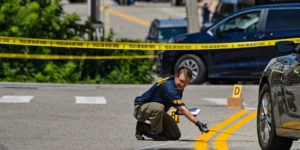
The Trump administration has reversed a brief pause on Immigration and Customs Enforcement vehicle stops just days after the tactic was linked to a fatal shooting in Maine, reigniting debate over the aggressiveness of the president’s immigration enforcement campaign. The decision comes as at least nine deaths have now been tied to enforcement operations since Trump returned to office.
Story Highlights
- ICE briefly paused vehicle stops before Trump personally overturned the pause, calling the tactic essential
- A fatal shooting of Colombian national Joan Sebastian Guerrero in Biddeford, Maine, prompted the temporary halt
- At least nine deaths have been linked to immigration enforcement operations since January 2025
- ICE arrests have roughly doubled in recent weeks as the agency pursues new enforcement quotas
What Happened
ICE temporarily suspended vehicle stops earlier this week after Homeland Security Secretary Markwayne Mullin directed agents to pause the tactic following a fatal shooting in Biddeford, Maine. According to an internal email reviewed by ABC News, a senior ICE official instructed personnel to “prioritize other existing operational methods, outside of vehicle stops, to conduct immigration enforcement activities” while the incident was reviewed. The pause came after agents shot and killed 26-year-old Joan Sebastian Guerrero, a Colombian national, during a traffic stop that ICE said involved the driver attempting to flee toward an officer. The Maine Attorney General’s Office corroborated that account, while a witness told ABC News he saw agents pull Guerrero from the vehicle after the shooting.
Within roughly 48 hours, President Trump personally overturned the pause, according to a source familiar with the discussion, allowing vehicle stops to resume as an enforcement tool. The reversal came even as protests and vigils continued near ICE facilities, including in Scarborough, Maine, where demonstrators and counter-protesters clashed verbally in the days following the shooting.
The Guerrero shooting marked at least the 11th fatal shooting involving federal immigration officers since January 2025, according to reporting compiled by U.S. News. Advocacy groups, including the American Immigration Council, have characterized the pattern as part of a broader trend of escalating aggression in immigration enforcement operations nationwide. Separately, Al Jazeera has tracked at least nine deaths tied specifically to enforcement operations during the same period, with government accounts of individual incidents frequently disputed by witnesses, relatives, or video evidence.
The episode unfolds against the backdrop of a broader shift in ICE’s operational strategy. After a highly visible, heavily staffed surge into Minnesota earlier this year proved politically costly, the agency reportedly moved toward a less visible but more aggressive quota-driven approach, arresting more than 10,000 people in a single week, roughly double the daily arrest pace from earlier in the year, according to reporting on internal ICE deployment data. Officers have increasingly made arrests during routine check-ins, traffic stops, and street encounters rather than large-scale coordinated raids.
Why It Matters
The decision to resume vehicle stops so quickly after a fatal shooting signals that the administration intends to prioritize enforcement volume over the kind of tactical pauses that have historically followed high-profile incidents involving law enforcement use of force. For the White House, vehicle stops represent an efficient enforcement mechanism central to meeting the ambitious removal targets the administration has set as a signature second-term priority.
For immigrant communities and civil liberties advocates, the resumption raises concerns about accountability and oversight, particularly given local officials’ calls for independent investigations into the Maine shooting “without federal interference.” The recurrence of fatal encounters, now numbering at least nine to eleven depending on the tracking methodology, has become a persistent point of political vulnerability for an administration that has otherwise touted historically low illegal border crossings as a core achievement.
Polling cited in recent coverage suggests the administration’s approach carries real political risk. Multiple surveys, including from Reuters/Ipsos and Fox News, have shown declining public approval of the administration’s immigration approach and majority concern that ICE tactics have become “too aggressive.” That erosion in public support complicates the political calculus heading into the midterms, particularly in swing districts where suburban and moderate voters have shown sensitivity to enforcement tactics perceived as excessive.
Economic and Global Context
The administration continues to cite substantial results from its enforcement campaign, reporting more than 605,000 deportations combined with an estimated 1.9 million additional self-deportations, for a total of over 2.5 million people who have left the country since Trump returned to office, according to White House figures. Officials also point to negative net migration in 2025, described as the first such occurrence in roughly half a century, as evidence the strategy is achieving its stated goals of reducing the resident illegal immigrant population.
The economic effects of this scale of labor-force reduction remain a subject of debate among economists, with agricultural, construction, and hospitality sectors in particular reporting labor shortages in regions with historically high shares of immigrant workers. Businesses in affected industries have increasingly lobbied for narrower, more targeted enforcement that exempts long-settled workers without serious criminal records, a position at odds with the administration’s current quota-driven approach.
Internationally, the pattern of fatal encounters has drawn scrutiny from foreign governments whose citizens have been affected, including Colombia in the case of the Maine shooting. Human rights organizations have also cited the U.S. enforcement campaign in broader discussions of migration policy trends across Western democracies, where several governments have similarly tightened enforcement in response to domestic political pressure.
Implications
In the immediate term, expect continued legal and political scrutiny of the Biddeford shooting, including potential state-level investigations that the administration will likely resist characterizing as warranting federal intervention. Civil rights organizations are likely to pursue litigation or file additional complaints challenging the tactics used in vehicle stops, building on existing legal challenges to ICE’s expanded enforcement authority.
For Congress, the recurring pattern of fatal encounters may generate renewed calls for oversight hearings, particularly from Democrats, though any legislative response is unlikely to advance given Republican control of both chambers. Some GOP lawmakers in competitive districts may nonetheless face pressure to publicly address constituent concerns about enforcement tactics as the midterms approach.
For ICE itself, the resumption of vehicle stops suggests the agency will continue prioritizing arrest volume, with quotas remaining a driving factor in operational decisions. Whether this approach proves sustainable will likely depend on how the administration manages the political fallout from future incidents, especially as enforcement activity continues to expand into new jurisdictions and tactics.
Sources
“Trump Defiant as ICE Faces Pressure From Latest Killings Tied to Immigration Crackdown”
