
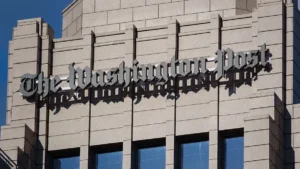
A federal judge in Tampa has dismissed a $3.8 billion defamation lawsuit filed by President Donald Trump’s social media company against The Washington Post, ruling that the company failed to meet the legal standard required to prove the newspaper acted with actual malice. The decision represents a significant setback for Trump Media and Technology Group and reinforces longstanding First Amendment protections that shield press organizations from defamation claims absent clear evidence of deliberate falsehood. The ruling arrives amid a broader pattern of litigation the Trump-aligned company and the president himself have pursued against major news outlets.
Story Highlights
- A federal judge ruled in favor of The Washington Post, dismissing Trump Media’s $3.8 billion defamation lawsuit.
- The suit was originally filed in 2023 by Trump’s social media company, Trump Media and Technology Group.
- The judge found the company failed to identify convincing evidence that the Post acted with actual malice.
- The ruling reinforces the constitutional “actual malice” standard established in New York Times v. Sullivan.
What Happened
A federal judge in Tampa ruled Thursday in favor of The Washington Post, dismissing a $3.8 billion defamation lawsuit brought by Trump Media and Technology Group, the parent company of Truth Social. The lawsuit, originally filed in 2023, alleged that reporting by the Post had damaged the company’s reputation and business interests. In throwing out the case, the court determined that Trump Media had not presented sufficient evidence to clear the demanding legal bar required in American defamation law when a public figure or public-facing entity is the plaintiff.
That bar, known as the “actual malice” standard, requires plaintiffs to demonstrate that a publisher knew a statement was false or acted with reckless disregard for the truth when publishing it. The standard was established by the U.S. Supreme Court’s landmark 1964 ruling in New York Times Co. v. Sullivan, a case widely regarded as a cornerstone of American press freedom jurisprudence. The Tampa judge’s ruling affirmed that Trump Media could not clear this threshold, effectively ending the lawsuit at the trial court level absent a successful appeal.
The case is one of several defamation and legal actions connected to Trump or entities closely tied to him that have targeted major news organizations in recent years. Trump has separately pursued litigation against other outlets, including a $10 billion lawsuit against the BBC over the editing of a 2021 speech, and has repeatedly criticized press coverage of his administration through both formal legal channels and public statements on Truth Social.
The dismissal is a notable defeat for Trump Media, a publicly traded company whose fortunes have often been closely tied to Trump’s political standing and public battles with media organizations. The ruling leaves the company without the substantial monetary judgment it had sought and denies it the opportunity to proceed to trial, where additional discovery and testimony might have been required.
Why It Matters
The dismissal carries significant weight for press freedom advocates who view the actual malice standard as an essential safeguard against the use of defamation litigation to intimidate or financially burden news organizations engaged in legitimate reporting. Because the standard requires proof of a publisher’s subjective knowledge or reckless disregard of falsity, it creates a high bar that protects journalists and news outlets from being sued into silence over good-faith reporting errors or disputed characterizations.
For American readers and consumers of news, the ruling reaffirms a foundational principle that has shaped U.S. media law for six decades: that a free press must be able to report on public figures and matters of public concern without constant fear of crippling litigation. Legal scholars have long argued that weakening or eliminating this standard would chill investigative journalism and reduce the public’s access to information about powerful individuals and institutions.
The case also highlights an ongoing tension within the current political environment, where a sitting president’s affiliated business ventures have pursued aggressive legal strategies against media organizations that have covered him critically. Critics of this pattern argue it represents an attempt to use financial and legal pressure against press institutions, while supporters of the litigation contend that news organizations should be held accountable for coverage they believe to be inaccurate or unfair.
For the broader legal landscape, the ruling may serve as a precedent-reinforcing decision that other courts could cite when evaluating similar defamation claims brought against news organizations, particularly those involving plaintiffs connected to public officials or public figures.
Economic and Global Context
Trump Media and Technology Group, which trades publicly, has seen its stock price fluctuate significantly based on developments connected to Trump’s political fortunes and the company’s various legal and business initiatives. The dismissal of a $3.8 billion claim removes a potential windfall the company had been pursuing, though it was unclear how much weight investors had placed on the litigation’s outcome relative to the company’s core social media and media business operations.
The case fits within a broader national conversation about the relationship between media organizations, defamation law, and political power. Legal experts have noted that public figures, including presidents and their affiliated entities, face a higher bar than private citizens when bringing defamation claims, a distinction rooted in the Supreme Court’s recognition that public discourse about government and public figures requires broader latitude for robust, even sharp-edged, criticism and reporting.
Globally, the American approach to defamation law, with its demanding actual malice standard for public figures, stands in contrast to many other democracies, including the United Kingdom, where defamation law traditionally places a heavier burden on defendants. This divergence has occasionally prompted forum-shopping concerns, with some plaintiffs seeking to litigate media disputes in jurisdictions viewed as more favorable to their claims.
The Washington Post, owned by Jeff Bezos, has faced its own scrutiny in recent years over editorial independence and the influence of ownership on newsroom decisions, making the paper’s successful defense in this case notable amid broader public debate about media credibility and institutional trust.
Implications
In the near term, Trump Media will need to decide whether to appeal the Tampa judge’s ruling to a higher federal court, a process that could extend the litigation for months or years without guaranteeing a different outcome given the well-established nature of the actual malice standard. Any appeal would likely focus on whether the trial court properly applied the legal standard to the specific facts of the case.
For news organizations more broadly, the ruling offers a degree of reassurance that courts continue to apply established First Amendment protections rigorously, even in politically charged cases involving figures connected to the presidency. Media law attorneys will likely point to this decision as evidence that the actual malice standard remains a meaningful and enforceable protection.
For policymakers and legal observers, the case adds to an ongoing national conversation about whether the actual malice standard should be reconsidered, a debate that has occasionally been raised by some conservative legal figures, including at least one sitting Supreme Court justice who has previously suggested revisiting New York Times v. Sullivan. This ruling, by reaffirming the standard’s application, may reduce momentum for such reconsideration in the near term.
For Trump and entities connected to him, the outcome may influence decisions about pursuing similar litigation strategies against other news organizations going forward, particularly if courts continue to apply the actual malice standard consistently across cases involving Trump-affiliated plaintiffs.
Sources
