

Story Highlights
- The Supreme Court ruled 5-4 that Mississippi can continue counting absentee ballots postmarked by Election Day but received up to five days afterward.
- Justice Amy Coney Barrett, a Trump nominee, wrote the majority opinion, joined by Chief Justice Roberts and the court’s three liberal justices.
- Eighteen states and territories have similar mail ballot grace periods, protecting voters in rural areas, military members overseas, and those affected by postal delays.
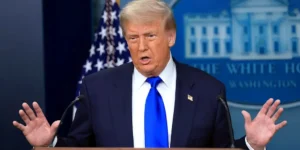
- Trump called the ruling a “tremendous loss” and renewed demands that Congress pass the SAVE America Act, which remains stalled in the Senate.
What Happened
The case originated in 2024, when the Republican National Committee, the Mississippi Republican Party, and allied plaintiffs sued to challenge a Mississippi state law permitting election officials to count absentee ballots that are postmarked by Election Day but arrive at election offices up to five days later. The plaintiffs argued that federal statutes establishing a uniform national Election Day preempt any state law allowing ballot receipt after that date, a novel legal theory that, if accepted, would have invalidated similar grace-period laws in roughly thirty other states.
A federal district court initially rejected the challenge, finding no conflict between state and federal law, but a three-judge panel of the conservative Fifth Circuit Court of Appeals reversed that decision, and the full appeals court declined to rehear the case, setting up a Supreme Court showdown. The Trump administration filed a brief supporting the RNC’s position, and Solicitor General D. John Sauer argued the federal government’s case before the justices in March.
On June 29, the Supreme Court ruled against the Republican challengers by a 5-4 vote. Justice Amy Coney Barrett, whom Trump nominated to the bench in 2020, authored the majority opinion, joined by Chief Justice John Roberts and Justices Sonia Sotomayor, Elena Kagan and Ketanji Brown Jackson. “Nothing in the federal election-day statutes requires ballots to be received by election day,” the court held, reasoning that federal law requires only that the electorate’s choice be made by Election Day, a standard Mississippi’s law satisfies since its deadline for casting a ballot remains Election Day itself. Justices Samuel Alito, Clarence Thomas and Neil Gorsuch dissented, joined in part by Justice Brett Kavanaugh, with Alito writing that counting late-arriving ballots “effectively postpones the date on which the electorate’s choice is made.”
Trump reacted immediately on Truth Social, calling the decision a “tremendous loss” and declaring that “it is more important than ever to pass THE SAVE AMERICA ACT.” That legislation, which passed the House in February, would impose nationwide voter identification requirements and target noncitizen voting in federal elections, a practice that occurs rarely and is already illegal under existing law. The bill remains stalled in the Senate, where Republicans lack the 60 votes needed to overcome a Democratic filibuster, and Senate Majority Leader John Thune has resisted Trump’s calls to eliminate the filibuster or remove the chamber’s parliamentarian to force the bill’s passage.
Why It Matters
The ruling represents a significant, if narrow, defeat for the Trump administration’s broader effort to nationalize and tighten control over state election administration, an effort that has included a March 2026 executive order attempting to restrict mail voting nationwide, which federal courts have separately found unconstitutional. For voting rights advocates, the decision affirms a foundational principle of American federalism: that states, not the federal government, retain primary authority over the mechanics of elections absent clear congressional action to the contrary.
The practical stakes for voters are substantial. Washington Secretary of State Steve Hobbs noted that more than 250,000 ballots postmarked on time arrived after Election Day during the 2024 election in his state alone, meaning a contrary ruling could have disenfranchised hundreds of thousands of voters nationwide, particularly those in rural areas dependent on unreliable postal service and military members stationed overseas who rely on grace periods to have their votes counted.
The decision also illustrates a broader pattern this term of a Supreme Court willing to rule against the Trump administration on select constitutional and statutory questions even while it has sided with the administration in other high-profile executive power disputes. That inconsistency has frustrated the president, who has responded to unfavorable rulings with pointed personal criticism of individual justices, including members of the court’s conservative bloc.
For Republican lawmakers, the ruling intensifies pressure to pursue election law changes through ordinary legislation rather than litigation or executive action, a path that requires the kind of bipartisan cooperation that has proven elusive given the composition of the current Senate.
Economic and Global Context
While election administration disputes do not carry the same direct market implications as monetary or trade policy, the ruling has broader institutional significance for American democracy’s credibility both domestically and internationally. Foreign governments and international election observers routinely monitor U.S. Supreme Court rulings on voting rights as indicators of the health of American democratic institutions, particularly amid ongoing global debates about election integrity and the role of courts in adjudicating disputes between federal and state authority.
Domestically, the ruling arrives as Trump faces the prospect of Democrats gaining control of one or both chambers of Congress after the November 2026 midterms, a dynamic that has made election administration rules a central and urgent priority for Republican strategists. The party’s inability to secure the mail-ballot ruling, combined with the stalled SAVE America Act, leaves Republicans with fewer legislative tools to reshape election rules before voters go to the polls this fall.
Civil rights organizations, including the ACLU, have announced plans to invest heavily, an estimated $24.5 million, in election safeguarding efforts during this midterm cycle, signaling that mail voting and related litigation will likely remain a flashpoint through November regardless of this particular ruling’s outcome.
Implications
In the immediate term, the ruling forecloses further federal court challenges to grace-period laws in the eighteen states and territories that currently maintain them, providing certainty for election administrators heading into the 2026 midterms. Voters in those states, including military personnel and residents of rural areas with less reliable postal service, can proceed with confidence that ballots postmarked on time will be counted even if delayed in transit.
For Trump and congressional Republicans, the path forward on election law now runs almost exclusively through Congress rather than the courts, and the SAVE America Act’s prospects remain dim given continued opposition from several Senate Republicans and unified Democratic resistance. Trump has acknowledged as much, telling reporters in the Oval Office that the votes “just won’t” materialize under current Senate rules.
State legislatures may become the next battleground. Mississippi Governor Tate Reeves and Attorney General Lynn Fitch have both signaled they may push the state legislature to repeal or narrow the very grace-period law the Supreme Court just upheld, suggesting that even a Supreme Court win for voting rights advocates may not be the final word in every state where similar political dynamics exist.
Sources
“Trump laments ‘tremendous loss’ on mail-in ballots at Supreme Court, doubles down on voter-ID bill”
