


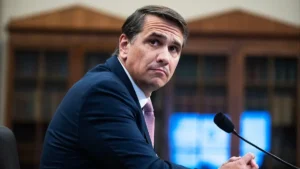
More than 1,200 former Department of Justice employees have called on the Senate to reject Todd Blanche’s nomination to serve as permanent attorney general, citing his record overseeing mass firings and politically charged prosecutions. The unusually large opposition letter arrives just days before Blanche faces a two-day confirmation hearing that could determine the future direction of the nation’s top law enforcement agency.
Story Highlights
- Over 1,200 former DOJ employees signed a letter urging senators to reject Blanche’s confirmation
- Blanche has served as acting attorney general since Trump fired Pam Bondi in April
- The Senate Judiciary Committee’s confirmation hearing is scheduled to begin next Wednesday
- Roughly 16,000 DOJ employees have left the department during Blanche’s tenure, according to the letter
What Happened
Todd Blanche, President Trump’s former personal defense attorney who has served as acting attorney general since April, is facing mounting opposition ahead of his Senate confirmation hearing for the permanent role. More than 1,200 former Department of Justice employees signed a letter to Senate Judiciary Committee Chairman Chuck Grassley and Ranking Member Dick Durbin, arguing that Blanche’s leadership has caused significant damage to the department’s apolitical career workforce and warning the situation would worsen if he is confirmed to lead the agency permanently.
The letter states that approximately 16,000 employees have left the department under Blanche’s tenure, with departures showing no signs of slowing. It argues many of these departures resulted from firings without notice or from employees resigning rather than carry out orders they viewed as illegal or unethical. Trump elevated Blanche to acting attorney general after firing Pam Bondi in April, citing dissatisfaction with her handling of his political priorities, including what Trump viewed as insufficient progress investigating perceived political opponents.
Blanche’s record at the department has drawn scrutiny on several fronts. Under his leadership, the DOJ froze civil rights litigation and closed more than 23,000 criminal cases involving terrorism, white-collar crime, and drug offenses in order to redirect resources toward immigration enforcement. Blanche also oversaw the department’s handling of the court-mandated release of files related to Jeffrey Epstein, an effort criticized after a redaction error exposed the identities of dozens of victims. He has additionally faced criticism for his role in the dismissal of an indictment against Kilmar Abrego Garcia, a Maryland man whom federal prosecutors had previously admitted was mistakenly deported, after a judge ruled the subsequent prosecution reflected a bad-faith, vindictive effort.
The Senate Judiciary Committee is scheduled to begin a two-day confirmation hearing for Blanche next Wednesday. Given unified Democratic opposition is expected, Blanche will need support from every Republican member of the committee to advance his nomination to the full Senate, a threshold that remains uncertain given concerns some GOP senators have voiced about his record.
Why It Matters
The confirmation fight over Blanche represents a broader test of institutional norms at the Department of Justice, an agency historically expected to operate with some insulation from direct political direction. Critics argue Blanche’s tenure as acting attorney general has blurred that line further than prior administrations, citing his personal history as Trump’s defense attorney and his oversight of a controversial $1.8 billion settlement fund, established in connection with a tax-related dispute, that drew bipartisan criticism on Capitol Hill.
For career DOJ employees, the letter’s signatories represent a significant cross-section of former officials who worked across multiple administrations, both Republican and Democratic, adding institutional weight to concerns that are often dismissed as partisan when raised by sitting Democratic lawmakers alone. The scale of the departures cited, roughly 16,000 employees, reflects a level of institutional turnover that former officials describe as unprecedented for the department.
The confirmation outcome will also shape how the DOJ approaches politically sensitive matters heading into the 2026 midterms, including ongoing investigations touching on election administration, immigration enforcement, and cases involving the president’s political critics.
Economic and Global Context
While the Blanche confirmation fight is primarily an institutional and legal matter, it carries budgetary implications tied to the department’s operations. The scale of workforce departures described in the opposition letter raises questions about the department’s capacity to carry out its full range of responsibilities, from antitrust enforcement to national security matters, with a substantially diminished career staff.
The $1.8 billion settlement fund Blanche helped establish, created in connection with a resolved dispute over the leak of Trump’s tax returns, has drawn particular scrutiny from fiscal watchdogs and lawmakers concerned about the use of taxpayer dollars in politically sensitive settlements involving the president personally.
Internationally, the department’s shift in prosecutorial priorities, closing thousands of cases involving terrorism and white-collar crime to redirect resources toward immigration enforcement, has drawn attention from allied nations that coordinate with U.S. law enforcement on cross-border criminal matters, raising questions about continuity in international cooperation.
Implications
The confirmation hearing next week will test whether Republican senators with previously voiced concerns are willing to break from the administration on a nomination central to Trump’s second-term agenda. Given that every Senate Republican previously voted to confirm Blanche as deputy attorney general, some observers expect the nomination to ultimately advance, though the scale of opposition suggests the hearing itself could prove contentious.
For DOJ career staff, the outcome will signal whether continued departures are likely to accelerate or stabilize, with significant implications for the department’s institutional capacity regardless of the political outcome.
For voters and legal observers, the Blanche nomination has become a proxy battle over broader questions of executive power and prosecutorial independence that are likely to remain central themes through the midterm elections and beyond.
Sources
